- Latest
- Trending

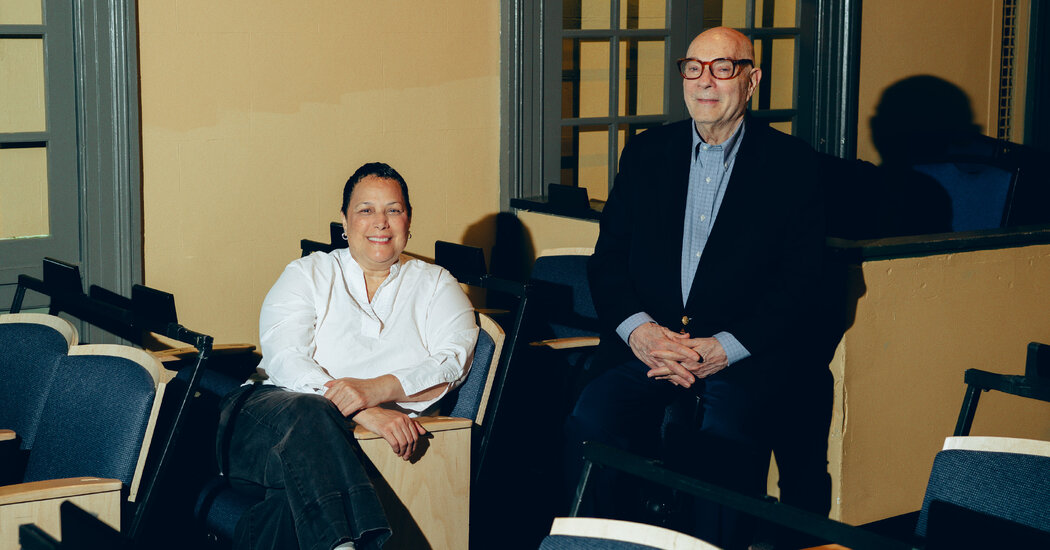
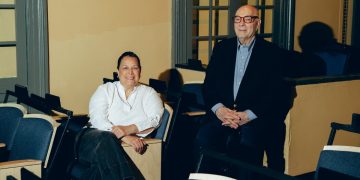
In 1981, Carmen Rivera, a high-school junior whose Puerto Rican parents spoke only English with her at home, attended her first Spanish-language play at the Gramercy Arts Theatre, an intimate little venue tucked into an old townhouse on East 27th Street in Manhattan. The play, “La Casa de Bernarda Alba,” was performed by Repertorio Español, a Spanish-language repertory company founded in 1968 by two Cuban émigrés.
“It was a really beautiful experience going into that theater,” Ms. Rivera recalled recently. “They wanted it to feel like a home, and after the show there was a little ‘talk back’” led by the play’s artistic associate producer, Robert Weber Federico. “He said, ‘If any of you write a play, send it to us.’”
Thirteen years later, Ms. Rivera did just that, submitting “La Gringa,” a drama about a young New Yorker of Puerto Rican descent who is received as an outsider when she visits her “homeland.” Repertorio produced the play in 1996, translated from the original English by Ms. Rivera and the theater’s artistic director, and it won an Obie Award.
Remarkably, the show has been performed in repertory ever since (now with English subtitles), making it the longest-running Off Broadway Spanish-language play in city history. Though the Gramercy Arts seats just 140, more than 150,000 people have seen “La Gringa.”
To celebrate the show’s 30th anniversary, the company has added weekend performances, bringing its still-topical themes of identity and migration to an even wider audience.
The staying power of both Repertorio Español and the pocket playhouse it calls home is equally striking. In 1972, after being pushed out of its previous home at the Greenwich Mews Theatre, inside the Village Presbyterian Church, Repertorio moved into the townhouse at 138 East 27th Street. In occupying a 19th-century home, the group followed in the footsteps of two other major Hispanic cultural institutions, the Spanish Benevolent Society and Our Lady of Guadalupe church, both in the West 14th Street enclave of Little Spain.
Taking on a $10,000 annual rent plus expenses “was scary at first,” said Mr. Federico, now the company’s executive producer emeritus. “Greenwich Mews was like we were living in our parents’ home, and moving to the Gramercy Arts was like suddenly we were on our own in a different city. We had to increase the number of productions to keep the theater filled year-round.”
The group has endured, performing a rotating repertory of Spanish-language classics and contemporary works, all with seat-back English subtitles, for more than 35,000 theatergoers a year, about half of them students.
“Repertorio has always just been this mainstay,” said Robert Sanfiz, executive director of the Spanish Benevolent Society. “And while it’s never been a place in the limelight, it certainly is known to everybody who speaks Spanish in New York City. Everybody’s been to a play there at least once in their lives. There’s no other place with that longevity and that sense that it really just belongs to people who speak Spanish.”
The Gramercy Arts Theatre, which stands a few doors east of Lexington Avenue, began its protean life in the mid-1800s as the high-stooped brick dwelling of an upper-middle-class family: three stories over a basement with an elaborate ironwork door surround framing an arched double door.
But whatever residential tranquillity the neighborhood offered was short-lived. In the 1840s and ’50s, railroads operated noisy depots on the block between 26th and 27th Streets from Madison Avenue to Fourth Avenue (now Park Avenue South). After the railroads moved to Grand Central Depot in the early 1870s, P.T. Barnum leased their station complex and converted it into his Great Roman Hippodrome, which was succeeded by the first two Madison Square Gardens.
No longer such an appealing place to live, the 27th Street townhouse was subdivided. By 1886, a coat maker was doing business on the ground floor, with renters living upstairs.
In 1891, the Welsh Baptist Tabernacle bought the house and hired Charles Rentz, the architect of Webster Hall, to convert it into a church. A 36-foot-deep, two-story extension was added to the rear of the house, and most interior walls on the basement and parlor floors were removed. On the front facade, bay windows were added to a 10-foot-deep extension on the two lowest stories. The pastor lived upstairs.
The Welsh worshiped only two years in their townhouse sanctuary, followed by the First Swedish Baptist Church, the Greek Holy Trinity Church and a local chapter of the Order of Alhambra, which gave the old house a dash of panache by calling its meeting place the Alcazar.
In 1914, a gadfly impresario by the name of Butler Davenport signed a 10-year lease and transformed the house into what The New York Times called “Manhattan’s tiniest theatre.” A 25-foot-deep stage was built, fronted by a new proscenium and flanked by narrow wooden “fly galleries” from which stagehands could operate scenery.
At the level of the parlor floor, Mr. Davenport inserted an intimate rear balcony over his gray-and-gold auditorium. A tiny capsule ticket booth and coat room were squeezed into the lobby.
When the theater, the Bramhall Playhouse, opened in 1915, it used kitchen chairs for seats and employed a novel indirect lighting scheme evocative of its origins as a private home, with illumination coming through French windows along both sides.
“The Bramhall is extremely pretty, but everything is so very cozy that you have the slightly uncomfortable feeling of holding the stage on your lap,” a Times reviewer observed.
The irrepressible Mr. Davenport, who lived upstairs, was, according to a critic quoted in his 1958 Times obituary, “an unbelievable sort of character,” who went through life “acting as if he were the living reincarnation of Phineas T. Barnum, Edwin Booth and the Good Samaritan.”
Among Mr. Davenport’s favorite playwrights was Mr. Davenport, and he frequently starred in his own works, which one reviewer said could be “tedious, unintentionally amusing and nasty.” But he won admirers for his decision, in 1923, to stop charging admission, passing the hat for donations instead.
“We have free schools, free art museums, free symphony concerts and libraries,” he declared. “Why not theaters?”
After Mr. Davenport’s death in 1958, the building was bought by a real estate developer, who renamed it the Gramercy Arts and rented it to producers. For a time it served as a children’s theater.
In 2000, Repertorio performed a gut renovation designed by Anita Ayerbe, an architect whose father, a Spanish teacher, had brought his students to the company’s productions in the 1970s.
The French windows, sealed years earlier, were re-envisioned as mullioned light boxes. Davenport’s elegant balustrade, much of which had been lost, was restored around the balcony.
“The idea was to evoke a typical Spanish courtyard that would enhance the context for the productions onstage,” Ms. Ayerbe said.
On the facade, Mr. Davenport’s bay window had been covered with siding decades earlier. Working from archival photos, Ms. Ayerbe recreated the arched motif in sheet metal and designed an acrylic canopy that echoed its 1920s forebear.
The 111-year survival of the playhouse is noteworthy, as other theaters carved out of 19th-century townhouses have not all been so lucky. The Sullivan Street Playhouse, where “The Fantasticks” ran for 42 years, was transmogrified into a glass-fronted condo in 2005. The 13th Street Repertory Company theater, where “Line” ran for more than 40 years, was shuttered by 2022, and landmark designation came too late to stop its owner from stripping off a handsome ironwork door surround similar to the one on the Gramercy Arts Theatre.
“I’ve seen so many of these theaters come and go,” said Mr. Sanfiz, the Spanish Benevolent Society leader, who lived down the street from the 13th Street Repertory Company for decades. “But somehow Repertorio is always there.”

Former world champion Lizzie Deignan has returned to Great Britain's cycling team in a sporting director role which "will play...

For the first time since 1973, the New York Knicks are NBA champions.They defeated the San Antonio Spurs in five...
World Cup fans attend the FIFA’s Fan Fest, a sixteen day festival in Atlanta. CNN’s Rafael Romo talks to attendees....
During the 1996 Olympics in Atlanta, $100 could buy you a pair of shorts, a hat, a t-shirt and a...
Discover Global News Panorama at news.mapworldnow.com — your universal gateway to comprehensive, international journalism. From politics and technology to culture and sports, we cover all news niches and all news categories from every corner of the world, all in one place.