- Latest
- Trending
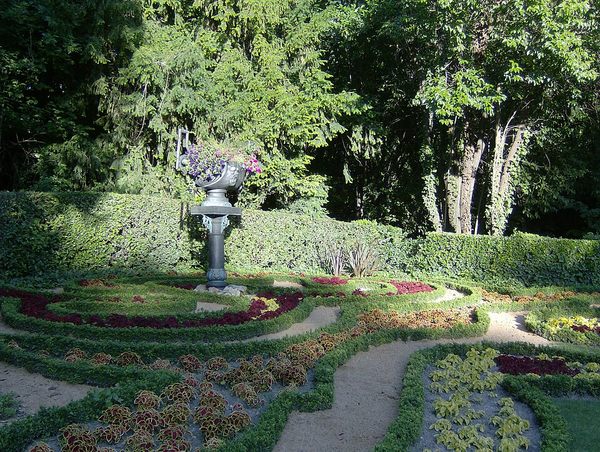
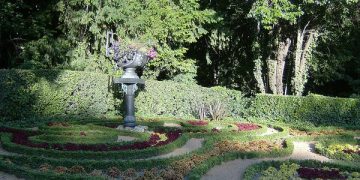
If you visit this small (about 10% of size of Central Park NY), triangular shaped park in the heart of the city of Valladolid the tranquil and nature-rich environment surrounded by major urban thoroughfares belies two important facts. Firstly the park used to be just outside the city, having now been surrounded by the urban sprawl and , secondly , in the 16th century, the park was both the site of the city’s gallows and the place where the Spanish Inquisition held a series of Autos de Fe in response to the development of the popularity of Lutheranism in the Valladolid area. It was possibly used earlier in response to the inquisition’s activity against Muslims and Jews. The Autos de Fe were essentially the public sentencing phase of a “trial” by the inquisition (where convictions were often obtained by torture). It involved public humiliation of the convicted and revealing to them their fate in front of the baying crowd. Normally those sentenced to death, usually by burning, would be executed at a different site by civil rather than church authorities but the calling of part of the site “el brasero” (the brazier) during the early 16th century and the known presence of the gallows may indicate that in Valladolid this was not the case.
In the anti-Lutheran campaigns of the later 16th century several English residents were targeted and later burned at the stake and it has been said that this was an act of revenge for the execution of the Catholic Mary Queen of Scots.
Campo translates from the Spanish as “field” and initially it was known as the Field of Truth, possibly in response to the use for Autos de Fe. It was Later called Campo de Marte or Field of Mars, possibly to do with the “warfare” involved in duels between “caballeros” which were held regularly in the field. The field was also used for military exercises and reviews with one recorded as early as 1394 when King Henry III held a general review of his troops on the site. The name Campo Grande became established in the mid 17th century by which time it had become established as a public open space for recreation. In the 17th century King Charles II approved a plan by the local authority to plant up the park with numerous trees and he favoured a plan presented by Francisco Antonio Valzanía, a neoclassical architect. Many mature elm trees were lost in an epidemic of Dutch Elm Disease in the 1960s but many trees remain in this tranquil area of artificial woodland interspersed by more formal garden sections.
A notable feature of the park is the diverse bird population, both wild and introduced. Within the park is an aviary which seems to be dominated by Canaries and there is a loft belonging to the Castilla Pigeon Club. There is a pheasant breeding area and peacocks are known to breed in the park along with loads of water birds. Also of note is the population of Red Squirrels. For anyone in the UK to see red squirrels in an urban setting is remarkable.
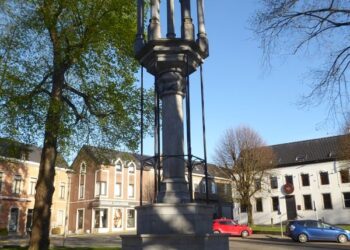
There is also a great collection of fountains and sculptural works in the park from many eras and in many artistic genres.

Like many U.S. airlines these days, Southwest's Rapid Rewards program uses dynamic award pricing to set redemption rates. Translation? The...

If you visit this small (about 10% of size of Central Park NY), triangular shaped park in the heart of...
Sovereign capital in travel has a coastline problem, and Albania’s Flamingo Revolution — more than three weeks of protests, the...
While retail investors are holding their breath as they watch XRP's psychological $1.00 threshold, higher timeframes point to an entirely different...

Discover Global News Panorama at news.mapworldnow.com — your universal gateway to comprehensive, international journalism. From politics and technology to culture and sports, we cover all news niches and all news categories from every corner of the world, all in one place.