- Latest
- Trending
Good morning! Today is Thursday, the 25th of June, 2026 and this is the Thursday Edition of GEORGE.
GEORGE brings Thursday’s news into focus with reporting, commentary, and dispatches for curious readers. Here are the stories, developments, and ideas worth carrying into the day.
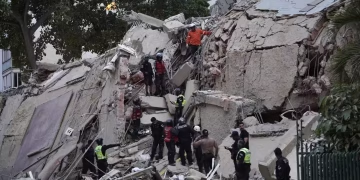
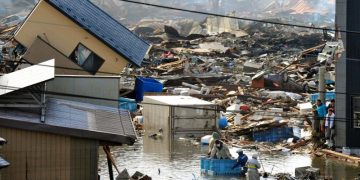
As George went to press, news of two severe earthquakes in Venezuela was coming out of that country’s capital, Caracas. Local media reported that buildings in the stricken area had collapsed and electric power had been knocked out, including in Caracas. The first quake registered magnitude 7.2 and the second 7.5 on the Richter scale. The epicenter was near San Felipe, a city of about 220,000 people in the state of Yaracuy, which is about 200 miles (320 km) west of Caracas. The stronger quake was the largest to hit the country since 1900.
Extreme weather across the globe continues to dominate headlines. Nowhere is it more serious than on the European Continent, where our @World News Roundup correspondent reports that the number of young people who drowned trying to seek relief from the heat in rivers and canals in France continues to rise along with the mercury, and in the British Isles, where England experienced its own peculiar form of irony in an extreme sense when a conference at the London School of Economics on extreme weather had to be cancelled… because of the “red” severity level warning the Met Office had issued – for only the second time.
GEORGE’s upgraded @The War Room feature now covers multiple battles and conflicts across the globe. Important dispatches there include the latest news from the Russo-Ukrainian War and the U.S.-Israel War with Iran. GEORGE’s@The War Room correspondent has the details.
The newspaper’s @The Sketch editorial cartoon columnist, noting the newspaper’s coverage of the problems with the Lincoln Memorial Reflecting Pool, came up with several easy-to-implement solutions to what he called “Reflecting Pool-Gate” that would be both far less expensive than the repairs it just underwent and far more entertaining for families visiting the nation’s capital.
In today’s @World News Roundup, in addition to the earthquakes and the heat wave, our correspondents report from Finland and the U.S. state of Florida.
Indeed, there is more exclusive reporting in today’s GEORGE – but don’t touch that dial. Scroll down for today’s editorial cartoon in @The Sketch, then continue with additional news, commentary, and stories readers will not find elsewhere.
GEORGE will return tomorrow with a new editorial cartoon and more original dispatches and reportage.
Until then, remain curious!

_________________________
VOLUME VI… № 1,747
@THE LEDE (above)
@THE SKETCH (above) Four Solutions to Reflecting-Pool-Gate
IN THIS ISSUE
@INTERMEZZO I 2009 BMW Z3 in Langenlois
@ON THE PITCH World Cup 2026 Coverage
@INTERMEZZO II 2011 BMW 335d at Lime Rock Park
@DIOCLES Warm Welcome from Americans During World Cup Boosts Global Image
@INTERMEZZO III 2009 BMW Z4 in Niederösterreich
@THE WAR ROOM
@INTERMEZZO IV Spices on display at Grand Central Terminal shops
@WORLD NEWS ROUNDUP
@INTERMEZZO V Starry Night
@BARTLEBY ON LANGUAGE What in the world is a Trionda?
ATCHES OF NOTE
@ABOUT GEORGE
____________________________________
 ____________________________________

2009 BMW Z4 in a vineyard in Langenlois
______________________________________
— Cristiano Ronaldo became on Tuesday the first man to score in six World Cups when he found the back of the net for Portugal against Uzbekistan. Mr. Ronaldo’s strike in the sixth minute was his ninth career World Cup goal. It was also his first since he converted a penalty kick against Ghana in Portugal’s 2022 opener. The goal came after the Portugal captain faced a torrent of criticism for his poor performance in Portugal’s opening 1-1 draw against Congo on 17 June.
— The Fédération Internationale de Football Association, or FIFA, the international, self-regulating body of association football and organizer of the 2026 World Cup, gave Paraguay’s Miguel Almirón a one-match ban for covering his mouth in a situation of confrontation. The ban means he will miss Paraguay’s final group-stage game against Australia next week. That match will determine whether or not Paraguay will progress to the knockout rounds.
— England stumbled to a 0-0 draw against Ghana in the team’s second match at this World Cup after wasting late chances at Boston Stadium. England performed well in its 4-2 win against Croatia in their opening match but Ghana’s defense was resolute and the only chance of the match came in the 86th minute when Nico O’Reilly’s header crashed against the crossbar before England captain Harry Kane missed a golden chance to secure the team’s place in the knockout stage.
______________________________________
 ______________________________________
— The United States became the second nation to reach the knockout stage of the 2026 World Cup, this on Friday, with a commanding 2-0 victory over Australia at Seattle Stadium. The win means that the team will follow fellow co-host Mexico into the Round of 32. The U.S. team made a lightning-quick start and took the lead when Cameron Burgess turned Folarin Balogun’s pass into his own net. Meanwhile, Alex Freeman’s 43rd-minute header – his first-ever World Cup goal –effectively put the game out of reach.
— Lionel Messi scored a brace against Austria, becoming the men’s all-time FIFA World Cup goalscoring leader and securing a 2-0 victory against Austria. The 2026 campaign is Mr. Messi’s sixth World Cup, making him the first men’s player in history to appear in six editions of the tournament.
____________________________________

2011 BMW 335d at Lime Rock Park
____________________________________

Citi Field, which replaced Shea Stadium as the home of the New York Mets, was modeled after the façade of Ebbets Field, the home of the Brookyn Dodgers (now the Los Angeles Dodgers)
The United States, thanks to the World Cup’s expanded format, is hosting the vast majority of the tournament’s matches and seating approximately 4.5 million football fans in its stadiums. While many of those in the stands are Americans, some ten million visitors have come from the rest of the globe either to sit alongside them, however reluctantly, or simply soak in the atmosphere at pubs or watch parties.
With so many foreigners from so many countries in the United States at one time, now is as good a time as any to see America through the eyes of a tourist, be he a kilted Scotsman or a group of Japanese football fans tidying up the stadium to leave it better than they found it.
How are the visitors are being welcomed? One need only look at social media post after social media post to see how Americans in the host cities and beyond are making ten million houseguests feel extremely welcome. And these visitors leave behind visions of angry and rambunctious politicians angering their allies as depicted in the headlines once they arrive on America’s porch.
“The front porch of your house is the first thing a visitor experiences before they ever step inside,” Darin White, founder of Samford University’s Sports Industry Program in Alabama and a former soccer coach, told the Japan Times. “Sports serves that same function for cities, states and countries. It is often the first meaningful, emotionally charged encounter someone has with a place they might otherwise never have thought much about.”
For the duration of the World Cup, and perhaps even beyond, some Americans have adopted the national teams of countries about which they know relatively little and which they may never visit. Meanwhile, other countries, including Iran and Haiti, have diaspora populations to boost them as well.
The United States is not “a distinctive culture of 24-hour retail, free soda refills, chicken wings dipped in ranch dressing, and a warm welcome from Americans,” as the Japan Times framed it, but even without free beverage refills and absent the distinctly American invention of ranch dressing, the secret sauce is really that warm welcome, which is as sincere and heartfelt as it comes.
___________________________________

2009 BMW Z4 in Niederösterreich, or Lower Austria
___________________________________
— Iran is making it a point to show the world that it can withstand varying viewpoints, including those of unveiled women, and tolerate a new kind of nationalism, one that incorporates those who once led protests against it. In a video made by the pro-government filmmaker, Hossein Shamaghdari, a young woman donning a pink top and acid-washed jeans tells Mr. Shamaghdari: “I was not a supporter of the Islamic Republic, nor the supreme leader.” In the video, she is surrounded by women draped in black from head to toe. The new message: Dissidents and loyalists can both play a part in the fight against foreign interlopers, as the government tries to present a friendlier, more inclusive face for the regime, even as it executes more perceived enemies of the state than at any time in recent memory.
— Oil prices continued to fall on Wednesday as the International Maritime Organization, a U.N. agency, led efforts to move hundreds of stranded ships out of the Persian Gulf, thus increasing the flow of crude oil through the Strait of Hormuz. Shipping traffic through the strait is on the rise, but it is still a fraction of what it was before 28 February.
— The price of Brent crude, the global benchmark for oil, fell 3.8% to $73.72 a barrel for September delivery, while the U.S. Energy Information Agency Gasoline and Diesel Fuel Update showed a decrease of $0.138 from the previous week and $0.232 from two weeks ago, but up $0.701 compared to the same time a year ago. The price of a gallon of gasoline averaged $5.07 across the United States, according to the EIA, for the week of 13 June, which means that gas prices have fallen $1.156 per gallon over the past two weeks.
— Israel said it would maintain its military presence in southern Lebanon. The two countries are negotiating potential acceptance of an American-backed plan under which Israeli forces would cede parts of the territory they control to Lebanon’s army. Separately, Iran has demanded that Israel end its campaign against Hizbullah as part of its tentative peace deal with America.
____________________________________
— A dramatic explosion that caused the lid of an oil tanker to fly into the sky during a Ukrainian aerial assault on Moscow was not caused by a Ukrainian drone. Verified video shows it was caused by a Russian air defense missile. Footage shows a Russian air defense missile traveling toward the fuel silo. The friendly-fire incident illustrates the difficulties that Russian air defenses are facing as Ukraine increases the scale of its drone attacks to break through a layered shield of systems designed to protect the Russian capital.
— Russian forces have been concentrating on the “fortress belt” cities of Sloviansk, Kramatorsk, Druzhkivka and Kostiantynivka, part of the roughly 20% of Donetsk that Ukraine still controls. Moscow’s troops have fought their way into Kostiantynivka, and Druzhkivka is a wasteland after extensive Russian bombing. Sloviansk and Kramatorsk remain Ukraine’s last real strongholds in Donetsk, although the two cities are not in imminent danger of falling. Донеччина, or the Donetsk Oblast or region, is a province in southeastern Ukraine that has been a heavily contested, active frontline in the ongoing Russo-Ukrainian War. Prior to the Russian invasion, it served as Ukraine’s most populous, densely populated, and heavily industrialized hub, renowned for its major coal mining and steel production
— Scores of targeted attacks against fuel trucks on supply routes to the Автономна Республіка Крим, or Autonomous Republic of Crimea, as part of what Kyiv calls a “logistics lockdown,” has caused gasoline shortages in the occupied territory. The region, internationally recognized as part of Ukraine, has been under Russian occupation since 2014.
____________________________________

1995 Mercedes-Benz S500 Sedan in the shadow of the Throgs Neck Bridge
______________________________________
As George went to press, news of two severe earthquakes in Venezuela was coming out of that country’s capital, Caracas. Local media reported that multiple buildings in the stricken area had collapsed and electric power had been knocked out. including in Caracas. The first quake registered magnitude 7.2 and the second 7.5 on the Richter scale. Paul Earle, a seismologist with the U.S. Geological Survey, called the earthquakes “devastating.” The agency described the quakes as a “severe seismic doublet sequence.” The epicenter of the two quakes was near San Felipe, a city of about 220,000 people in the state of Yaracuy, which is about 200 miles (320 km) west of Caracas. The stronger quake was the largest to hit the country since 1900, when the San Narciso earthquake occurred on 29 October with an estimated moment magnitude of 7.6 to 7.7 and a surface-wave magnitude of 7.7 to 8.4. It had a maximum Mercalli intensity of VIII to X, causing landslides and liquefaction events. Venezuela’s president, Delcy Rodríguez, declared a state of emergency. “For those who have unfortunately suffered the loss of a family member, we extend our immediate condolences,” she said in a televised address. She gave no numbers of deaths or injuries, figures which were largely unknown at press time, but with fears of a widespread disaster high, called on doctors and nurses to report to their jobs to care for the injured.
____________________________________
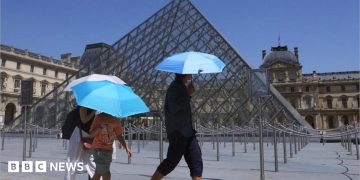
Multiple regions across the globe are concurrently experiencing severe and deadly weather phenomena, all driven by an intensifying El Niño. Almost in unison, above-normal temperatures are heavily affecting the Americas, Africa, and Asia, as well as causing unseasonal flooding in tropical zones. But it is Europe that is in the thick of it. An extreme heatwave has already caused dozens of deaths as daytime temperatures surpassed 40° C earlier this week. The record-breaking heat has resulted in school closures, slowed down trains, knocked out electricity for tens of thousands of households, and forced farmers to harvest grain at night. In Paris, la tour Eiffel, or the Eiffel Tower, was forced to close, and 68,000 households were left without electricity in France as the heatwave raised temperatures beyond 43° C. Across Europe, the high temperatures have also wiped out hundreds of thousands of chickens.
____________________________________
The number of people who have drowned during the last six days in France in rivers and canals while trying to escape the scorching heat wave that has gripped much of Europe is at least 40, and officials believe that figure could increase. Most of the victims were young people, some of them teenagers, who were swimming in unsupervised areas, the country’s prime minister said. During Monday’s historic European heatwave, the warmest regions exceeded 42° C (107.6° F), with southwestern France seeing the most severe spikes. Cazaux hit an intense 43.5° C (110.5° F), while Cognac reached 42.7° C (108.9° F). Meanwhile, parts of Spain and Portugal also experienced temperatures well into the 40° C range, with Andujar in Spain reporting 43.9° C (111° F).
____________________________________
On the morning of 24 June, as the Shaw Library at the London School of Economics was preparing to host a room full of people who would discuss the consequences of climate change as part of London Climate Action Week, Britain’s Met Office issued, for only the second time, a “red” warning, its highest severity alert. The red warning means that dangerous weather is imminent with a high risk of injury to life, widespread damage, and substantial disruption to travel, power, and infrastructure. The weather conditions existing when such a warning is issued are considered dangerous enough that serious illness or danger to life is likely, even among the fit and healthy. The organizers of the event opted to cancel the meeting, which carried this moniker: “Extreme heat: Improving governance and strengthening action.”
____________________________________
Italy’s Ministero della Salute, or Health Ministry, on Wednesday issued its maximum “rosso” or red heat alerts for an unheard-of 17 cities, including Rome, Milan, Florence, and Bologna. The extreme warning level indicates emergency conditions that threaten both vulnerable populations and healthy adults. The severe heatwave has already claimed several lives.
____________________________________
To understand the European heatwave that started on 18 June, George’s @Noah on Weather meteorologist requested that the following explanation be inserted into the World News Roundup:. A horseshoe of lower pressure – a so-called omega block – is sustaining an area of high pressure over the western part of the European continent for an extended period of time. The air near the surface in this high-pressure region came from the southeast, rather than off the Atlantic, and so started off as being fairly warm. High pressure above stopped it from losing its heat through convection, the process that produces clouds. A lack of clouds let the sun stoke things further and temperatures kept rising. Relief is not yet in sight: Ventusky, a global weather forecasting and meteorological data visualization platform developed by the Czech meteorological company InMeteo, shows that the mercury in some areas of southern Spain, near Sevilla, could hit 45° C (113° F) on 4 July.
____________________________________
The unemployment rate in Finland hit 12.7% in May, its highest since the year 2000. Year over year, the rate was 2.2 percentage points higher than for the same period in 2025. The 12.7% rate leaves the Nordic nation with the highest joblessness rate in the European Union. The Finnish economy relies heavily on exports, particularly of metals and petrochemicals, and has suffered from weak demand and disruptions relating to wars in Ukraine and Iran.
____________________________________
Five years ago on Wednesday, 24 June, the Champlain Towers South condominium building crumbled, killing 98 in Surfside, Florida. It was one of the deadliest structural failures in U.S. history. While new reports indicate that the collapse may have been weeks in the making, the 40-year-old, 12-story beachfront condo pancaked in a matter of seconds in the middle of the night, a sudden rush of concrete that crushed sleeping families. Many Florida developers viewed rebuilding on the site as too sensitive and stayed away from the now-empty lot. The incident led to a federal safety investigation, a $1 billion court settlement, and a flurry of new building safety laws.
____________________________________
A federal judge in Boston on Wednesday permanently blocked the Trump administration from enforcing an executive order signed last year that required proof of citizenship to register to vote and that mail-in ballots be received by Election Day. The judge ruled that Mr. Trump lacks the authority to oversee elections and rejected the administration’s unsupported claims of “widespread illegal voting, discrimination, fraud, and other forms of malfeasance and error.” A group of attorneys general last April had filed suit seeking to block the order. “While the Constitution vests the President with ‘executive Power’ and commands him to ‘take Care that the Laws be faithfully executed,’ it does not grant the President any specific powers over elections,” Judge Casper said in her ruling.
____________________________________
Mr. Trump is also pressuring the U.S. Senate to pass a bill that requires proof of citizenship to register to vote and that mail-in ballots be received by Election Day, similar requirements to those included in his blocked executive order. The president also wants Congress to require voters to bring photo identification to polling locations in order to cast a ballot. On Wednesday, he canceled plans to sign into law the 21st Century ROAD to Housing Act – a major bipartisan legislative package aimed at lowering housing costs and increasing home construction – until lawmakers agree to act on his controversial voting requirements legislation, the so-called SAVE America Act.
____________________________________

Starry night in New York City
____________________________________
Astute readers of GEORGE may have noticed references in the @On the Pitch column covering the 2026 World Cup to an Trionda.
Trionda is a portmanteau created by sportswear manufacturer Adidas, which also created a product called the Trionda as Trionda is the name of the company’s high-tech connected football that was introduced last fall, is the official match ball of the 2026 World Cup.
The etymology of the name “Trionda” combines the prefix “tri,” a numerical prefix that stems from Proto-Germanic or Proto-European foots and functions as a combining form to denote “three,” “three times,? or “every three” in almost all languages of the Indo-European family including English, Spanish, French, German, and Russian, with the Spanish word “onda,” which means “wave,” hence “Triple Wave” or “Three Wave.”
Tri has also been heavily borrowed into many non-Indo-European languages worldwide through international scientific and numerical terminology.
Common words in English that use “tri” include triangle, tricycle, trilogy, triathlon, tripod, and trio, among others. In anatomy, the triceps is a muscle at the back of the upper arm with three points of attachment, and the tricuspid valve in the heart has three flaps. Common words in German that use the “tri” prefix versus “drei” – a dreieck is a triangle, for example – include Trilogie for trilogy, Trigonometrie for trigonometry, Triangel for a triangle instrument, Triathlet for triathlete, and Triathlon.
The Adidas Trionda, which is the official match ball of this tournament, is a fully “smart” ball — Adidas uses the term “connected” — which means the ball can transmit a record amount of near instantaneous data, assist in making offside decisions in a way never seen before, and offer more statistical insights than any team or fan could reasonably use.
The Trionda’s membrane is made of four thermally bonded polyurethane panels, the lowest number for any FIFA World Cup match ball so far, according to FIFA records. As with the Al Rihla in 2022, the Trionda’s surface is textured with debossed macro and micro patterns – specifically on the ball’s icons – meant to improve the ball’s flight stability, swerve, and grip in wet conditions.
Meanwhile, the ball’s color scheme of red, green, and blue and its symbols are inspired by the iconography of the three host nations of the 2026 World Cup, namely red with a maple leaf for Canada, green with a golden eagle’s head for Mexico, and blue with a five-pointed star for the United States.
The Trionda is the third World Cup ball with smart or connected technology, which goes back to the Telstar 18 in the 2018 match in Russia. This includes a side-mounted inertial measurement unit, or IMU, chip inside one of the four panels. This sensor tracks the ball’s movement 500 times per second and provides real-time data to referees including the video assistant referee, helping to quickly judge offsides, touches, and handballs. This technology was developed with FIFA and Kinexon based in Munich.
There is one thing that the Trionda requires, which other footballs do not: It needs to be charged for some 2.5 hours before a match. And copy editors will need to beware as it is quite easy, as your humble correspondent found out, to type “Triconda” – which would be a type of snake that doesn’t really exist – versus Trionda, so much so that – after it had accidentally been added by mistake (and there is no finger-pointing here) to GEORGE’s The Zoo content management system.
____________________________________
A study that found that the SARS-CoV-2 vaccine reduced the risk of emergency department visits and hospitalizations among healthy adults by about half last winter and which had been blocked by Jay Bhattacharya, the Center for Disease Control and Prevention‘s interim director from publication last March in the CDC’s Morbidity and Mortality Weekly Report, has been published on Tuesday in JAMA Network Open, a leading peer-reviewed medical journal. The findings were consistent with what researchers have found in past years, namely that the vaccine helped reduce the risk of severe illness in adults even after accounting for immunity from prior vaccination or infection. Dr. Bhattacharya had had concerns about the methods used to calculate vaccine effectiveness, a Health and Human Services spokesman said at the time. Michelle Barron, one of the study’s authors and senior medical director of infection prevention and control for UCHealth, a nonprofit health system in Colorado, alleged that the paper was withheld because it conflicted with the administration’s vaccine agenda. Health Secretary Robert J. Kennedy Jr. has been an outspoken critic of covid shots, once referring to them as the “deadliest vaccine ever made.” To complete the study, researchers analyzed data from a CDC-funded surveillance network to compare data on adults who sought medical care for covid-like symptoms and compared outcomes between those who received the updated 2025-26 vaccine and those who had not, known as test negative design, has limitations but they are well understood. “This is not a controversial study design – this is [the] same design that has been churning out vaccine results for a long time,” Natalie Dean, associate professor of biostatistics and epidemiology at Emory University’s Rollins School of Public Health, told the Washington Post.
______________________________________
The driver of a Tesla Model 3 using Autopilot crashed into a house in Harris County, Texas, Friday night, killing a woman who lived there. The driver told investigators he was using the vehicle’s automated-driver system when it left the roadway and instigated the crash. The driver, Michael Butler, was in the vehicle at about 8 p.m. local time and operating the car “with an automated driving assistance system,” the Harris County Sheriff’s Office said in a statement on Saturday. The crash happened in Katy, Texas, about 30 miles west of Houston in Harris County. Mr. Butler “failed to drive in a single lane, left the roadway and struck the residence” as a result, authorities said. His vehicle “entered through the brick residence at a high rate of speed,” the sheriff’s office said.
_____________________________________
George delivers news for curious thinkers in a world of shortened attention spans.
Decades of research on how readers consume information when faced with Information Overload – led by George co-founder Jonathan Spira, one of the foremost authorities on the subject – ensures that each article gets straight to the point with no fluff and no bias.
George presents important news and events of the day clearly and concisely in a format better suited to the modern reader’s limited time and focus, without forsaking the founders’ traditional commitment to fact-driven news, commentary, and dispatches – all prepared by curious thinkers, for curious thinkers.
________________________________________________
Jonathan Spira, Alexander Khusid, Tim Perry, Christian Stampfer, Kurt Stolz, Anna Breuer, and Paul Riegler contributed to this issue of George.
The mark “George,” the tagline “A daily newspaper…,” and all of the newspaper’s content, images, photographs, and associated material are subject to copyright law.
Copyright © 2011-2026 Accura Media Group LLC

The Maharashtra Food and Drug Administration (FDA) on Wednesday issued a comprehensive order on food safety which mandated, among other...

Rome/London – The Food and Agriculture Organization of the United Nations (FAO) today announced a new investment from Norway to...
When you eat out as often as our food writers do — enduring the reservation apps, cramming into every buzzy...
In our May/June 2026 issue, for Imbibe‘s 20th anniversary, writer Susannah Skiver Barton reported on the radical reversal of fortunes...

Discover Global News Panorama at news.mapworldnow.com — your universal gateway to comprehensive, international journalism. From politics and technology to culture and sports, we cover all news niches and all news categories from every corner of the world, all in one place.