- Latest
- Trending

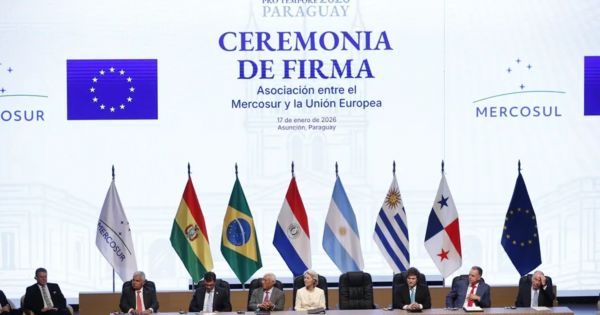
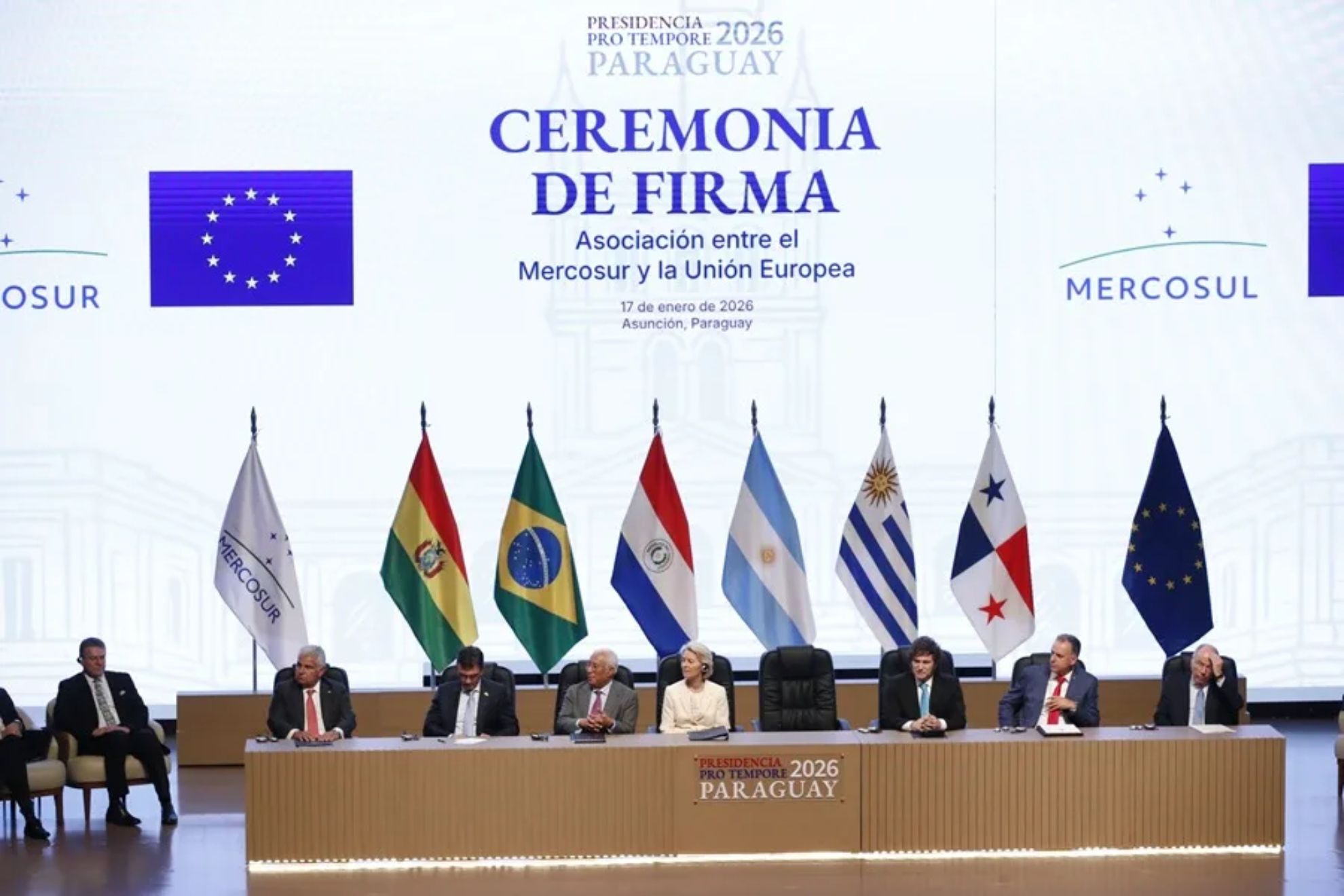
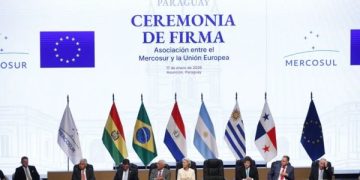
The internal distribution of export quotas under the trade agreement between Mercosur and the European Union will dominate much of the debate at the bloc’s summit of heads of state, to be held on June 30 in Asunción, where Paraguay will hand over the six-month presidency to Uruguay. The meeting coincides with the 35th anniversary of the Treaty of Asunción, the bloc’s founding charter.
The agreement’s commercial chapter entered provisionally into force on May 1, after more than 25 years of negotiations, but the founding members —Argentina, Brazil, Paraguay and Uruguay— have yet to agree on what percentage of the preferential quotas granted by Brussels corresponds to each. The most sensitive issue is the beef quota, though the dispute also covers products such as poultry, sugar, honey and rice.
The positions differ according to each country’s economic asymmetries. Uruguay and Argentina propose distributing the quotas according to the average of what each partner exports to the EU; Paraguay proposes dividing them into four equal parts and claims 25% of each quota, while Brazil advocates a distribution based on each country’s share of world trade. Paraguay’s deputy trade minister, Alberto Sborovsky, held that his country needs 25% of the quotas to prevent the law of the jungle from prevailing, referring to the current first come, first served system. In practice, that logic is already at work: Argentina exhausted the preferential quotas for honey, eggs and rice within a few weeks, and Brazil sharply increased its poultry shipments to Europe in May.
According to meat-industry sources, Argentina, Brazil and Uruguay are said to have reached a preliminary agreement to divide the beef quota —which will reach 99,000 tons after a five-year phase-in period— though the understanding does not yet have binding legal form and must pass through the bloc’s bodies. Paraguay’s absence from that preliminary deal could generate tensions during the summit.
Uruguay’s government, which will hold the pro tempore presidency in the second half of the year, has set as a priority closing the distribution before the end of September. Foreign Minister Mario Lubetkin has proposed a transitional agreement for the rest of 2026 and a definitive distribution over the longer term, set out in a binding legal instrument. The summit’s agenda also includes the budget of the structural convergence fund (FOCEM), progress on the free-trade agreements with Canada and Japan, the bloc’s stance on the political crisis in Bolivia and possible enlargement. The meeting will be attended, alongside the full members, by the presidents of Chile, Panama and Ecuador, states associated with the bloc.

Scotland's Laura Muir will run the 5,000m at the Commonwealth Games in Glasgow as she aims to be "as strong...

Former world champion Lizzie Deignan has returned to Great Britain's cycling team in a sporting director role which "will play...
For the first time since 1973, the New York Knicks are NBA champions.They defeated the San Antonio Spurs in five...
World Cup fans attend the FIFA’s Fan Fest, a sixteen day festival in Atlanta. CNN’s Rafael Romo talks to attendees....
Discover Global News Panorama at news.mapworldnow.com — your universal gateway to comprehensive, international journalism. From politics and technology to culture and sports, we cover all news niches and all news categories from every corner of the world, all in one place.