- Latest
- Trending



The first half of 2026 has not been kind to fashion retail: Claire’s, Russell & Bromley, LK Bennett, and The Original Factory Shop went into administration in January, followed by Quiz in February and Radley and BrandAlley in May.
These shuttered businesses have resulted in 3,618 job losses (including 1,180 at The Original Factory Shop and 1,335 at Claire’s) and a further 300 at risk – up from 1,567 redundancies since the start of 2026, when Drapers last took the temperature of the industry in February.
The collapses have left almost 400 empty units on high streets across the UK: 154 Claire’s, 137 Original Factory Shops, 40 Quiz units, 23 Russell & Bromleys, 21 Radleys and LK Bennett’s nine stores and 13 concessions.
The sector is grappling with structural change and economic headwinds. Retailers are contending with squeezed margins, as well as rising operating and employment costs. They tell Drapers that those that have succumbed this year had not evolved and adapted to shifting market and consumer trends, and had lost brand identity amid challenging market conditions.
“I can’t remember an easy retail year,” says one department store CEO. “The [administrations] that are really sad are institutional names such as Russell & Bromley, Radley and even Claire’s, which have been around for decades.”
“This is the pressure on fashion retail finally showing through,” adds Harvir Dhillon, economist at the British Retail Consortium (BRC).
“Sales volumes have held up, but sales values haven’t. Heavy discounting, high costs and cautious consumers mean many businesses are selling more without making money. For brands already stretched, that has tipped them over.”
Success in fashion retail is a balancing act between keeping a business stable while providing excitement for consumers, as the managing director of one footwear retailer tells Drapers: “There’s always room for the next new thing, but companies have got to be careful about the money they’re using to get the turnover they’ve got. With everything added together, it’s very difficult to get it right.

Keir Starmer resigned as prime minister on 22 June
“Cash is king and it’s always important to have cash to pay outgoings. You can have a business that makes a loss but has enough money to keep going because its directors have a duty of care to make sure creditors get paid.”
In her 2025 Autumn Budget, chancellor Rachel Reeves increased employers’ National Insurance from 13.8% to 15%, and the National Living Wage by 45p/hour for 16-to-17-year-olds, 85p for 18-to-20-year-olds and 50p for those aged over 21. On top of new business rates multipliers, this has added pressure to the bottom lines of many retail businesses this year.
“When you set a store out, you assume rents and wages, but some of those operational costs have grown and have compounded in staffng,” says the footwear MD.
“When your costs are going up, you can’t cut your way to success,” adds the CEO of one menswear retailer. “Retail businesses are very expensive businesses to run. The government keeps pushing cost on to business and you can’t keep increasing your overheads. Businesses aren’t banks and therefore the inevitable happens. Unless you’re driving your business forward, the costs will end up strangling you.”
As such, retailers must ensure they are adapting to keep their heads above water. “Competition is really important and certain people are getting stronger. There are always some losing and some winning,” says Superdry co-founder and CEO Julian Dunkerton. “Very often it is a certain business model that is losing and people aren’t adapting to change.
“The industry doesn’t get any smaller. There are still the same amount of clothes and bags being bought – but it is about how they are being sold, so you have to adapt.”
Of the fashion businesses that have recently entered administration, some have been acquired by private equity – Radley and LK Bennett were bought by US firm Gordon Brothers – while others have been taken over by larger rivals, such as Next’s purchase of Russell & Bromley.
“Private equity has tried to take over an old-fashioned trade market and revive it. But the definition of madness is trying to do the same thing and get a different result,” argues the department store CEO.
Next has acquired the intellectual property for Russell & Bromley. Last July it bought maternity brand Seraphine, which went into administration earlier in the year. Meanwhile, Frasers Group continues to buy up smaller rivals – most recently targeting Hugo Boss.
“With the big boys buying up everything, some things will win and some things will fail,” says the department store CEO. “But you can’t just pick up everything that goes into administration – you’ve got to make sure it adds value.”.
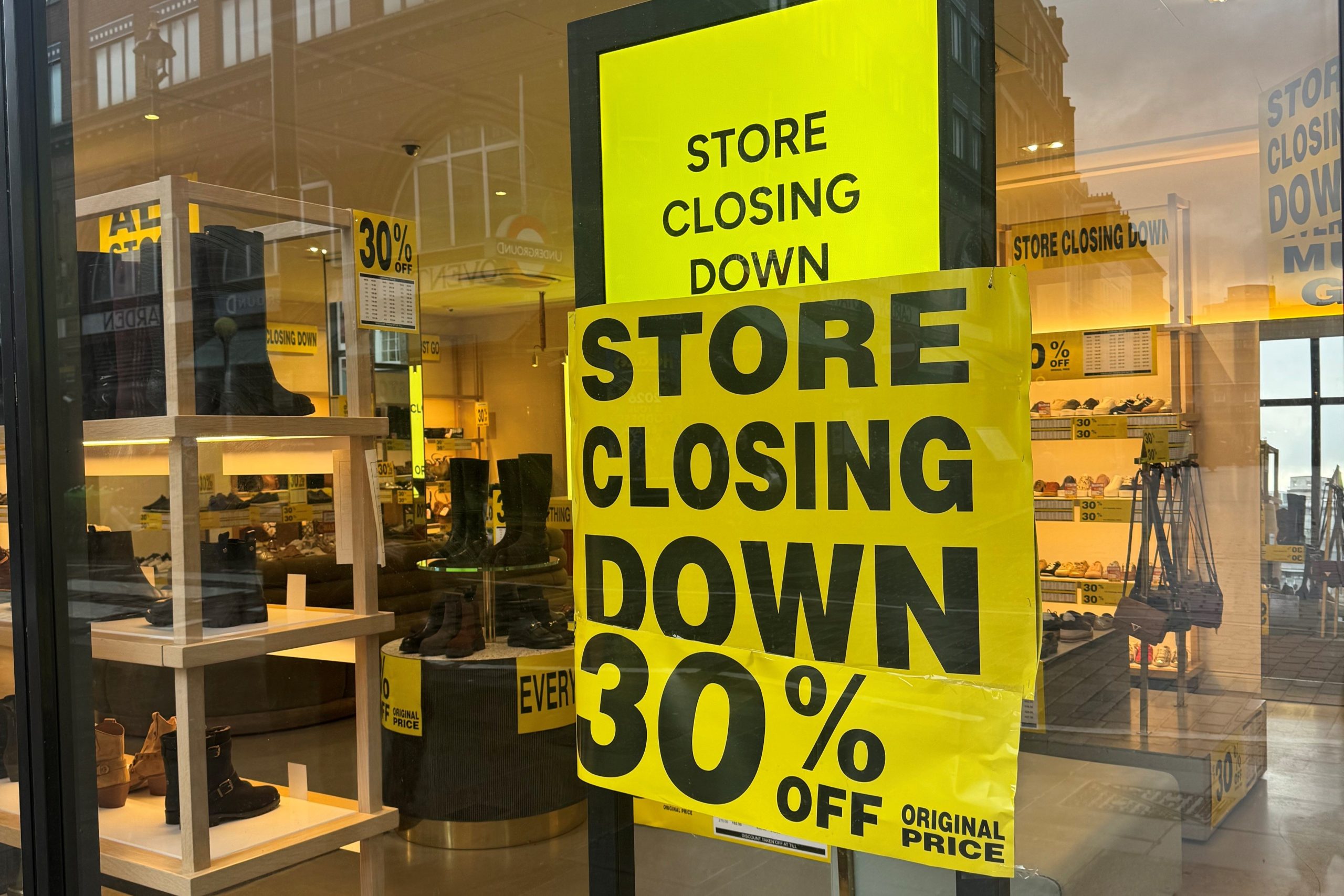
Russell & Bromley’s Covent Garden store
“I don’t know if it’s a good or a bad thing,” says the menswear CEO. “There’s brand equity with these businesses, and if someone else can develop it and the customers like it, then ultimately they will vote with their wallets.”
Looking ahead, as brands shutter and fashion loses space on the high street to sectors including food and beverage, how fashion businesses remain financially afloat increasingly depends on imagination and raison d’être.
“You’ve got to have a reason to be,” says the department store CEO. “Some of these brands have watched themselves get old.”
The menswear CEO agrees: “When I think about those businesses, a lot of them had been struggling for a long time. Unless brands reinvent themselves and are relevant then what’s their reason to exist?”
Retail analyst Richard Hyman believes administrations are likely to continue because of an oversupplied market and lacklustre demand: “In fashion when demand softens, retailers and manufacturers become more risk averse, and fashion becomes less innovative.”
Sarah Johnson, founder and director of merchandising training initiative Flourish Retail, and former head of China retail at Asos, says: “Sometimes brands can lose their way a little bit. They sort of lose that focus on the customer – who they are, what they want, what problem you’re solving with your product – and it just becomes another generic brand.”
To stem the flow of administrations and empty units, retailers must convince consumers why their brand deserves a place in increasingly crowded wardrobes and shopping baskets. Meanwhile, political and economic uncertainty looks set to continue, so fashion retail can expect a choppy few months ahead of the all-important peak trading season.
“Fashion is mercurial,” says the footwear managing director. “You’re never going to get the bumper profits of 10 to 20 years ago but there’s still a place for retail.”

Amazon Prime Day hits different in 2026, even if it is the last day of the week-long event. Prime Day...

Let me pick up where I left off in a previous column. On sabbatical in China, I was reeling from...
Euphoria breakout star Chloe Cherry has announced she is releasing her debut book, a raw and fearless memoir detailing her...
The college sports world is mourning the death of Kenny Klein, the legendary University of Louisville athletic communications director, who...

Discover Global News Panorama at news.mapworldnow.com — your universal gateway to comprehensive, international journalism. From politics and technology to culture and sports, we cover all news niches and all news categories from every corner of the world, all in one place.