- Latest
- Trending

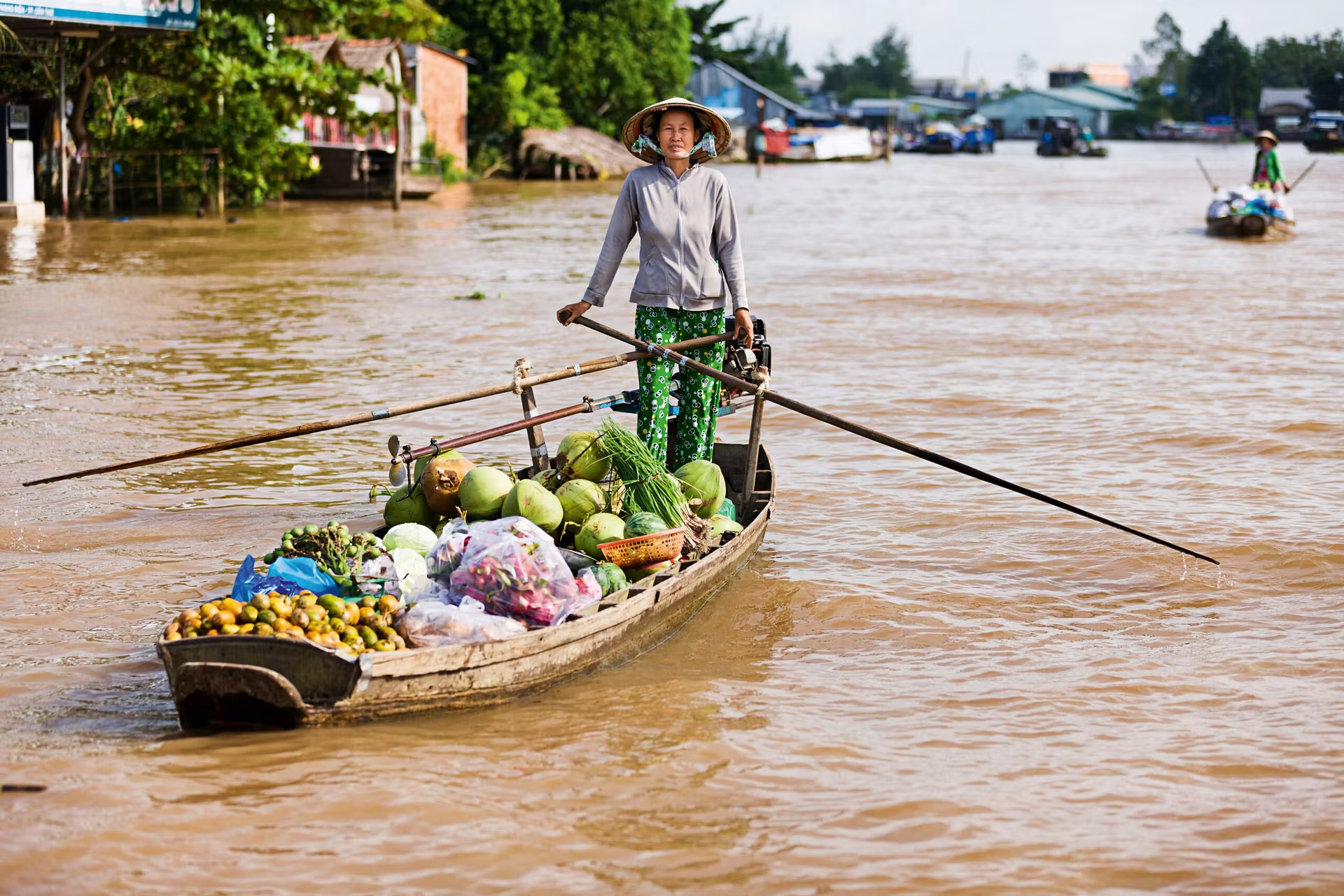
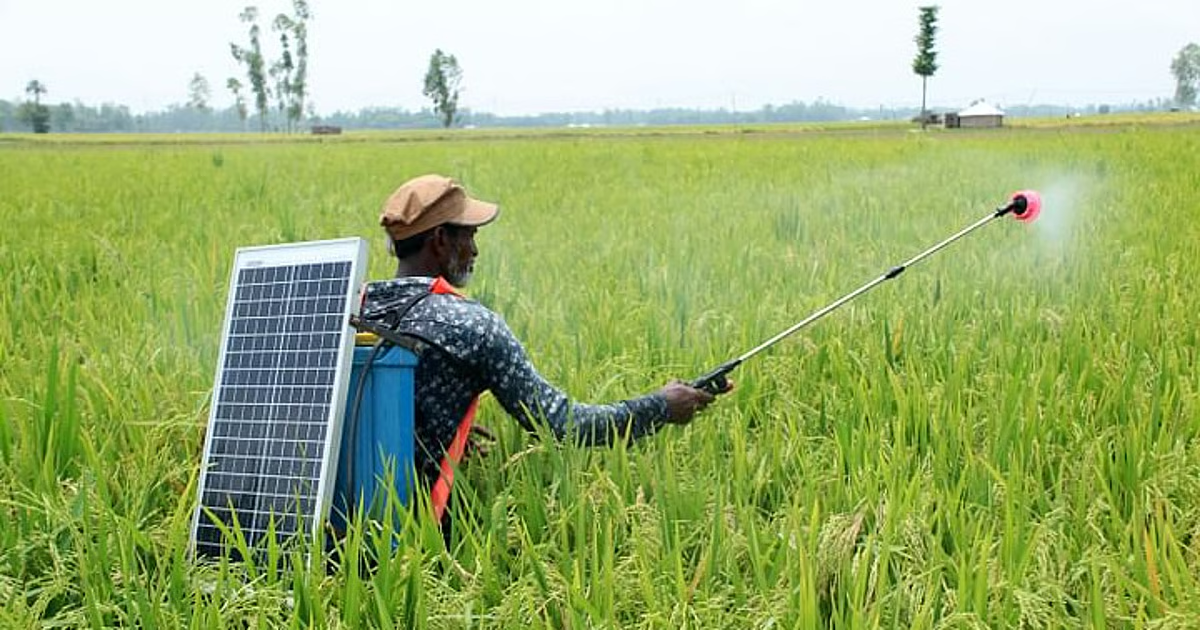
A new study covering 121 countries shows that improving access to safe drinking water is critical to tackling food insecurity in both low- and high-income countries.
A new global study has found that people without access to clean drinking water are significantly more likely to report lacking food and experiencing threats to food safety, underscoring the urgent need for coordinated global action to address these issues together.
Public health experts warn that climate change, population growth and increasing pressure on water resources could intensify these risks in the coming decades. Drought, extreme weather and declining freshwater supplies may make both water insecurity and food insecurity more common, particularly in low-resource communities.
The study was published in Nature Food by a team of researchers from the University of Southern California (USC) and the International Water Management Institute (IWMI) with expertise in water, food and public policy. They analyzed survey data from the Lloyd’s Register Foundation World Risk Poll, which included 124,003 respondents from 121 countries across all country-income levels.
The data revealed that, around the world, including in high-income countries, about 10% of respondents lacked clean drinking water, food or both. Both low-income countries, especially in eastern Africa and high-income countries such as northern America, showed compounded effects of lacking clean drinking water and food safety.
“Even if you live in a wealthy country, if you lack access to clean drinking water, you are far more likely to lack access to food,” said Wändi Bruine de Bruin, lead author of the study. Bruine de Bruin is Provost Professor of Public Policy, Psychology and Behavioral Science at the USC Price School of Public Policy, and Director, Behavioral Science and Policy Initiative, at the USC Schaeffer Institute for Public Policy & Government Service.
Researchers say the results demonstrate why governments, humanitarian organizations, and public health leaders should address water and food insecurity together rather than as separate issues.
“Water insecurity, food insecurity and food safety are too often siloed as distinct challenges — and mistakenly presumed to be burdens borne only by low- and middle-income nations,” said Rachael McDonnell, Deputy Director General at IWMI and one of the study’s co-authors. “Addressing this interconnected crisis demands that global, national, and local institutions transcend the structural and political barriers that have long fragmented coordinated action across the water-food nexus,” she added.
The researchers suggest several reasons why people who lack clean drinking water also experience problems with accessing safe and sufficient food. These challenges may stem from broader environmental factors such as poor infrastructure, climate change, poverty, homelessness and war. In addition, without clean drinking water, preparing food safely can be difficult or even impossible. When people must spend more time and money getting food, they often have fewer resources left to secure clean water.
The study calls for expanded investments in clean water infrastructure, sanitation systems and community-based public health programs, particularly in vulnerable and underserved regions. Researchers also encouraged policymakers to strengthen collaboration across water, food and other sectors to better address overlapping challenges including in high-income countries. This requires breaking down long-standing barriers that continue to separate global, national and local institutions working on water and food issues. It also means recognizing that water insecurity, food insecurity and food safety risks often occur together and should be addressed collectively when measuring these challenges, when identifying community needs, and designing and assessing interventions.
The findings add to a growing body of evidence showing that access to clean drinking water is fundamental not only for health and sanitation but for nutrition, food safety and economic stability.
Researchers hope the study will encourage policymakers and international organizations to prioritize comprehensive strategies that protect both water and food systems.
“Access to clean drinking water is a basic human necessity,” the study concluded. “Ensuring safe water access is critical to improving food security, reducing health risks, and supporting healthier communities worldwide.”

Agave plants grow wild in India and new distillers are using them to create a spirits industry. Source link

Summary Federal Reserve Chair Kevin Warsh wants the central bank to rely on alternative inflation measures ahead of his first...
Buying a home is a major commitment and many factors determine what a mortgage lender is willing to offer you....
Citizens maintains Hinge Health stock rating on customer conference Source link
Discover Global News Panorama at news.mapworldnow.com — your universal gateway to comprehensive, international journalism. From politics and technology to culture and sports, we cover all news niches and all news categories from every corner of the world, all in one place.