- Latest
- Trending

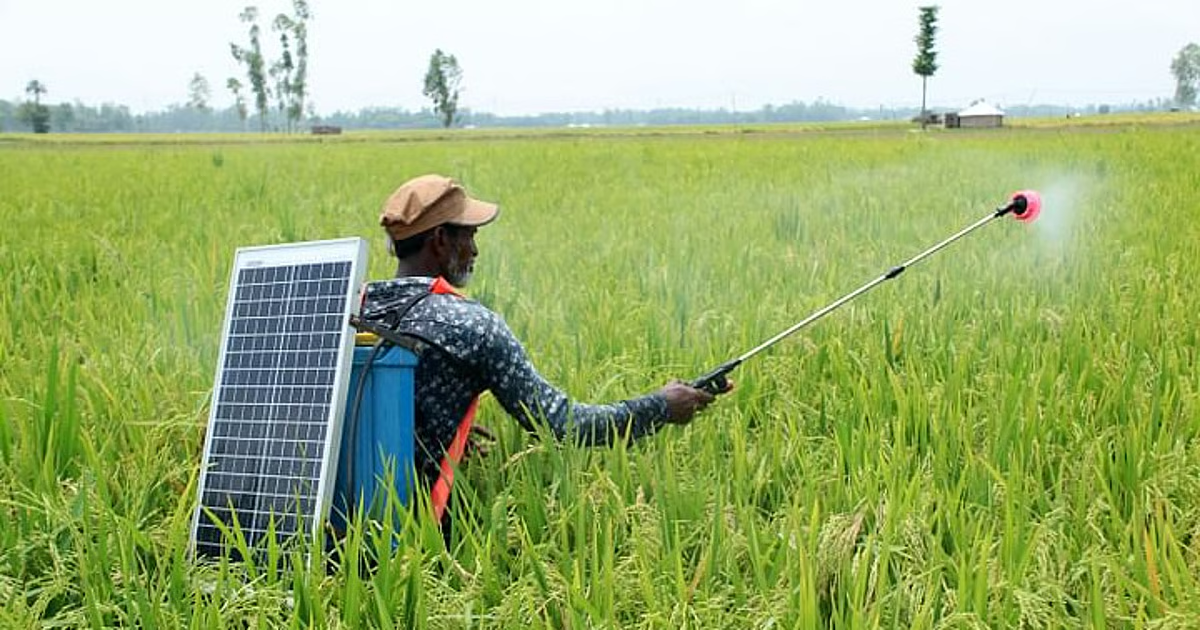
Irrigation is the largest energy-consuming activity in Bangladesh’s agricultural sector. Whether for boro rice, vegetables, maize, or other dry-season crops, irrigation is essential during the dry months. Most of this irrigation still depends on diesel and electricity.
According to data from the Sustainable and Renewable Energy Development Authority (SREDA), under the Ministry of Power, Energy and Mineral Resources, Bangladesh used 1.58 million irrigation machines during fiscal year 2018–19. Of these, 338,847 were electric pumps, while 1.24 million were diesel-powered. Together they irrigated more than 5.3 million hectares of farmland.
In other words, nearly 80 per cent of the country’s irrigation equipment remains diesel-dependent.
The economic cost of that dependence is substantial. SREDA estimates that a typical diesel irrigation pump consumes around 1,200 liters of fuel annually. Altogether, the irrigation sector uses about 1.49 billion liters of diesel each year, equivalent to approximately 1.25 million tonnes. Importing that fuel costs around Tk 45.78 billion annually.
Farmers bear these costs directly. When global oil prices rise, irrigation costs increase, production expenses climb, and food prices eventually follow. Renewable energy in agriculture is therefore not only an environmental issue but also a matter of food security and economic stability.
According to BADC, Bangladesh currently has 10,35,639 diesel-powered shallow tube wells, 737 deep tube wells, and 184,375 low-lift pumps.
During the 2025–26 fiscal year, operating more than 1.22 million irrigation machines required approximately 769,000 tonnes of diesel.

Your support helps us to tell the storyFrom reproductive rights to climate change to Big Tech, The Independent is on...

Three men from the United Kingdom who were extradited to Canada last year to face charges after a deadly confrontation...
It has been three days since Californians cast their primary election votes, but the state’s marquee races are still in...
The US vice-president wrote the "only response is righteous anger" when referring to Henry Nowak's death on X. Source link
Discover Global News Panorama at news.mapworldnow.com — your universal gateway to comprehensive, international journalism. From politics and technology to culture and sports, we cover all news niches and all news categories from every corner of the world, all in one place.