- Latest
- Trending
First convened in 2009, The Global Fashion Summit brings together brands, manufacturers, innovators and decision-makers to try to solve some of the multitude of problems across the fashion ecosystem. It has set itself no easy task. Despite some meaningful progress over the past 15 years, the sector remains beset with issues.
The summit convened some of the most influential voices shaping the future of fashion, sustainability and human rights, bringing together industry leaders, activists, scientists and storytellers to confront the sector’s most urgent challenges. Speakers included Pamela Anderson, actress and Pandora Global Ambassador; Grace Forrest, Founder and CEO of Walk Free; National Geographic photographer, filmmaker and Explorer at Large Ami Vitale; representatives from luxury conglomerates LVMH (home to brands including Louis Vuitton, Dior, Fendi and Givenchy) and Kering Group, whose portfolio includes Gucci, Saint Laurent, Balenciaga and Bottega Veneta, alongside from Chanel; H&M Group and eBay. Attending the final celebration was Her Majesty Queen Mary of Denmark, official patron of Global Fashion Agenda. Queen Mary is well-known for her championing of sustainable fashion, regularly re-wearing wardrobe pieces and upcycling high-street conscious collections.
This year’s theme was ‘Building Resilient Futures’, with an Innovation Forum showcasing sustainable startups, action-oriented networking, and a range of panel discussions focusing on strengthening the fashion industry’s agility and long-term viability. Sessions covered topics such as: Fashion Climate and Women’s Health; Next Gen and Low Impact Materials; The Pay Equity Playbook for Gender Equality; Landscape Collaboration: Regenerating Natural Capital and Building Breakthroughs for Human Rights Due Diligence. And some discussions made for sobering listening.
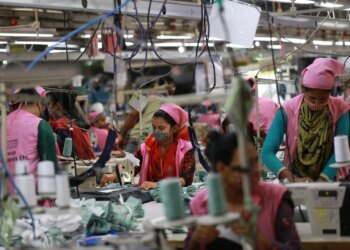
During one panel, Dr Harshita Umesh, a doctor at a hospital in India, described in stark terms the daily realities faced by many garment workers. She recounted the case of a worker who arrived at hospital with a severely infected finger injury sustained at work. Unable to afford time away from the factory, the worker discharged herself before receiving adequate treatment, only to return, days later, critically ill and on a stretcher.
Dr Umesh also spoke of workers trapped in deeply exploitative conditions, risking violence in washrooms or being penalised for taking water breaks. She spoke to one worker who said, “I do not enjoy this work. I do it because I want my daughter to have an education. I don’t want her to suffer like me”. Another described the working conditions in the factory: “It feels like we’re trapped inside an oven. The heat doesn’t leave, it just builds up”. Her stories were a confronting reminder of the human cost that still underpins parts of the fashion supply chain.
Anti-slavery organisation Walk Free estimates that 50 million people are currently trapped in modern slavery, showing an increase of 10 million in the last five years. In Australia, it is estimated that 90% of all imported apparel is tainted by forced labour. Walk Free founder Grace Forrest called on the Summit to invite garment workers directly to these conversations, saying, “the most resilient systems are the ones where workers and survivors shape solutions…knowledge has to flow up from workers from the front of the supply chains, not just down from boardrooms or sustainability teams in Europe.”
“The most resilient systems are the ones where workers and survivors shape solutions…knowledge has to flow up from workers from the front of the supply chains, not just down from boardrooms or sustainability teams.”




I am not a Tomb Raider expert - my memories go about as far back as playing the bulk of...

We are getting grimly used to seeing game developers attempt to justify their use of generative AI in production, usually...
Only the key creatives behind Forza Horizon currently have the sway to start up a brand new studio and secure...
When Microsoft revealed that Halo: Campaign Evolved last year, I balked at its claim that this would be "a faithful...

Discover Global News Panorama at news.mapworldnow.com — your universal gateway to comprehensive, international journalism. From politics and technology to culture and sports, we cover all news niches and all news categories from every corner of the world, all in one place.