- Latest
- Trending

Politics derives from the Greek word “politika,” which means “affairs of the city.” Today, it refers to the activities associated with governing a country or area, especially the debate between groups with power. Politics plays a crucial role in regulating human behavior, maintaining order, and providing a basis for decision making. It is indeed an integral part of modern society and has a complex nature.
Politics primarily revolves around making decisions for a group, usually a nation or state’s residents. It includes administering and implementing policies, managing state affairs, defending the country, and maintaining good relations with other countries. It’s about negotiating and reconciling diverse values, goals, interests, and potentially making uneasy compromises. It’s a delicate balancing act, and the stakes couldn’t be more significant; after all, the quality of governance dramatically influences the quality of life among citizens.
The political landscape isn’t just about governments. Peaceful interactions, concessions, bargaining, and cooperation among individuals, communities, institutions, and countries can be viewed as political actions. It also encompasses the struggle for power, in which some try to influence the actions of others or control resource distribution. Politics is therefore an inescapable part of societal interaction.
Politics operates at a variety of levels, from local institutions to global structures, and manifests in numerous ways. The following sections will explore these.
An essential aspect of politics is government structures – the organization through which a society manages its political, economic, and social matters. Structures vary significantly worldwide but usually fall into two categories: democratic or autocratic.

In a democratic system, citizens participate in political decision-making, either directly or through chosen representatives. More than a mere system, democracy is a value system that demands citizens’ equality and liberty. The state must respect and protect these rights. Two primary types of democracies exist: direct and representative.
Contrastingly, autocracy vests all power in one individual or group. The people have little or no participation in decision-making. Autocracies include dictatorships, where one person seizes power, and monarchies, where rule is hereditary.
Diverse philosophical views and ideologies shape politics. These ideologies provide a lens through which people perceive and understand the political world and what they believe a perfect world might look like. Key ideologies include liberalism, conservatism, socialism, and nationalism, and these shape parties’ platforms in democratic systems.
The rule of law is another critical facet of political life. This concept anticipates equality before the law for all citizens and protection against arbitrary use of authority. Institutions accountable to the law, and not above it, are a cornerstone of a functional political system and civil society.
Politics primarily regulates the power dynamics in a society. It shapes policies and laws determining decision-making processes, rights and freedoms, economic distribution, social equality, etc. Politics also helps resolve conflicts without resorting to severe coercion or violence – this feat alone highlights its inherent value.
Politics also affects individuals on a personal level. Political decisions impact multiple dimensions of individual life, including economic status, personal freedom, education, healthcare, and social equity. Hence it is of utmost importance for individuals to understand politics and participate in it, not least by voting.
Government refers to the formal institutions and procedures through which a territory and its people are ruled, while politics refers to processes by which power and resources are distributed and managed.
Given that politics provides a structure for decision making, public accountability, resource allocation, and conflict resolution, it would be virtually impossible to live in a societal group without some form of politics.
Political parties aim to control the government by winning elections. They set out their philosophies and agendas in platforms and strive to influence public policy and law.
Yes, politics is a crucial tool for maintaining law and order in society, resolving disputes, and allocating resources. It provides a platform for expressing differing ideas and reaching a consensus.
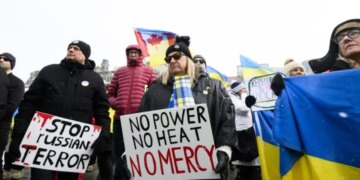
The average person can contribute to politics by voting, volunteering for campaigns, expressing their views through peaceful demonstrations or social media, or even running for office.
In conclusion, politics is an all-encompassing field that significantly impacts arena ranging from societal norms to international relations and individual rights. By determining the distribution of power and resources, politics creates the framework for our rights, freedoms, and duties. It provides a means to resolve differences and shape our shared future – albeit often amidst fierce debates and diverse perspectives. Politics is undoubtedly complex, but it is ultimately a reflection of our collective efforts to cooperatively govern ourselves and enact change. Engaging with it is pivotal to creating a world that reflects our values and aspirations.

Sharing a giveaway with some of my favorite wellness, beauty, and skincare items! Check out the details below on how...

In a June 9 report, Sidhu maintained his “Outperform” rating and raised his target on Hammond to $355.00 from $325.00...
Michigan regulators say they seized dozens of illegal gambling devices and thousands of dollars in cash during a raid at...
In a pitch to private investors, Elon Musk once predicted that one of his companies would quintuple its revenue to...
Discover Global News Panorama at news.mapworldnow.com — your universal gateway to comprehensive, international journalism. From politics and technology to culture and sports, we cover all news niches and all news categories from every corner of the world, all in one place.