- Latest
- Trending
Southern areas (South and El-Nabatieh governorates)
Across South and El-Nabatieh, Crisis (IPC Phase 3) outcomes are widespread as of June following renewed escalation since early March. Ongoing military operations, widespread destruction of productive assets, restricted population movement, and extensive infrastructure damage continue to disrupt livelihoods and limit both market functionality and physical access to food, particularly in southern border districts such as Sour, Bent Jbeil, Marjaayoun, and El-Nabatieh. Income access remains severely constrained. Poor Lebanese households and Syrian refugees face near-total loss of agricultural livelihoods due to damaged orchards, inaccessible farmland, destruction of irrigation systems, and sharply reduced demand for seasonal labor. Physical access constraints are also limiting households’ ability to reach functional markets, with approximately 80 percent of southern farmers forced to abandon their lands due to active hostilities, compounding economic access barriers even where food remains available. As a result, many households are experiencing food consumption gaps, while others are only marginally meeting food needs through increased reliance on livelihood coping strategies. Households are increasingly borrowing, relying on humanitarian assistance, engaging in informal or irregular labor opportunities, selling productive assets, and reducing essential non-food expenditures to access sufficient food. Among the worst-affected households, more severe coping strategies are evident, including engagement in high-risk or illegal work and child labor. Consumption-based coping strategies are also widespread, including reducing meal frequency and portion sizes
Northern areas (Akkar and North governorates)
In Akkar and El-Minieh-Denie, Crisis (IPC Phase 3) outcomes emerged in June, while Stressed (IPC Phase 2) outcomes persist in other northern districts. Poor Lebanese households and Syrian refugees face below-average income due to high unemployment and reduced labor opportunities. Combined with elevated food prices, these income constraints are eroding purchasing power and limiting households’ ability to access sufficient food. In addition, the continued presence of displaced populations is further increasing competition for limited labor opportunities. In Akkar and El-Minieh-Dennie, a substantial share of households are experiencing food consumption gaps or are only minimally meeting food needs by engaging in negative coping strategies, including accumulating debt and reducing essential non-food expenditures such as health and education. Households are also relying on consumption-based coping strategies, such as reducing meal frequency and portion sizes, shifting to less preferred foods, and purchasing food on credit.
Eastern agricultural areas (Bekaa and Baalbek–El Hermel)
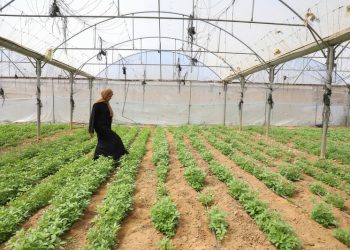
Crisis (IPC Phase 3) outcomes are ongoing and increasingly widespread across Baalbek–El Hermel, West Bekaa, and Zahle as of June, driven by reduced income from insecurity-related disruptions, high production costs, and weak demand for agricultural labor following over five consecutive seasons affected by water shortages. In Baalbek-El Hermel, where half the population are refugees, households are increasingly relying on remittances, humanitarian assistance, and low-paying informal labor to meet food needs. Meanwhile, livelihood coping strategies are becoming more prevalent, including the sale of productive and household assets, borrowing, reductions in essential non-food expenditures, and among the worst-off households, engagement in child labor and begging.
In West Bekaa and Zahle, similar constraints on agricultural and casual labor are limiting households’ purchasing power. While humanitarian assistance continues to play a stabilizing role for some households, it remains insufficient to prevent food consumption gaps among poorer households. In addition, poor dietary diversity, overcrowding, and limited access to water, sanitation, and hygiene (WASH) and health services continue to interact with food consumption gaps, increasing malnutrition risks, particularly among those residing in informal settlements.
Beirut and Mount Lebanon
Crisis (IPC Phase 3) outcomes are ongoing in Beirut and Mount Lebanon’s Baabda, Aley, and Chouf districts as of June, despite broadly functioning markets. The deterioration is driven primarily by reduced economic access to food amid large-scale displacement, high living costs, and weakened purchasing power following the escalation. In Beirut and Mount Lebanon’s southern districts, where households are highly market-dependent, food availability remains adequate; however, poor Lebanese households, Syrian refugees, and displaced populations face some of the highest living costs countrywide and limited income-earning opportunities. Labor demand in construction and services remains below average, while the disruption of the June–September tourism season has reduced seasonal employment opportunities in hospitality, transport, and retail, further constraining household incomes. Meanwhile, the influx of displaced populations has intensified competition for limited employment opportunities and placed additional strain on housing and local services. As a result, many poor households rely on irregular informal labor, borrowing, and remittances to meet basic needs, while increasingly resorting to consumption-based coping strategies, such as reducing meal size and frequency.
Elsewhere in Mount Lebanon, including Kesrwan-Jbeil and El-Meten, Stressed (IPC Phase 2) persist as most households maintain minimally adequate food consumption. Compared to Beirut and southern Mount Lebanon, these districts have experienced relatively lower levels of displacement and less direct impact from hostilities, resulting in comparatively lower pressure on housing, labor markets, and services. Households benefit from relatively better access to income, including salaried employment, remittances, and more stable service-sector activity, which help sustain basic food access despite high prices. However, elevated living costs continue to strain household budgets, requiring many households to reduce expenditures on health care, education, utilities, and other essential non-food items.

Sony is still rationing its supply of attachable disc drives despite announcing plans to end production of physical discs for...

Your support helps us to tell the storyFrom reproductive rights to climate change to Big Tech, The Independent is on...
This is a nod to a beloved tradition, written intentionally in the style of a classic New York Times wedding...
A great key lime pie is a study in contrasts: tangy, silky custard; lightly sweetened whipped cream; and a crunchy...

Discover Global News Panorama at news.mapworldnow.com — your universal gateway to comprehensive, international journalism. From politics and technology to culture and sports, we cover all news niches and all news categories from every corner of the world, all in one place.