- Latest
- Trending

The co-sponsored meeting will help shape the evidence for IPCC’s Seventh Assessment Report by spotlighting water’s role in climate adaptation, resilience and risk.
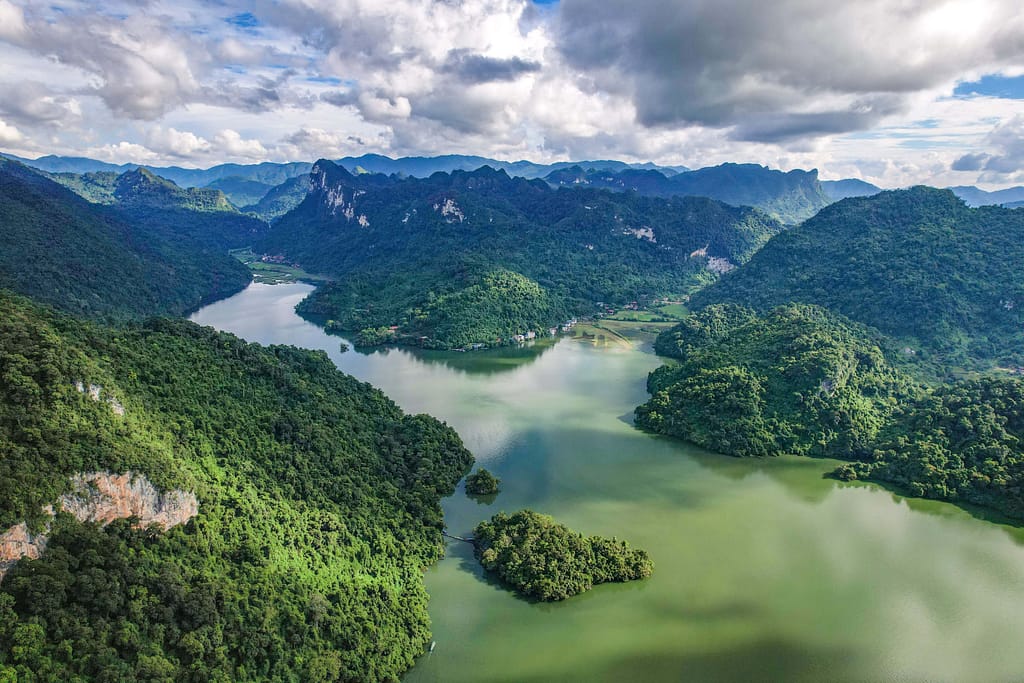
As climate change intensifies pressure on water, food and the environment, the Intergovernmental Panel on Climate Change (IPCC) and the International Water Management Institute (IWMI) will host a co-sponsored Expert Meeting to advance the science of water in climate change.
The Expert Meeting will be co-chaired by Cromwell Lukorito, IPCC Working Group II Vice Chair and Henk Ovink, Chair of the Board of Governors of IMWI, and Executive Director and founding Commissioner of the Global Commission on the Economics of Water. The meeting will bring together about 60 leading experts in the field to discuss the current state of knowledge on water and climate, identify priority research needs and generate evidence that could inform policy and practice at the local, national and global levels.
The meeting will take place from September 8–10, 2026, at IWMI’s global headquarters in Colombo, Sri Lanka.
“Water shapes economies, lives and livelihoods around the world. It is dependent on climate, and therefore, climate variability and change impact its availability and distribution with direct, cascading, compounding and transboundary consequences that dictate how communities adapt, how they are exposed to water-related risks and how they are made increasingly vulnerable,” said Lukorito. “The outcome of this expert meeting will be important in generating outputs that could constitute critical input into the IPCC Working Groups’ preparations of their contributions to the IPCC’s seventh assessment report. We look forward to experts’ fruitful engagements and sharing of their views on priorities for consideration by the authors of the report,” he said.
Bringing together experts involved in IPCC’s global climate assessments and IWMI’s leadership in water research reflects the growing recognition that water is central to understanding climate risks and shaping effective adaptation responses.
“The global water cycle is being profoundly disrupted by unsustainable human activity, as the Global Commission on the Economics of Water put center stage to the global debate. Disruptions to surface water and groundwater systems, the degradation of biodiversity and disruptive land use practices, have resulted in changing patterns of evaporation and precipitation, and increased the frequency and intensity of droughts and floods. All of which undermine water security, accelerate biodiversity loss, climate change and threatens economic resilience and equity worldwide,” highlighted Ovink. “This expert meeting comes at a crucial moment as the global community prepares for the 2026 UN Water Conference, the SDG Summit in 2027, and the IPCC’s Seventh Assessment Report. Together, these processes offer an opportunity to place water at the center of climate action and development decisions, frameworks and governance,” he added.
Water connects and cuts across food, climate, health, economies and ecosystems but the world is not set to achieve sustainable water management until at least 2049. 40% of countries still have limited capacity to balance competing water demands across sectors and cope with increasing pressures from climate change. Transforming water systems entails delivering and scaling sustainable solutions for water across food, land, energy and ecosystems.
“Globally, we are facing a crisis in water governance due to the growing uncertainty of climate risks, making it difficult for governments to make decisions about sustainable water management and the necessary investments,” said Mark Smith, IWMI’s director general. “IWMI’s collaboration with the IPCC is especially important in helping countries develop future-fit, evidence-based solutions for water security.”
As climate change intensifies water-related risks around the world, there is an urgent need for stronger evidence to support effective action. The Expert Meeting will identify key knowledge gaps on water and climate change and help strengthen the scientific foundation for future climate assessments. The meeting will also develop a synthesis report on water, climate resilience, adaptation and equity, highlighting the importance of managing the full hydrological cycle to sustain water security, healthy ecosystems and resilient communities.
###
For more information or to arrange interviews, contact the media team:
iwmi-media@cgiar.org | media@ipccwg2.org
ABOUT IWMI
The International Water Management Institute (IWMI) is an international, research-for-development organization that works with governments, civil society and the private sector to solve water problems in developing countries and scale up solutions. Through partnership, IWMI combines research on the sustainable use of water and land resources, knowledge services and products with capacity strengthening, dialogue and policy analysis to support implementation of water management solutions for agriculture, ecosystems, climate change and inclusive economic growth. Headquartered in Colombo, Sri Lanka, IWMI is a CGIAR Research Center with offices in 17 countries and a global network of scientists operating in more than 55 countries. www.iwmi.org
ABOUT IPCC
The Intergovernmental Panel on Climate Change (IPCC) is the UN body for assessing the science related to climate change. It was established by the United Nations Environment Programme (UNEP) and the World Meteorological Organization (WMO) in 1988 to provide political leaders with periodic scientific assessments concerning climate change, its implications and risks, as well as to put forward adaptation and mitigation strategies. In the same year the UN General Assembly endorsed the action by the WMO and UNEP in jointly establishing the IPCC. It has 195 member states.
Thousands of people from all over the world contribute to the work of the IPCC. For the assessment reports, experts volunteer their time as IPCC authors to assess the thousands of scientific papers published each year to provide a comprehensive summary of what is known about the drivers of climate change, its impacts and future risks, and how adaptation and mitigation can reduce those risks.
The IPCC has three working groups: Working Group I, dealing with the physical science basis of climate change; Working Group II, dealing with impacts, adaptation and vulnerability; and Working Group III, dealing with the mitigation of climate change. It also has a Task Force on National Greenhouse Gas Inventories that develops methodologies for measuring emissions and removals.
IPCC assessments provide governments, at all levels, with scientific information that they can use to develop climate policies. IPCC assessments are a key input into international negotiations to tackle climate change. IPCC reports are drafted and reviewed in several stages, thus guaranteeing objectivity and transparency.


Monday 06 July 2026 19:00 - 19:15 INTA Feeder.co Your favorite content. All in one place Source link
Palestinian officials warn against the implications of the plan, saying it would further isolate East Jerusalem.Published On 3 Jul 20263...
Discover Global News Panorama at news.mapworldnow.com — your universal gateway to comprehensive, international journalism. From politics and technology to culture and sports, we cover all news niches and all news categories from every corner of the world, all in one place.