- Latest
- Trending
This article is part of Food Tank’s primer series, “Food Tank Explains.” Each installment unpacks the ideas, innovations, and challenges shaping today’s food and agriculture systems, offering clear insights into complex topics. To explore more articles in the series, click here.
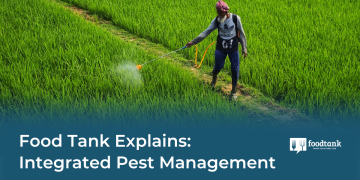
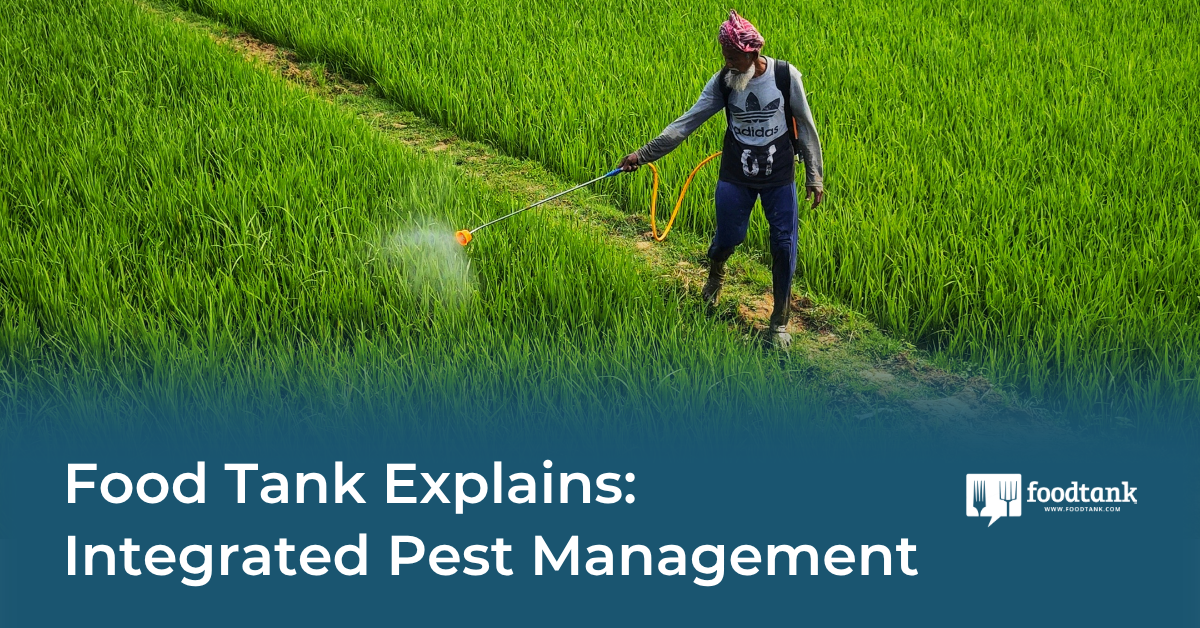
Integrated Pest Management (IPM) is an approach to pest control developed in response to the widespread use of synthetic pesticides. IPM uses monitoring and targeted interventions to manage pests while protecting crop yields and reducing environmental and health risks.
For thousands of years, farmers relied on a range of natural pest-management strategies. Ancient civilizations used sulfur, plant-derived compounds, and smoke to control insects and other pests, while practices such as hand weeding helped reduce crop damage.
Farmers in the 1800s began to rely on compounds such as copper sulfate, lead arsenate, and kerosene, marking the first shift toward manufactured chemical controls. But the discovery of DDT’s insecticidal properties in the 1940s transformed pest management.
The U.S. military used DDT extensively during World War II to control malaria and typhus. After the war, DDT and other synthetic pesticides entered commercial markets and quickly gained popularity. They were thought to be more effective, longer-lasting, and easier to apply than earlier solutions and helped increase agricultural productivity.
As demand grew, U.S. pesticide production rose from about 100 million pounds in 1945 to 1.6 billion pounds by 1975, according to the Environmental Protection Agency (EPA). Farmers increasingly relied on pesticides as a primary line of defense against insects, weeds, and plant diseases, and agricultural pesticide use grew eightfold between the 1940s and 1980s, according to U.S. Department of Agriculture data.
The result, according to a 1980 EPA report, was many unforeseen problems. The “most serious and best documented of these is pest resistance,” the EPA says. Pests can develop resistance to widely used pesticides, reducing their effectiveness and requiring farmers to apply chemicals more frequently and at higher rates. By 1980, over 300 species of insects, mites, and ticks through the world possessed genetic strains resistant to pesticides.
Another challenge was residue, which drafted into surrounding areas and harmed non-target organisms, including pollinators and other beneficial insects. Food production depends on a diverse community of organisms, including insects that play important roles in agricultural ecosystems, Abdou Tenkouano, Director General of International Centre of Insect Physiology and Ecology (icipe), tells Food Tank. Insects can help “recycle organic waste, mitigate environmental pollution, and produce rich biomass,” explains Chrysantus Tonga, Senior Scientist and Lead of icipe’s Insects for Food, Feed, and Other Uses.
Rachel Carson’s Silent Spring, published in 1962, brought these concerns to a wider audience. The book documented the ecological and health impacts associated with chemicals like DDT, sparking scrutiny of pesticide-dependent farming systems.
Scientists and researchers have responded in different ways including through developing the foundation of IPM. Early efforts focused on conserving beneficial insects and using pesticides more selectively, before expanding to include biological controls, crop rotation, resistant crop varieties, monitoring, and other management tools.
The U.S. responded to the backlash by creating the EPA in 1970 to oversee chemical safety, and banning DDT in 1972. Over the following decades, growing global concern led to the adoption of the Stockholm Convention in 2001, phasing out persistent organic pollutants in agriculture.
Despite increased regulation, artificial pesticides remain central to global agriculture. Thousands of pesticides are approved and used worldwide, and the UN Food and Agriculture Organization (FAO) reports that global pesticide use reached 3.7 million tons in 2022. Synthetic chemicals accumulate in soil and water, and can remain there for years. FAO estimates that 80 percent of agricultural soils contain pesticide residues.
Studies link long-term pesticide exposure with cancer, neurological disorders, and respiratory illness, disproportionately effecting agricultural workers, low-income communities, and communities of color. SYSTEMIQ estimates that the resulting health impacts cost the global economy US$816 billion annually.
Glyphosate, produced by Bayer under the brand name Roundup, is currently the most widely used herbicide globally. Bayer maintains that glyphosate is safe, and President Trump recently issued an executive order to expand domestic production of glyphosate-based herbicides.
But the International Agency for Research on Cancer classifies glyphosate as “probably carcinogenic to humans” and juries have ruled that cancer victims’ exposure to Roundup helped cause their non-Hodgkin lymphoma in three cases. Bayer faces approximately 65,000 similar claims from plaintiffs who have developed various forms of cancer after using Roundup at home or on the job.
“Most of the pesticides currently used are ineffective and damage public health, ecological sustainability, and farming system resilience,” Dr. Mame Farma Ndiaye Cissé, Project Coordinator at CORAF, tells Food Tank.
IPM farmers identify pest species and monitor populations to determine potential damage. Rather than attempting to eliminate every pest, IPM uses thresholds to guide management decisions. When intervention is needed, IPM combines multiple control methods. Cultural controls seek to make conditions less favorable for pests. For example, icipe’s ‘push-pull’ system uses pest-repellent and trap plants to protect farms from invasive insects.
Biological controls use natural enemies, like predators and pathogens, while mechanical controls may include traps or barriers. Chemicals like pesticides are typically used selectively and in combination with other strategies rather than as a first response.
IPM can reduce production costs while supporting food safety and crop quality. The Rodale Institute suggests that systems that rely less on synthetic inputs may be more resilient to environmental stresses.
However, effective programs require regular monitoring, accurate pest identification, and access to a range of management tools. These requirements can make IPM more labor- and knowledge-intensive.
To expand adoption, the International Institute of Tropical Agriculture (IITA) has called for greater investment in surveillance and early-warning systems, biological controls, and pest-specific biopesticides. IITA also highlights the importance of extension services, and stronger collaboration among governments, NGOs, and farming communities to make IPM innovations more accessible and effective for smallholder farmers.
Articles like the one you just read are made possible through the generosity of Food Tank members. Can we please count on you to be part of our growing movement? Become a member today by clicking here.
Photo courtesy of Dibakar Roy




Remakes tend to be more exciting than remasters because the improvements often go beyond mere bumps in resolution or framerate....

It's been a year since the Nintendo Switch 2 Pro Controller landed on the shelves but we're still yet to...
Thank You For Your Application is an indie RPG and sim that’s about job interviews. But it’s not exactly the...
Here at PC Gamer, we're all very excited about Grand Theft Auto 6—given it's one of the biggest videogame events...

Discover Global News Panorama at news.mapworldnow.com — your universal gateway to comprehensive, international journalism. From politics and technology to culture and sports, we cover all news niches and all news categories from every corner of the world, all in one place.