- Latest
- Trending


With smaller process nodes becoming increasingly more expensive to achieve, chip manufacturing engineers are turning to other ways to increase the number of transistors that can be packed into a single die. In some ways similar to traditional chip stacking, one research team has created a way to implement an extra layer of microscopic switches on an already completed die, by sticking them where the power and signals go.
Okay, so that’s a very rough description of the work conducted by MIT’s Department of Electrical Engineering and Computer Science, the University of Waterloo, and Samsung Electronics. But when you read the details about it in the press release on the matter, you’ll see that it’s a tad difficult to describe it all in just one sentence.
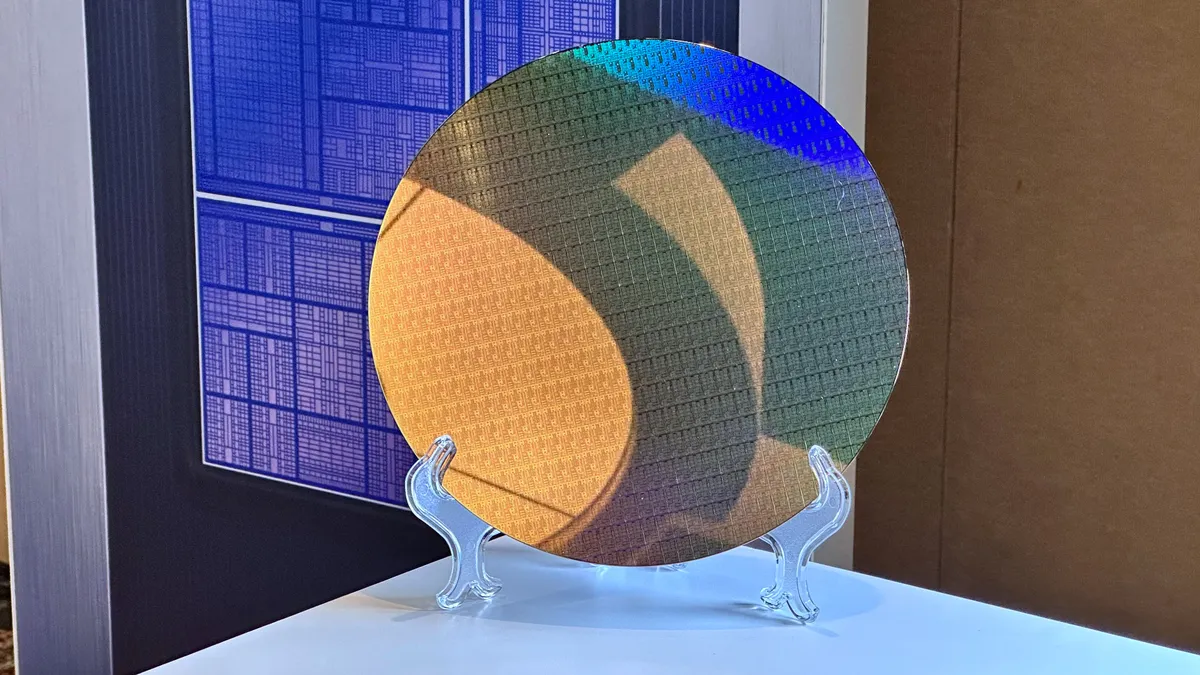
In other words, they applied a new transistor layer to the back end. But even that’s not quite enough to protect the sensitive front end from heat. The researchers solved that problem by using a very thin layer (just 2 nm thick) of amorphous indium oxide for the extra transistors.
It requires a much lower temperature to be applied than traditional materials, which stops the front end from getting damaged. The group also discovered that using a layer of ferroelectric hafnium-zirconium oxide could then be used to create memory cells.
The end result? A chip with a higher transistor density than one without the extra layers. However, don’t get too excited just yet. The research is still far from being able to convert all of this into usable circuits at the moment, but all chip architectures start life in this way.
We’ve already seen researchers discover a way to apply multiple layers of transistors on top of each other, so if processors of the future can be built using both techniques, as well as traditional chip stacking, then the limit to transistor densities will be blown through the roof.
Moore’s Law might have looked a bit rocky in recent years, but work like this suggests that rumours of its death are very unfounded.

Best CPU for gaming 2025

Six-time major champion Phil Mickelson has disputed allegations of misconduct carried in an investigation by golf publication Skratch, with his...

Great Britain's Georgia Hunter Bell stormed to her second Diamond League win of the year with a season's best time...
The 113th edition of the Tour de France begins on Saturday, 4 July in Barcelona, with 184 riders competing for...
After winning Group D, the United States national team has their fans feeling more confident than ever that they can...
Discover Global News Panorama at news.mapworldnow.com — your universal gateway to comprehensive, international journalism. From politics and technology to culture and sports, we cover all news niches and all news categories from every corner of the world, all in one place.