- Latest
- Trending

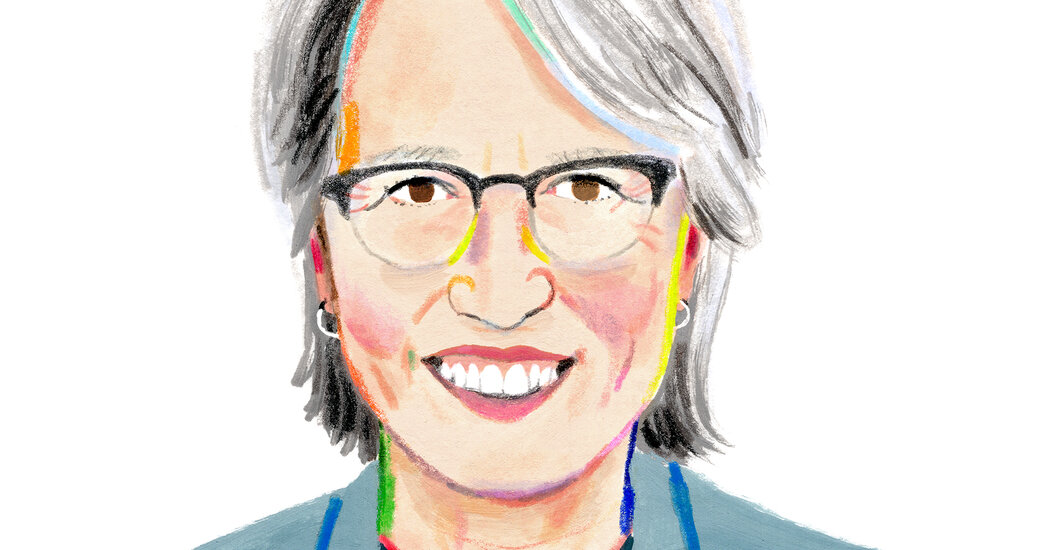
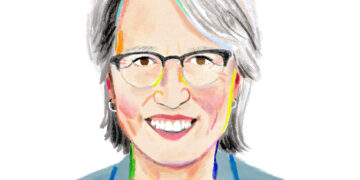
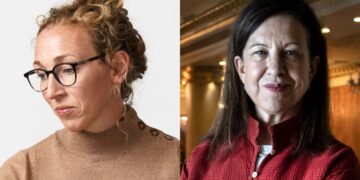
In an email interview, the author of “The Typing Lady: And Other Fictions” shared details of human anatomy she learned the hard way. SCOTT HELLER
What kind of reader were you as a child?
Precocious. I remember trying to read Norman Mailer’s “Ancient Evenings” when I was in seventh grade. I was really into ancient Egypt. I don’t recall much of it now, only that it was a fat book filled with dense hallucinatory descriptions of sodomy, necrophilia and ritual sex magic. Not what I expected. I wanted to read about pyramids.
How have your reading tastes changed over time?
I never read another Norman Mailer book.
Describe your ideal reading experience.
I’m in my house in Desolation Sound, in the middle of a raging storm. The wind is howling and the rain is beating against the tin roof. The internet is down, my phone battery is dead and the generator is broken. But I have a kerosene lamp, lots of fuel, shelves of good books and a full bottle of Scotch, and I know it’ll be days before the grid is back up and power restored. All of this is realistic, except for the Scotch.
What’s your favorite book no one else has heard of?
It used to be “I Who Have Never Known Men,” but now more people have heard of it. It was written 30 years ago, in French, by the now-deceased Belgian author Jacqueline Harpman, and had faded into obscurity until it was rediscovered on TikTok. I don’t want to give spoilers, so I’ll just say that the novel is about profound, haunting loneliness and the desire to connect and be known through language.
You’ve talked about your affection for audiobooks. Have you ever read and listened to the same book?
I love a good audiobook, but I’m very finicky about the reader. When I find one I like, I will usually listen and read at the same time. I did this with “Piranesi,” by Susanna Clarke. It is such a beautiful book, gorgeously written, and superbly read by Chiwetel Ejiofor. I started listening to it, and immediately went out and bought the book.
Has there been a favorite typewriter in your life?
My Hermes 3000. It was an aspirational typewriter, one I could never afford, but when “The Typing Lady” was scheduled for publication, I felt she must have one immediately, and so I bought her one.
Why is your subtitle “And Other Fictions” rather than “And Other Stories”?
I want to draw readers’ attention to the idea of fiction and prompt them to wonder how it might apply to the stories they’re about to read. The first entry in the collection is titled “An Author’s Note” but it quickly becomes apparent that it’s actually a story, told by the supposed author (me), about a woman she calls “the typing lady,” who is a minor autofictional character (also me) in my novel “The Book of Form and Emptiness.” It’s a hall of mirrors.
What books are on your night stand?
Lewis Carroll’s “Through the Looking-Glass.” Jorge Luis Borges’s “Collected Fictions.” Lydia Davis’s “Into the Weeds.”
What book might people be surprised to find on your shelves?
“The Complete Book of Shoulders and Arms” next to “Strength Training Anatomy.”
What’s your philosophy on selling off books?
Sometimes I try to sell books, but not in New York City. The used bookstore buyers are too discerning. You lug in a pile of beloved books and stand there, hopefully, while they scrutinize your titles. Maybe one or two will pass muster. It’s impossible not to feel somewhat book-shamed.
What’s the most interesting thing you learned from a book recently?
That the shoulder pain I suffer is caused by the long head of my biceps brachii running awkwardly through the bicipital groove in the humerus. This is not my fault. When our knuckle-dragging ancestors were quadrupedal, our arms hung down in front and the tendon ran a straight, easy path. Bipedalism forced our arms to hang at our sides, bending the tendon around a corner, pinching it, and making it perpetually vulnerable to inflammation and wear. In short, we were not designed to stand upright.
What’s the last great book you read?
I’m now reading the galleys of “Sublimation,” by Isabel J. Kim. It’s a debut novel, set in contemporary alter-worlds of Seoul and New York, about the very timely issue of immigration and border crossings. The characters, at the moment of crossing, split into two selves, one who leaves and one who stays behind. As a mixed-race person, I can relate to this feeling of being bifurcated and alienated from a single, psychologically integrated self — the cultural norm. I haven’t finished the book yet, but so far it’s great!
You’re organizing a literary dinner party. Which three writers, dead or alive, do you invite?
In “The Typing Lady,” when the grandmother is making a fake online dating profile so she can spy on her teenage granddaughter, this very question comes up. Her answer is Hannah Arendt and Walter Benjamin. But who else? Oh, wait, I know. Barack Obama.

Sharing a giveaway with some of my favorite wellness, beauty, and skincare items! Check out the details below on how...

In a June 9 report, Sidhu maintained his “Outperform” rating and raised his target on Hammond to $355.00 from $325.00...
Michigan regulators say they seized dozens of illegal gambling devices and thousands of dollars in cash during a raid at...
In a pitch to private investors, Elon Musk once predicted that one of his companies would quintuple its revenue to...
Discover Global News Panorama at news.mapworldnow.com — your universal gateway to comprehensive, international journalism. From politics and technology to culture and sports, we cover all news niches and all news categories from every corner of the world, all in one place.