- Latest
- Trending

 Getty Images
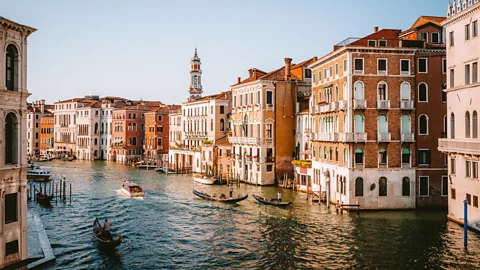
But more than a century later, these metaphors persist. Blog posts still dissect how destinations “earned” the title of Venice, usually for their canals or waterways, while Instagram has more than 25,000 posts tagged #VeniceOfTheEast. At best, such comparisons are outdated; at worst, they remain quietly reductive.
“Language doesn’t just name places; it shapes how we relate to them and treat them,” says Paul Meighan, a sociolinguist and researcher. “These metaphors, albeit used unintentionally at times, centre Europe as the benchmark for ‘civilisation’, framing everywhere else as derivative. They flatten specificity… a place isn’t allowed to be itself; it must be an echo or copy of somewhere else, many times decided by and reflective of a colonial power.”
Such framing, he adds, arbitrates what counts as “worth seeing”, sidelining local histories and understandings.
None of this is, of course, unique to Asia. Across continents, similar language shapes how entire regions are imagined long before travellers arrive. Hedder Quispe Puente de la Vega, founder of Machu Travel Peru, sees this play out regularly in his home country. “Phrases like ‘lost civilisation’ or ‘untouched land’ make Peru and the Andes seem frozen in time, more connected to mystery than to everyday life,” he says. “These words spark curiosity, but they also simplify reality. Many [travellers] arrive expecting only ancient ruins, llamas or rituals, without realising that Andean culture is alive, modern and constantly evolving.”

An Australian man has been charged with homicide in Thailand, after a Thai teenager’s body was found stuffed in a...

Russian President Vladimir Putin meets Chinese leader Xi Jinping at the Great Hall of the People on Wednesday, days after...
Thursday 02 July 2026 09:33 - 09:37 ECON ENVI LIBE Please try out: nodemaven Pay as our go PROXY with...
New Delhi: The Congress has announced its core team for Punjab ahead of next year's Assembly election. While the party...

Discover Global News Panorama at news.mapworldnow.com — your universal gateway to comprehensive, international journalism. From politics and technology to culture and sports, we cover all news niches and all news categories from every corner of the world, all in one place.