- Latest
- Trending
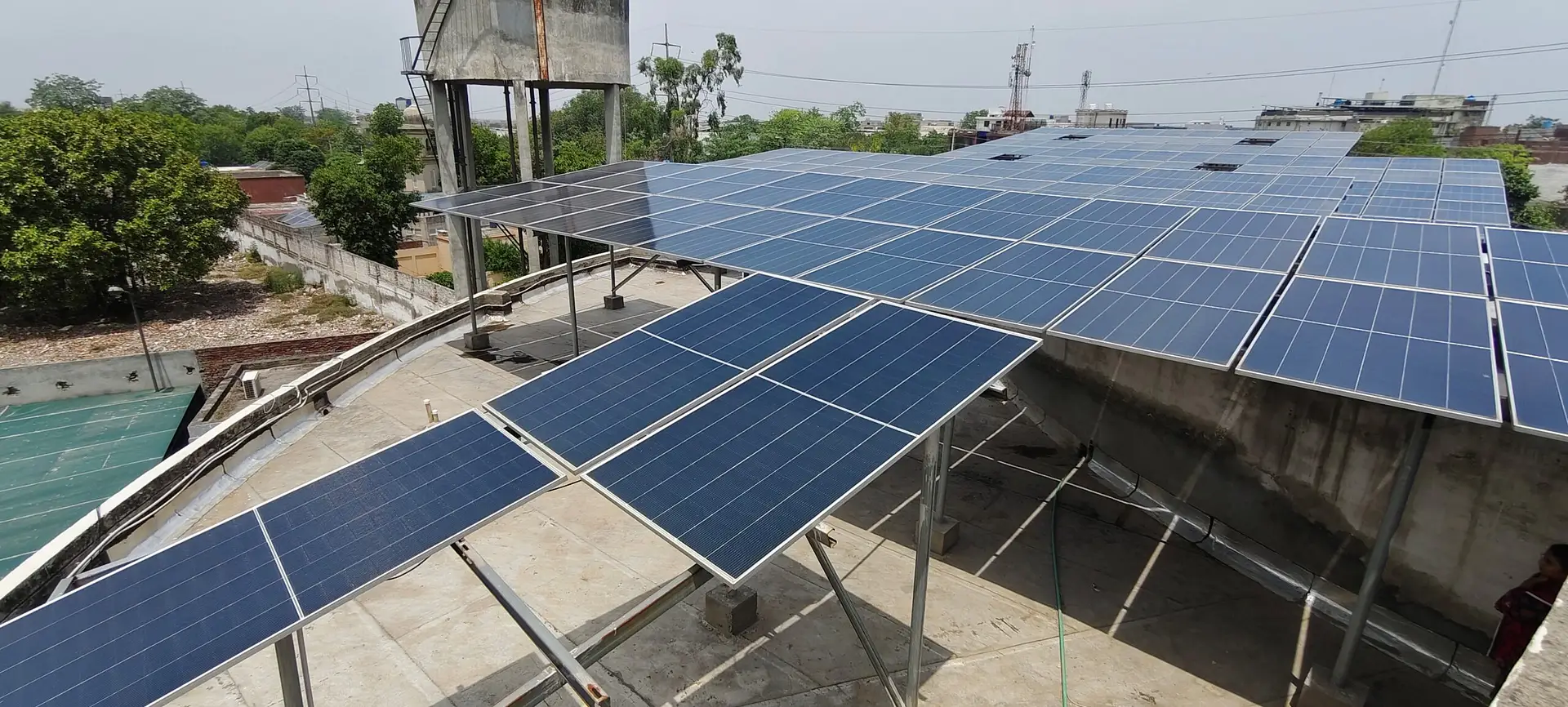
At IWMI’s Pakistan office, practical initiatives — from solar energy to rainwater harvesting — demonstrate how organizations can reduce their environmental footprint.
Research alone is not sufficient: action matters. The International Water Management Institute (IWMI) has spent decades generating knowledge to help the world manage water and energy more wisely. But knowledge, however rigorous, is incomplete without practice. The real test of any institution committed to sustainability is not just what it measures in the field; it is how it operates within its own walls.
Across its global offices, IWMI has begun translating its institutional values into concrete operational decisions: reducing energy consumption, harvesting rainwater, recharging depleted aquifers, cutting carbon emissions and embedding a culture of mindful resource use into everyday working life. The results are already measurable.
In 2025, IWMI recorded an 8% reduction in global energy consumption compared to 2024, alongside a 9% reduction in associated greenhouse gas emissions over the same period. IWMI’s ambition is to continue this momentum, with a target to expand solar coverage across 10% of its offices annually.
Our office in Lahore, Pakistan, has been a pioneer in this endeavor. They made a decisive investment in a rooftop solar power system with a generation capacity of 160 kilowatts. The system is actively producing clean energy, reducing dependence on conventional grid electricity and delivering cost savings of millions of rupees. The return on investment exceeds initial projections.
This kind of return, financial as well as environmental, makes a clear case that sustainability and institutional efficiency are not competing priorities. They reinforce each other.
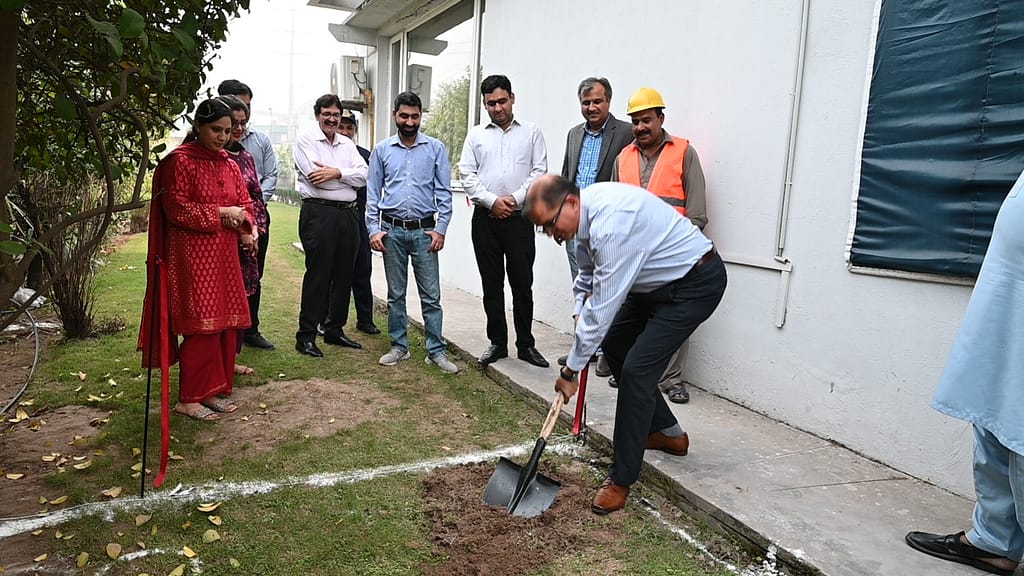
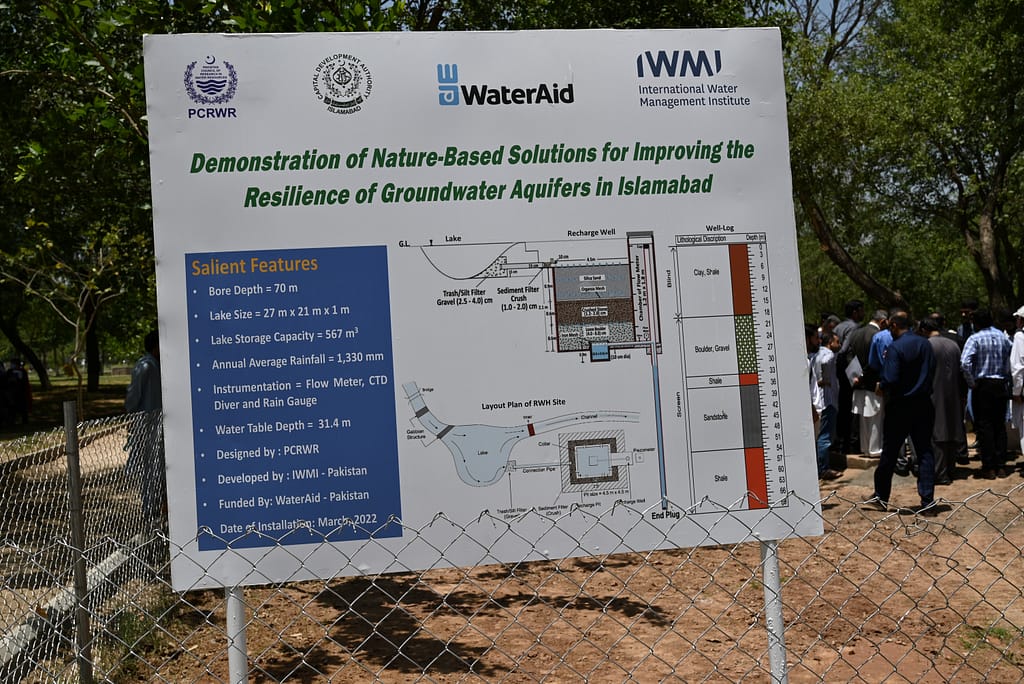
The Lahore office also installed a rooftop rainwater harvesting system paired with a groundwater recharge well. This carefully engineered setup intercepts rainfall, treats it through a systematic three-stage filtration process across three dedicated tanks and channels the cleaned water directly into the local aquifer. Rather than allowing precipitation to run off into drains and be lost, the system actively replenishes groundwater reserves.
In Pakistan, where groundwater depletion is an accelerating crisis, this initiative does more than conserve water for the office — it contributes to restoring the very resource that millions of people depend on for drinking, agriculture and livelihoods. It is infrastructure that gives back.
IWMI’s sustainability work also recognizes that lasting change lives in behavior, in the daily decisions made by every individual across every office.
In Lahore, this is visible in the small details that add up to something meaningful. Motion-sensor lights have been installed throughout the office, automatically switching off when a space is unoccupied. Conventional energy-hungry bulbs have been replaced with energy-efficient alternatives across the board, cutting electricity consumption without any change in working comfort. Soil moisture sensors are being used to guide drip irrigation in office green spaces, ensuring water is applied only when and where it is needed. Energy monitoring, waste reduction and sustainable procurement practices are woven into the fabric of how IWMI operates as an institution.
There is a compelling logic at the heart of all of this. An institute that studies water stress, energy transitions and environmental sustainability must be willing to interrogate its own operations with the same rigor it applies to the systems it researches. Credibility is earned through consistency.
When IWMI installs a solar system in Lahore and measures the kilowatts we produce, when we build a rainwater harvesting system and trace the water it recharges into the aquifer, when we track and publish our own emissions reductions, we are not solely reporting progress. We are demonstrating that the solutions we recommend to others are solutions we are willing to live by ourselves.
That is what it means to walk the talk.
The work is ongoing, and each of these steps is modest in isolation. Yet together, they add up to something significant: proof that a research institution can serve as a living laboratory for the values it promotes, and an inspiration to partner organizations, governments and individuals watching what responsible operations look like in practice.

Argentina's Pacific-pact bid would make it a trade partner of the UK, raising a Falklands dilemma Monday, June 29th 2026...

The project involves almost £5m of funding from Invest NI with the rest of the money from the firms. Source...
New York — SpaceX was expected to be one of the hottest stocks on Wall Street this year – and it...
Americans are beginning to feel better about the economy, as prices at the pump fall amid optimism over easing tensions...

Discover Global News Panorama at news.mapworldnow.com — your universal gateway to comprehensive, international journalism. From politics and technology to culture and sports, we cover all news niches and all news categories from every corner of the world, all in one place.


![Ebola in the DRC: At least 300 positive cases unaccounted for [Africanews Today]](https://news.mapworldnow.com/wp-content/uploads/2026/06/1024x538_cmsv2_25f7c4fa-db68-5802-982d-f4c1ab52755b-9817196-75x75.jpg)


























































![Ebola in the DRC: At least 300 positive cases unaccounted for [Africanews Today]](https://news.mapworldnow.com/wp-content/uploads/2026/06/1024x538_cmsv2_25f7c4fa-db68-5802-982d-f4c1ab52755b-9817196-360x180.jpg)