- Latest
- Trending

Science, from the Latin word “scientia,” meaning knowledge, is an intellectual and practical activity encompassing systematic study through observation and experiment. It is a systematic enterprise that constructs and organizes knowledge in the form of testable explanations and predictions about the universe.
Science comprises numerous disciplines. Each has a unique focus, yet they all intertwine, complimenting and enhancing one another. Here are a handful of fascinating scientific disciplines.
Physics is the study of matter and energy and the interactions between the two. This discipline is largely about equations, algorithms, and trying to quantify the world around us. It teaches us about the fundamental laws governing the universe, such as gravity and electromagnetism.
Chemistry, often regarded as the “central science”, studies the properties of matter, its composition, and the changes it undergoes during chemical reactions. Chemists work with simple substances and figure out how they bond, react and transform to form new substances.
Biology is the natural science that studies life and living organisms, including their physical structure, chemical processes, molecular interactions, physiological mechanisms, development and evolution. It is a vast and eclectic field that seeks to understand the complex mechanisms that make the natural world function.
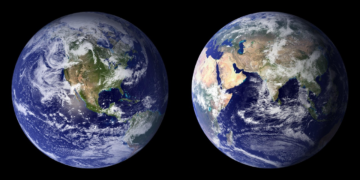
Earth Science embodies the study of the Earth’s structure, composition, processes, and history as well as the energy that makes it all transpire. Geology, Oceanography, Meteorology, and Astronomy are considered primary disciplines within Earth Science.

Science has a profound impact on society in numerous ways. Electricity – a form of energy resulting from the existence of charged particles, like electrons or protons – has revolutionized human existence beyond imagination. This scientific discovery illuminates homes, runs appliances, fuels technology, transit systems, among many other applications.
Medicine, a science-intensive discipline, has led to vaccinations and antibiotics, extending human lifespan remarkably. The invention of the internet, intricately linked to computer science, has also transformed the way we interact, work, learn, and indeed, live.
The practical applications of science in everyday life are endless. Solutions to numerous societal issues like energy crisis, health problems, and food shortage are rooted in scientific research and knowledge.
Science, beyond its direct practical implications, spurs innovative thinking and progress. It lays the foundation for technological advancements. Whether we talk about space travel accessible for the common public, robotic surgeries, or 3D printing, they all stem from scientific inquiry and discovery.
Scientific advancements also influence education, revolutionizing teaching and learning methods. Practices like project-based learning, digital simulations, and online education take inspiration from the progress in scientific domains like psychology and computer science.
Science continues to shape our understanding of the world, from unraveling the mysteries of the cosmos to breakthroughs in gene editing techniques.
1. What is the Purpose of Science?
The main purpose of science is to discover the truth about the natural world: how it works, what are the rules that govern it, and how can we use that knowledge for our benefit.
2. Why is Science Important?
Science is crucial because it allows us to understand our universe and our role within it. From cures for diseases to technological innovations, science underpins nearly every aspect of modern life.
3. Can Science Answer Everything?
Science strives to answer questions about the physical and natural world, but it may not provide all the answers regarding abstract ideas, human emotions, values, ethics, and spiritual beliefs.
4. Is Science Limited?
While science is a powerful tool for understanding our universe, it does have its limitations. It is unable to make value judgments, offer personal or spiritual growth, or work without empirical evidence.
5. Can Scientific Theories Change?
Scientific theories can change as scientists gather new evidence that either supports or contradicts current theories. Science is constantly evolving to provide the best possible understanding of our world.
In conclusion, science is a fascinating field that encompasses a vast array of disciplines. It challenges our minds, pushes the boundaries of our knowledge, and critically, allows us to understand and navigate the world we inhabit. Science sparks curiosity, drives innovation, and breeds breakthroughs that shape our societies. Whether discussing the intricacies of each scientific discipline or the significance of science in everyday life, it is an undeniably foundational part of our existence. As humanity navigates the future and its challenges, the importance and impact of science will invariably persist and evolve.

Enterprise AI teams face a dilemma: The best models today might not be the best models a year from now....

On Tuesday, Anthropic launched a new “Mythos-class” model, Fable 5, describing it as being more powerful than any other model...
Channing Tatum didn't just become an actor. He became a presence. 'Magic Mike'. '21 Jump Street'. 'The Vow'. 'Dear John'....
Tessa McWatt, whose book is inspired by her mother, describes her as her "heart's inspiration". Source link

Discover Global News Panorama at news.mapworldnow.com — your universal gateway to comprehensive, international journalism. From politics and technology to culture and sports, we cover all news niches and all news categories from every corner of the world, all in one place.