- Latest
- Trending
This article is part of Food Tank’s primer series, “Food Tank Explains.” Each installment unpacks the ideas, innovations, and challenges shaping today’s food and agriculture systems, offering clear insights into complex topics. To explore more articles in the series, click here.
CRISPR is a gene-editing technology that can make targeted changes to the DNA of living organisms. Adapted from a immune system mechanism found in bacteria, it has become a widely used tool across medicine, research, and agriculture.
Short for clustered regularly interspaced short palindromic repeats, CRISPR originated from a defense mechanism that bacteria use to identify and eliminate invading viruses. The system is made up of two key parts. One component identifies a target DNA sequence, another cuts it. The bacteria then stores fragments of the virus’s DNA, helping the bacterium recognize and eliminate the virus if it attacks again.
For thousands of years, humans have used genetic modification methods like selective- and cross-breeding to grow crops and raise animals with desirable traits, like corn that grows taller or watermelon that has fewer seeds. “Nature is basically gene editing all the time,” Alison Van Eenennaam, an Animal Geneticist and Biotechnology Specialist at the University of California, Davis, tells Food Tank.
But once the molecular mechanism for its DNA-cleaving ability was discovered, CRISPR was quickly repurposed into a tool for editing the DNA of living cells. In the past decade, CRISPR has taken the biomedical world and life sciences by storm and is now being used in thousands of labs worldwide.
When compared to other genome editing tools, researchers say CRISPR is more versatile and more efficient. They also underscore the tool’s accuracy. “Genome editors are far more precise than some of the tools we already use for plant breeding,” Christine Tait-Burkard, Group Lead at the Roslin Institute, tells Food Tank.
Gregory Licholai, a biotechnology entrepreneur and lecturer at Yale School of Management, compares earlier gene-editing methods to editing a book by removing entire pages. CRISPR, by contrast, allows scientists to edit individual letters, enabling more precise changes to DNA.
The technology has expanded opportunities for both biomedical research and the treatment of genetic disease. Researchers use CRISPR to create cell and animal models for studying diseases including cancer and mental illness, while clinicians have used CRISPR-based therapies to treat sickle cell disease. Scientists used CRISPR to edit disease-causing mutations in human embryos in 2017, and, in 2019, Victoria Gray became the first person in the U.S. to receive a CRISPR treatment for a genetic disorder.
Researchers from around the world have applied the technology to a wide range of crops and livestock, while patent data suggest growing commercial interest. CRISPR can improve crop yields by shortening breeding timelines and targeting and modifying genes linked with productivity and stress tolerance. Researchers used CRISPR to recreate naturally occurring traits in sorghum that help protect the crop from Striga hermonthica, a parasitic weed responsible for significant yield losses across parts of Africa.
CRISPR can also be used to improve food quality and shelf life. Scientists modified potatoes to reduce compounds that can be converted into acrylamide during frying, resulting in potato chips with substantially lower acrylamide levels. Researchers have also developed non-browning avocados to extend shelf life and reduce food waste.
Researchers are also exploring how CRISPR can support sustainable food and agriculture systems, including by developing crops with greater tolerance to drought and other environmental stresses. Researchers are also investigating whether gene editing can reduce food production emissions by modifying microbes and other organisms used in manufacturing processes.
The African Plant Breeding Academy, launched in 2013 by the University of California, Davis in partnership with the African Orphan Crops Consortium (AOCC) and AUDA-NEPAD, trains African plant breeders in advanced crop improvement techniques, including genomics and CRISPR-based breeding techniques.
Hosted in Nairobi, Kenya, the Academy has trained more than 150 scientists from 28 countries, helping strengthen local capacity to develop improved crop varieties. At the program’s launch, Howard-Yana Shapiro, founder of the AOCC, described the initiative as part of a broader effort to equip African scientists with the tools needed to improve nutrition, food security, and agricultural resilience across the continent.
Using CRISPR, scientists have modified traits in farmed animals and aquaculture species. Researchers at Auburn University developed blue catfish with improved resistance to bacterial disease, offering a potential alternative to routine antibiotic use in aquaculture. In livestock, researchers used CRISPR to remove a gene that enables the PRRS virus to infect pigs, creating animals resistant to a disease that costs the U.S. pork industry billions of dollars each year.
The technology’s precision and versatility and the potential ability to repair disease-causing mutations has sparked excitement in the scientific community, Licholai says. And the U.N. Food and Agriculture Organization (FAO) calls CRISPR a promising tool for agriculture, citing its potential to contribute to food security, climate adaptation, and more efficient food production systems.
But CRISPR has raised concerns among some researchers, ethicists, and policymakers. A series of studies have linked the technology to unintended genetic changes, highlighting the need for continued research into its safety. And in a briefing to the U.K. Parliament, the Nuffield Council on Bioethics warned that gene editing could contribute to “unethical or unsustainable practices” if it enables animals to endure poorer living conditions rather than improving animal welfare.
Care must therefore be taken to ensure that genome editing does not contribute to an acceleration of unethical or unsustainable practices,” the Council states. They emphasized that the introduction of genetically edited animals to the marketplace should be guided by robust public dialogue and aimed at raising animal welfare standards.
Moving forward, FAO argues that gene editing’s potential to improve food security, nutrition, and environmental sustainability will depend on effective governance. The organization calls for clear regulatory frameworks, ongoing safety assessments, and attention to economic, social, and ethical considerations, while encouraging greater international coordination as countries develop different approaches to regulating gene-edited products.
According to the Food and Drug Law Institute, despite various hurdles to overcome, CRISPR is “likely to revolutionize how we eat.”
Articles like the one you just read are made possible through the generosity of Food Tank members. Can we please count on you to be part of our growing movement? Become a member today by clicking here.
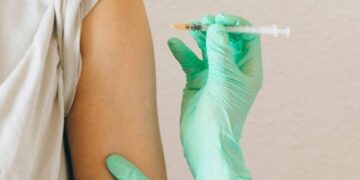
Photo courtesy of the National Cancer Institute

The app expanded its algorithm personalization features to its main feed. Meta Instagram just made it...

Enterprise AI teams face a dilemma: The best models today might not be the best models a year from now....
On Tuesday, Anthropic launched a new “Mythos-class” model, Fable 5, describing it as being more powerful than any other model...
Channing Tatum didn't just become an actor. He became a presence. 'Magic Mike'. '21 Jump Street'. 'The Vow'. 'Dear John'....

Discover Global News Panorama at news.mapworldnow.com — your universal gateway to comprehensive, international journalism. From politics and technology to culture and sports, we cover all news niches and all news categories from every corner of the world, all in one place.