- Latest
- Trending

New York
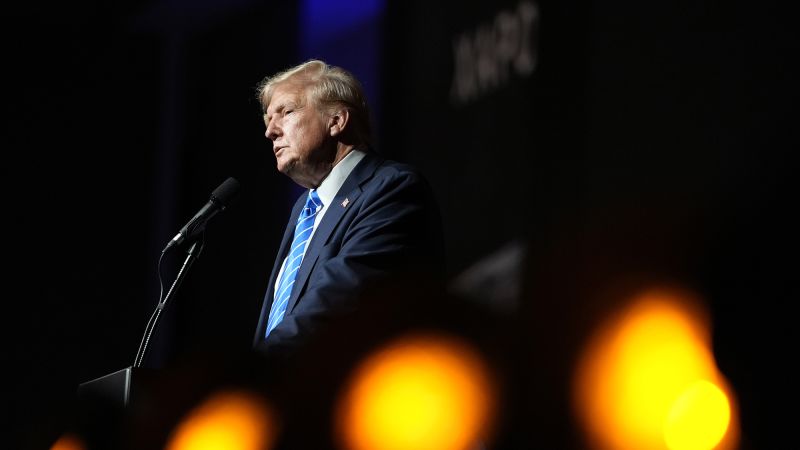
For President Donald Trump, pivoting his personal investments and his administration’s priorities to favor cryptocurrencies has been a lucrative move. His family’s crypto venture raked in more than $1 billion last year, on top of tens of millions in income from his real estate empire, according to his latest financial disclosure.
For the crypto industry, Trump 2.0 has been more of a mixed blessing.
Trump’s re-entry to the White House accompanied a burst of enthusiasm from crypto investors. While Trump previously said crypto “seems like a scam,” he made a heel-turn during his 2024 campaign, promising to make the United States the global “crypto capital” and accepting millions in campaign donations from industry donors.
Bitcoin, the most popular crypto token and a bellwether for the sector, hit back-to-back records on Trump’s win. The surge was fueled by his promise to clear a regulatory path for the industry, which has long complained it was unfairly targeted by the Biden-era Securities and Exchange Commission.
In the year that followed Election Day 2024, bitcoin’s value rocketed more than 80%, hitting an all-time high above $126,000 in October 2025.
Since then, bitcoin has given up all of its Trump-era gains, and then some.
This week, as the US stock market notched its best quarter in six years, bitcoin has hovered below the $60,000 level, down more than 50% from its peak.
The bitcoin crash comes despite Trump laying out the regulatory red carpet for the industry.
Over the past two years, the White House has become a cheerleader for all things crypto, installing industry-friendly officials at the SEC and proposing a “strategic bitcoin reserve” that would backstop the token’s value. The president met with industry leaders at a White House summit, threw a party for investors in his memecoin, and championed two bipartisan, industry-backed bills in Congress that aim to establish clearer federal guidelines for issuing and trading digital assets.

At the same time, the SEC has dropped a series of enforcement actions against crypto companies and investors with ties to the Trump family.
“They’ve given them everything they could possibly want,” said Hilary Allen, a law professor at American University and prominent critic of the industry.
But it’s a double-edged sword, she said. The crypto industry desperately wants to be seen as legitimate to attract new money, but there are limits to Trump’s efforts to legitimize an industry long associated with fraud.
“The Trump family ventures have not ameliorated the perception that crypto is scammy,” Allen said.
On Wednesday, Trump shrugged off concerns that he is profiting from an industry his administration oversees, attributing his wealth bump to the rising stock market in response to reporters’ questions at Joint Base Andrews. The White House has consistently denied that the president has a conflict of interest in his finances, emphasizing that he is not actively involved in managing his businesses or investments.
Although crypto prices have struggled lately, Trump’s crypto firm, World Liberty Financial, took in more than $500 million from token sales last year, according to the latest filing. His largest haul was $635 million from a licensing agreement related to his memecoin — a functionally useless, commemorative digital asset that has lost 98% of its value since it was launched shortly before his inauguration.
Cryptocurrencies are decentralized, digital money, such as bitcoin and Ethereum. But the roughly 15-year-old industry has largely operated on the fringes of finance, and those digital currencies are still not widely accepted as payment for goods and services, and their value can be volatile.
Historically, bitcoin and other tokens have mirrored moves in risk assets like tech stocks. But for the better part of a year, crypto has spiraled partly in response to investors moving their money into AI. Crypto investors have also been spooked by a shift from Strategy (formerly software firm MicroStrategy), a bitcoin-hoarding company that reversed a long-held promise to never sell bitcoin.
The decline has also triggered forced liquidations in the heavily leveraged crypto space, intensifying the stomach-churning price drops that crypto is known for.
Analysts say a rebound may be a long way off.
“The most violent selling appears to be moderating, but demand has not yet returned, Yusuf Fakhro, a partner at crypto infrastructure firm ARP Digital, said in a note this week. He expects the market is moving toward a “slower bleed.”
The monthslong decline underscores the risk of investing in cryptocurrencies, which are typically an unreliable store of value relative to the US dollar or other government-backed currencies.
Trump and his family’s embrace of the business, for better or for worse, suggests that crypto will continue receiving favorable treatment from regulators, said Eswar Prasad, an economics professor at Cornell University.
“This will of course boost demand for and valuations of digital assets,” Prasad said, “implying a healthy future for this entire ecosystem notwithstanding some short-term bumps in the road.”

At least 32 people were killed and 16 others injured after an overcrowded passenger bus plunged into a ravine in...

Monday 06 July 2026 19:00 - 19:15 INTA Feeder.co Your favorite content. All in one place Source link
Discover Global News Panorama at news.mapworldnow.com — your universal gateway to comprehensive, international journalism. From politics and technology to culture and sports, we cover all news niches and all news categories from every corner of the world, all in one place.