- Latest
- Trending
Dear Nila,
It’s 5 a.m. and I’m lonely because I’ve never left you before. My heart is at home with you and Appa, but my soul needs — and my job demands — exploration.
I remember other, long-ago early mornings. I wasn’t that much older than you when I started waking up at 5 a.m. to watch India play Australia in cricket. I muted the TV inside my pink home in Coimbatore, Tamil Nadu, held the remote up to my mouth and pretended I was telling the story of the match to fans who loved the sport as much as me. “A marvelous straight drive! Sixeeeeeer!!!”
A few years later, I watched a TV show called “The Newsroom” and the main character, a news anchor, gave a fiery speech at a school called Northwestern. “America is not the greatest country in the world,” he said. I envisioned a country where we could be honest, where our opinions are valued. Where I could become the best journalist in the world. That’s where I needed to be.
My Appa (your Thatha) took a loan against the only land he owned to pay for my master’s degree at Northwestern. I packed my two 23-kilogram suitcases and boarded an airplane that carried me 8,000 miles away from everything I knew about life.
Even before I touched down, I worried about finding my place in America. Will I make friends? Will I be accepted with my thick South Indian accent? Will I like the food? But the thing I worried about most: Will America give me a chance? Will I be able to find a job and pay Thatha back so he doesn’t lose his land?
Eleven years later, 250 years into America’s existence and seven months into yours, ESPN is sending me on an eight-day road trip. I’m traveling up the Atlantic coast seeking an answer to the one question I’ve spent the most time in this country thinking about. What makes something American? What makes you — a child of an Indian immigrant mother and an American father — American? What makes a sport American?
You’ll be in my heart every stop along the way, Nila!
Love,
Amma
Dear Nila,
This is going to be so much fun, Nila! Fans of all ages and colors converge around the courts at the US Open Pickleball Championships at East Naples Community Park. Food trucks line the grounds. Bratwurst. Thai bowls. Pizza. A man wearing a cowboy hat and a red shirt sings in a corner. Lord, I was born a ramblin’ man. Tryin’ to make a livin’ and doin’ the best I can. I get a cup of Italian ice and walk around to see if I can learn how pickleball has become such an integral part of the American fabric.
I meet a 72-year-old man named Bob Collins, whose wispy white hair falls on his forehead. His beige polo shirt looks a little too big on his thin body. He tells me he lost 45 pounds since he started playing pickleball three years ago. When I ask him why he plays, he looks me in the eye and says, “To prolong my life.” Collins’ friend, a 78-year-old woman named Pam Thompson, says, “I don’t know what old people did before pickleball.”
I make my way to the pro players’ lounge and meet Richard Livornese Jr., a nationally ranked 25-year-old who quit his full-time job to pursue a sport he stumbled into. Now he earns his living playing pickleball and traveling the world. He says he plays six hours every day. His opponent walks by as he’s speaking with me. Livornese pauses, hugs the man he just beat and says, “You played incredibly today. I’m sad somebody had to lose.”
Nila, your great-aunt launched a company that does corporate training through pickleball. One of Appa’s friends plays in a hypercompetitive league. But this is my first time attending an event, and it’s diverse in ways I didn’t imagine. White, brown, Black folks. You see families. And the 50-something tennis-player-turned-pickleball-nut who travels the country playing in tournaments. Then, there are players in their 80s, moving gingerly between serves. They give each other water bottles and yell, “Shake it off,” when they see someone in a slump. Players hop off the court and get ice cream together.
I’ve played racket sports my whole life, Nila, and pickleball feels the most democratic. Badminton, which I played competitively in India, is too niche. Tennis, which Appa introduced me to in West Hartford on one of our first dates, is too physically demanding. Table tennis, which Appa and I play with you in our arms, is too insular. It makes perfect sense that pickleball is having its moment. Not only is it attainable, but it’s possible to improve even when you’re 60 years old. Anyone can get good. There’s something deeply American about that.
I got you a baby paddle, Nila! If you become a racket sports girl, it would make me the happiest mom in the world.
See you in seven days,
Amma
Interludes from the road
So hot, so humid, so early as I hit the highway for my nine-hour drive / I woke up every couple of hours last night, my body wired for my baby even when I’m thousands of miles away from her, the phantom cries reverberating in a hotel room that I will not remember in a few days / Still, it’s the most sleep I’ve gotten since I gave birth / I feel a jolt of energy / I think about my mom, how she must have felt about 8,000 miles of separation after her daughter left the land she called her own / My heart aches for her / I stop at Nila’s great-grandmother’s home in Fort Myers / Rosie turned 90 earlier this year and is starting to forget things / I walk into her home and she smiles and says, “Where is the baby? Is she sleeping?”https://www.espn.com/”No, Grandma, it’s just me this time, but we will bring Nila to see you soon” / I make my way to Siesta Key Beach, the water so blue and warm / A kid is trapping water with his tumbler, pouring it back into the ocean and giggling / I miss Nila in my bones / Back on the road, I chuckle at a billboard ad that boasts “Easy vasectomies” / I find baby gators, wide-eyed and adorable, in a tank at a Florida Citrus Center / “Martin had a dream, Kendrick have a dream” / Kendrick Lamar’s “Backseat Freestyle” comes on my playlist / As I move north, in awe of America’s vastness, the thorny palm trees give way to Spanish moss / It looks like something that was put together for Halloween, the moss dramatically falling from spindly tree limbs / A billboard says “owner is selling 40 acres of land” / In India, that would have been a hilarious prank / Husband texts me “the eagle has landed,” code that our daughter has finally, mercifully, managed to go down for the night //
Dear Aish,
Why do oceans always feel so comforting? Here at Coligny Beach, as the sun prepares to call it a night, the salty smell turns back the clock. Back 25 years to when you were a kid building sandcastles on the banks of the Indian Ocean in Chennai. Enjoy it now as you enjoyed it then.
How crazy the past seven months have been. Clean and sterilize bottles. Pump and store milk. Change diapers and clean the mess. Soothe. Hug. Rock. That voice of dread that’s been constantly chirping on this trip (Is she in pain from teething? Did she drink enough milk? Did she get her three vitamin drops before bedtime?) — it’s going to be OK. She is with Appa and her grandmother, Gaga. She’s taken care of. Breathe.
Go on! Rediscover the part you thought you left behind. The spontaneous one. The spunky and daring one. The one who took trips on a whim, watched “Frasier” into the wee hours of the night and read 60 books a year.
Amma Aish, say hello to Carefree Aish. Carefree Aish, connect with this new version of yourself.
Hi old friend. I’ve missed you.
Dearest Nila,
Hilton Head Island is beautiful! Spanish moss, hanging from these little trees, is so enchanting. I spend my morning walking around the island. You can actually feel the sun here. The humidity reminds me of Chennai. I hope to take you to both places one day.
It’s the annual RBC Heritage PGA golf tournament this week, and the sport’s history is ever present here. On the walls of the media center are drawings of previous winners of the tournament going back to Arnold Palmer in 1969.
Did you know that back in 1739, a bunch of golf clubs and balls were shipped from Scotland to William Wallace, a Scottish merchant in Charleston, which is a couple of hours north of here, and that’s how the sport laid its roots in the U.S.?
Walking around Harbour Town Golf Links, my thoughts go back to a question that has been on my mind for a long time: Why did America so wholly accept golf while sports that are of the same ilk — like cricket — get left behind?
John Farrell is a 64-year-old balding man with the biggest smile. He’s the director of sports operations at Sea Pines Resort, and he has spent the past four decades immersed in the world of golf in the Carolinas. He loves my question and right away mentions two things I’ve suspected about golf’s success in the U.S.: land and individualism.
Much like in Scotland, where golf is believed to have been invented, America has acres of land, including long coastal stretches.
Then, there’s the hyperindividualism America espouses. In golf, you’re competing against yourself, Farrell says, and Americans love that. Farrell speaks about Palmer. A blue-collar “swashbuckler, handsome,” whose father was a golf course superintendent. “A self-made man.” There it is. That oh-so American phrase.
“It’s you and your pursuit of greatness,” he says. “There is no perfecting this game.”
Huge hugs and sweet kisses,
Amma
Me again, Nila!
I’m spending my afternoon with hundreds of fans following American golfer and defending champion Justin Thomas.
On the first tee box, this little boy sticks his hand under the rope separating him and Thomas. He grins and there’s a gaping hole where his baby front teeth used to be. He wants, so badly, a high-five from his favorite golfer. Then, suddenly, he gets shy and pulls his hand back. His mom pats him on his back and ribs him. “Did you chicken out?”
Vincent is 8 and has been playing golf since he was 4. His mom, Amy, grew up playing with her grandfather. Golf is everywhere in America, Amy tells me. So many courses to play, so many different topographies. She had to introduce Vincent to it. She calls golf a “life skill,” a way for Vincent to learn to keep pushing himself to be a better person.
Vincent says he found it difficult to hit the ball when he started playing, but now he can “hit really well.”
I tell Vincent’s mom about you, Nila, and that I often wonder what sports you’ll play when you grow up. “It’s so fun to watch him play the sport I love,” she tells me.
A CBS Sports director named Tyler has his daughter on his shoulder and his son next to him. He brought his kids on his work trip. His son has tagged along to Hilton Head since he was 6 months old. He tells me time is precious, Nila.
I promise to bring you on my next work trip. I’d love for you to see and experience what I’m experiencing. I walked 18,981 steps today, according to my phone’s health app. It’s the most I’ve walked since I had you.
Appa tells me you ate turkey for the first time today. Gaga tells me you’re gonna be crawling by the time I get back. I am so sorry I’m missing so many of your firsts.
I can’t wait to see you in six days.
With all my love,
Amma
Interludes from the road
Spanish moss forms a canopy above the road as I head to the birthplace of American golf, but for a whole different sport / Am I bugging or do the trees look different, stockier, the leaves bushier? / My curious former Latin teacher husband texts me after I send him a slew of Spanish moss photos: Did you know Spanish moss is not actually a tree but an air plant of the pineapple family native to the Bahamas, Mexico and Bermuda, where we went on our babymoon when Nila was in your belly? / They’re not parasites, they absorb nutrients from the air but they assimilate and become a part of the tree on which they’re hanging / I remember feeling a sigh of relief after paying back my dad’s loan two years after I moved here / I stop at Wood Brothers, a charming store filled with Southern treasures / I pick up a painting of a low-country swamp with Spanish moss hanging from trees //
My dear Nila,
I am sitting among thousands of Southerners, some eating crawfish boil, others munching on fried alligator while some others are popping Cajun boiled peanuts into their mouths. I am at the Lowcountry Cajun Festival in Charleston for its 35th annual crawfish-eating contest.
I came here to understand why America is so obsessed with competitive eating. About 15 minutes before start time, volunteers cover four long tables with newspapers. One explains the rules to me: There will be multiple heats — he figures six — and each heat will have six people. “The person who chucks and sucks the most crawfish in 30 seconds wins.”
A crowd gathers. Some fans sport red and green necklaces with crawfish pendants. Somebody yells, “He’s here, he’s here.”
A man wearing a hat with a ginormous crawfish on top walks toward the cheering crowd. He has wisps of white hair sticking out from the sides of his hat. He smiles shyly. He is Craig Browdy, the defending champion.
The first heat starts — volunteers dump crawfish from buckets in front of each contestant — and I am mesmerized. Contestants pull off the crawfish tails and suck the flesh off the head. If they don’t do it right, the flesh gets stuck to the tail and they’re wasting precious time. My neighbors and I wonder: What’s the most efficient technique? What is Craig’s record? (32 in 2016.) How many times has he won? (Six.) Can anyone beat the champion? (TBD.)
When Craig is called up on stage, 13 is the number to beat. Organizers plop crawfish in front of him, and he arranges them in pairs. 3, 2, 1, go. The man did not come to play. His shucking is so fluid, his sucking so smooth. He doesn’t bother to swallow. He just keeps sucking and storing the flesh in his mouth. When 30 seconds are up, he wipes the juice that stains his face with the back of his hand. He smiles and, at last, chews.
The crowd rises to its feet. The host calls out the number. Thirty-three. A new Craig Browdy record.
He punches his fists in the air. The crowd goes nuts.
Why does he do it?
“Bragging rights,” he says, smiling widely. “You’re the crawfish-eating champion of Charleston. Not everybody can say that.”
I leave the festival and head downtown. The pink and green and yellow pastel houses on Rainbow Row look like matchboxes, so whimsical and timeless. I have the best bowl of gumbo at Hyman’s Seafood.
Counting down the days (five) before I can see you.
Love,
Amma
Interludes from the road
Spanish moss fades as I make my way north on I-95 / I guess this is the farthest it’s comfortable traveling from its homeland / I remember the moment, in 2017, when I heard from my immigration attorney that I had received a work visa to legally reside and work in the U.S. / I’d spent months living out of suitcases, not permitting myself anything permanent, but that day I bought a toaster at Target as a sign that I finally could live in this country long term / I listen to the “Hamilton” soundtrack / I remember looking up Hamilton’s birth country a few weeks ago when I was studying for my citizenship test / I learned that many Americans have a misconception that Hamilton could not have become president because he was born in the West Indies / In fact, he could have because he was already a citizen upon the country’s ratification / He didn’t run because his affair became public / America’s history is fascinating / I’ve been a permanent resident for years and I can’t even vote / My husband jokes that Nila will become a Supreme Court Justice / It dawns on me that my child could be the president of this country / A colorful billboard catches my eye: “Kids love Pedro”/ I take an exit where there are ginormous statues of a Mexican man named Pedro wearing a sombrero / Parents and kids at the “South of the Border” rest stop are freaking out over Pedro’s size / The fireworks shop is massive and the fireworks — most were made in China — have American flags plastered all over them / I drive to Wawa, still the magical gas station I remember, get a hoagie and a vanilla milkshake / I ask Siri what the word Wawa means. “Wawa, which means wild goose in Ojibwe, a language spoken by indigenous people in the Great Lakes region, was founded in 1902 as a milk production and delivery facility before becoming a food market in 1964” / My mother-in-law texts me a video. “She can high-five on command now,” the text reads / A video of Nila slapping my husband’s hand and giggling / My heart sinks //
My dear Nila,
I have driven north for only four hours since I last wrote, but it’s 30 degrees colder. Isn’t that crazy? North Carolina is beautiful. Lots of tall and sturdy trees like willow oak and red maple.
In a coffee shop in Durham, I meet an author and historian named Alan Piercy to talk about the “Tobacco Road Rivalry.” I grew up more than 8,800 miles from North Carolina, but I still knew about Duke basketball, Coach K, the UNC Tar Heels and NC State. How did basketball — which was invented by a Scottish-Canadian immigrant named James Naismith at a YMCA in Springfield, Massachusetts, in 1891 — not just make its way to the Carolinas, but give this country one of its most cherished rivalries?
Piercy maps the sport’s migration: Naismith went to coach in Kansas in 1898. His friend from the YMCA networks, Nicholas McCay, took basketball to Indiana. People in the Midwest, where Appa is from, loved that they could play it indoors during their bitter winters. A man named Everett Case, a high school basketball coach in Indiana, was lured by NC State in 1946. Until then nobody in the region spent much time thinking about basketball. Case convinced NC State to build a 12,400-capacity arena — “the largest in the Southeast at the time.” He began a holiday tournament called the Dixie Classic that included four North Carolina schools. (Wake Forest was the fourth.) “People snapped up tickets. It became the hottest ticket in town,” Piercy says. UNC hired Frank McGuire from St. John’s to shore up its program. Duke’s coach Vic Bubas elevated his program.
Now remember, Nila, this was the Jim Crow South, so while there was class hierarchy — Duke, a private school, was perceived as elitist, while UNC, a state school, welcomed more working-class families — all the players were white.
Every year, the coaches tried to lure the best white prospects from around the country to come play for them. Then, once segregation ended, they began recruiting Black players. A New Yorker named Charlie Scott became the first Black student-athlete to receive a scholarship to play for the Tar Heels in 1966. Incidentally, he received scholarship offers from all four Tobacco Road schools. He is 77 today.
The Duke Basketball Museum is closed when I arrive, so I flag a security guard and beg him to let me in. Trophies line the wall. A TV plays every NCAA championship game Duke has won on loop. I press a red button on the wall in the far corner and walk into a room. I am transported to the sounds of Cameron Indoor Stadium during a game. Thunderous noise — drums, screaming fans — fills the space.
I drive 10 miles to UNC in Chapel Hill. I see remnants of the class hierarchy Piercy mentioned. The trees are slightly less pruned, the walls of the arena slightly less manicured. I complete the triangle with a drive to Raleigh and Reynolds Coliseum to see the statue of Everett Case.
Wearing a suit, his left fingers draped around a basketball net, his right hand holding a basketball by his side, Case looks formidable even in statue form.
I stand in front of him, wondering what my life would have looked like had I lived when Case coached. 1949 North Carolina. I wouldn’t be driving a car up the Atlantic Coast. Or even standing in front of Case.
I also would not have been allowed to marry Appa, let alone give birth to you.
We’ve come a long way since, Nila.
See you in four days, my love.
Amma
Interludes from the road
“Cabinet Battle #1” from the “Hamilton” soundtrack fills my car / “Look, when Britain taxed our tea, we got frisky. Imagine what gon’ happen when you try to tax our whisky” / It reminds me of the comparison Piercy drew yesterday between quintessential American sports and bourbon / Developed in 1789 in Kentucky, the woody and sweet liquor became a classic American drink / It was made in America, it was versatile and it helped people bond / After the Revolutionary War, America purged damn near everything British / Piercy texts during my drive / “Good morning, Aish! I had an additional thought on our conversation …The entire reason we were sitting in a coffee shop yesterday rather than a tea house goes back to the American Revolution. The taxation of tea, the Boston Tea Party, etc. Americans gravitated to coffee, which helped to form a separate and distinct identity. It became part of them and who they were (and still are), much like bourbon, much like barbecue, much like basketball.” / My love of chess demands a detour to Fredericksburg, Virginia / My dad taught me how to play and I used to watch matches with strangers on the big TVs propped up against store windows in India / Our fifth president, James Monroe, loved chess, so I have to check out his museum / A knight, a king, a queen and a pawn are displayed in what used to be his law office / The pieces — a gift from his chess rival and neighbor Thomas Jefferson — date back to the 1790s and are well-preserved / The “black” pieces are dyed red, giving them an ominous quality / They’re made of bone or ivory, it’s up for debate //
Nila,
Eleven years ago, when I moved to the U.S. for grad school in Chicago (long before Appa and I met), one of the first things I did was go to Wrigley Field to watch the Cubs. I hadn’t even fully unpacked. I ate my first hot dog (delicious) and I tried to understand a sport that was synonymous with America. But baseball felt too close to the sport I grew up adoring: cricket. I left Wrigley more confused about baseball than ever.
That was the first time I thought about the question that has taken me on this road trip: what makes a sport American? Baseball originated in the U.S. — Alexander Cartwright frequently is credited with codifying the rules in New York in 1845 — from cricket and another bat and ball sport called rounders. Why did America so wholly reject sports that paved the way for baseball? Folks I’ve talked to on my journey have brought up baseball as an example of America’s rejection of the British. While India took a British sport and became better at it than their colonizers, America decided it wanted nothing to do with the British Empire. It took bits and pieces of cricket and made something completely original — and its own.
Today I am watching a baseball game at Nationals Park with my colleague and friend Shwetha Surendran (Aunty Shwe to you!). It is 43 degrees — a 50-degree drop from Florida — and windy. Still, families with young children cheer, sip sodas and wrap themselves in Nationals blankets. We buy hot dogs and chicken tenders and boo when we hear Nats fans boo. We cheer for kids who catch baseballs that players throw in their direction and rise for the wave with the rest of the Monday night fans. It feels like we are part of a big American experience.
Like bourbon, baseball exemplified American freedom. American independence. America’s love for all things made in America.
Aunty Shwe got you a teddy bear named Bartholomew because she thinks you need to have the perfect brown teddy bear growing up. I am counting down the days before I see you.
Love,
Amma
Dear Aish,
Seriously? A speeding summons on the same day your attorney informs you that you’re naturalization eligible? You’ve been waiting for this day for years, spending the past decade proving to America that you’re worthy of its land, its people, its resources. Did you mess it all up by driving too fast in Virginia?
Let’s hope this one mistake doesn’t cost you the chance to raise your American child as an American in America.
Take solace in this: Remember when you were studying for your citizenship test and you learned that Ulysses S. Grant was arrested for speeding — in his two-horse carriage in D.C. — while he was president? If America can forgive a president, certainly it can forgive you.
Interludes from the road
I stop to see Nila’s cousin, 10-month-old Weston / He’s happy and sweet and he kinda scoots instead of crawls / He shows me his new skill: standing up / I miss my child so much when I hold him / I give him the tumbling blocks I bought at the Monroe Museum and he spools and unspools them in his little palms / I kiss him goodbye and tell his parents to bring him to New England soon / Pink flowers peek from the trees along the interstate, dotting the drive with pops of color //
Dearest Nila,
It’s been a week since I last saw you. You look bigger in every picture Appa sends me. I reached Philadelphia this morning. What a historic city. This is where the Declaration of Independence was signed starting Aug. 2, 1776.
I’m writing to you from city hall, which has been transformed for one of Philadelphia’s biggest events of the year: the 2026 FIFA World Cup. A miniature soccer pitch has been built on the grounds and people are reading, playing cornhole and kicking around a soccer ball. It’s nice and sunny today even though a bit chilly.
I meet Kaitie Burger, the executive director of the Pennsylvania Tourism Office and a lifelong Pennsylvania resident who has been planning for the World Cup.
Soccer is an interesting sport in America, Nila! Americans love watching international soccer, millions of kids play, and women’s soccer is thriving thanks to the national team’s success. But soccer always feels like an outsider. There are moments when it feels like it could be on the cusp of becoming a part of the American fabric — and I feel that while I talk to Kaitie — but it doesn’t ever feel fully American. Why is that? Kaitie and I discuss two theories: It is a sport that America did not change to make its own. It was planted, nurtured and blossomed in other parts of the world.
Second, maybe America doesn’t like to invest in sports it can’t be great at consistently. Growing up in India, we always begrudgingly respected America for being great at every sport it played. Maybe that’s part of why soccer feels out of place here.
Kaitie says this is the most hopeful she has felt for soccer. “The World Cup could be the tipping point.”
Kaitie bids me goodbye and heads to Pittsburgh for the NFL draft, which she helped plan. I’m driving east to make an American football pit stop. We both use “American” as an adjective for “football” when we say where we’re headed.
Can’t wait to write to you from my next stop, Nila!
Amma
Dear Nila,
There is not a living soul in sight as I sit in front of Vince Lombardi’s grave. It’s 48 degrees and the sun is shining on his simple gray headstone. Flowering trees sprinkle pink flowers on the grass. I imagine what is left of Lombardi’s bones buried under the earth I’m sitting on. There’s a maroon helmet to the left of his headstone, a mini Green Bay Packers helmet on the right. A Green Bay flag hangs on a metal rod attached to a green bush. “Go Pack Go” and other messages are written in black marker on the flag. A cross, a green heart and coins are scattered about. Some coins look new, others weathered and stuck to the stone. A legendary Italian American coach, whose grandparents immigrated to the U.S., Lombardi faced ethnic prejudice before becoming an iconic coach for the Packers. I’m here because I want to understand America’s love for football, a sport it invented in the 19th century. When I was a grad student in Chicago, I was thrown into covering the 2016 NFL draft. I knew barely anything about the sport. I remember spending three days in my bedroom watching every highlight possible. It was so warlike, primal and violent. Yet so clinical, technical and precise. Jared Goff went No. 1 to the Rams; Carson Wentz was the No. 2 pick for the Eagles. One of my classmates that night brought up Lombardi and rattled off some of his famous quotes, mimicking his intense style of speaking. “Gentlemen, we are going to relentlessly chase perfection … in the process we will catch excellence.”
Over 10 years, I’ve come to appreciate football’s place in America. I’ve loved tailgating, I’ve loved watching “Friday Night Lights,” I’ve loved turning to Appa and asking him what the numbers a quarterback yells out during games mean. Lombardi’s name is synonymous with the sport. I am glad I got to see his grave and feel the lives he touched through the tokens of appreciation people have left for him.
See you tomorrow, Nila!
Love,
Amma
Dearest Nila,
If you don’t know where to look, you could walk right past Walker Park and miss the longest continuous cricket club in America (launched in 1872). Two Sri Lankan American members of the Staten Island Cricket Club, Bala and Babu, invite me in. Bala has been a part of the club since 1978 and Babu since 1988. The ground in front of the red brick building has a cricket pitch in the center, but it’s a weekday and they are permitted to play cricket there only on weekends. Today kids are playing softball. Babu tells me the kids drag their bags and gear all over the pitch, and it causes him consternation because the pitch is a sacred member of the team. Her well-being means a better cricket match.
We’re standing outside waiting for the club’s oldest member and president, 96-year-old Clarence Modeste — a Caribbean immigrant who has been a part of the club since 1961. He’s driving himself from Queens to meet me here. The club has had about 40 members for the past five decades, they tell me. In the beginning it was strong “Caucasian and West Indian immigrants” who carried the equipment to the basement after games. Now, they’ve built a small metal shed for the equipment right next to the clubhouse because the “Indian immigrants are not as big and strong and can’t carry things all the way to the basement.” We chuckle.
A few years ago, a white American named Alex Miller knocked on their door and said he wanted to play. He went to England, fell in love with cricket, came home, and looked up cricket clubs in the area. The community was shocked, but thrilled to have an “American American” participating.
Modeste arrives, apologizing for his tardiness. He’s moving a lot slower than when I last saw him, in 2019. I see a layer of cataract covering his eyes. I ask him about cricket’s place in the American consciousness. I tell him that I believe there have been moments — when USA beat Pakistan at the World Cup in 2024 — when it felt like cricket could be something here. But it has always been on the fringes and has never really felt American. That has never not been true in the 96 years he has lived, he says. But what’s surprising is what he says next.
Americans wanted to join the cricket clubs in the early 1800s, when the British who stayed back played the sport. But “they wouldn’t accept Americans as members,” Modeste tells me.
Maybe cricket would have had a different journey in this nation if the British — who did the same thing in colonized India — had been more welcoming. Or maybe it would have always been in the margins because America would have found the Britishisms — the tea breaks, the white-on-white jerseys — too prim and proper. Too foreign.
It would be a miracle if things change during Clarence’s lifetime. He holds out hope, but Bala and Babu shake their heads. Still, they’re happy they have a “second home” where they can come play the game they love, with the people who hold the same love for it.
It really is impressive, Nila, that they’ve held on to their love for cricket for so long. Cricket was my first love. Over time in America, I lost touch with it. Maybe it reminded me of a version of myself I had left behind. Or maybe I didn’t feel like I had the right to cheer for India after I had left my country behind. Or maybe America had changed me so much that cricket didn’t feel like my home anymore. Still, I sometimes find my way back to it. Like today.
Cricket kick-started my career as a sports journalist, so for that I’ll always be thankful.
See you so soon,
Amma
Interludes from the road
My shoulders hurt from all the driving and my hair is knotted from being pressed against the car seat for days / I see the mountains of upstate New York and my mood improves / Trees peek out from the mountains’ cracks, some barren, like they’re struggling to wake up from their winter slumber, some brown and others yellow, like they’re migrating between seasons / My ears pop / I can’t believe this all used to be mountains and America used explosives to blast through them to construct roads for me to drive on today / I drive past acres of farmland dotted with horses, cows and a cute farmhouse / I pass the town of Hamilton / “Raw milk available here,” a sign reads / Hamilton County gives way to Oneida Nation, “America’s First Allies” / The Oneida Nation fought alongside America during the Revolutionary War / I pull up to Territory Road //
My darling Nila,
I almost tip-toe when I arrive at the Shako:wi Cultural Center on the Oneida Indian Nation territory. Cindy Schenandoah-Stanford, a direct descendent of Chief Skenandoah, the first leader of the Oneida Wolf Clan to ally with America, welcomes me. The cabin is made of white pine from the Adirondacks, which is considered a “sacred tree of peace,” Cindy says. The logs are carved, shaped and put together like puzzle pieces, and all they have holding them together is gravity. No nails or pegs.
I ask Cindy if she can help me understand the origins of lacrosse, the “first sport of the Americas.” A sport that existed before America became America.
It’s pronounced “gah:las” she says, a sport created in the heavens for the Creator. He sent it to earth for it was a medicine game and he knew human beings needed medicine. Traditionally, gah:las is played only by men, the wooden stick (made out of hickory) is heavy and can hurt people. Men played it to settle disputes, to bring the community together and to build endurance. In their matrilineal society, women, life givers, did not touch the stick let alone play the game.
I ask for Cindy’s permission, and pick up a wooden stick. It feels long and heavy. There’s a section of the cabin dedicated to the making of the stick. The community picks the right hickory tree, gives it their prayers (they consider the tree a living being that’s giving up its life for the stick), and they begin a monthslong process of cutting, chiseling, steaming, bending and creating a hook-shaped stick.
Cindy tells me the first written documentation of “gah:las” was by the Jesuit missionaries in 1636. Settlers began showing interest in the 1830s after a demonstration in Montreal. In 1856, Dr. William George Beers founded the Montreal Lacrosse Club and later introduced a rubber ball and a longer stick. American universities started adopting the sport in the 1870s. Women began playing. In 2028, gah:las is set to return to the Olympics for the first time since 1908.
“What do you think about women playing lacrosse?” I ask Cindy.
“I am a traditionalist, but I have three girls and a boy, and my little girl, she likes to play lacrosse,” she says. “I told her she can join the girls’ league but not play against the boys, and she has to use aluminum sticks, not traditional sticks.”
“As long as she stays protected, I will let her do it.”
I walk to the gift shop. Tiny lacrosse sticks hang on the walls, some attached to dream catchers. I ask Cindy what they’re for.
“Do you have a child?” she asks me. I tell her about you.
“Put the dream catcher above the crib, so she can dream about playing lacrosse,” she tells me, smiling. She pulls out the lacrosse stick, made out of hickory, and tells me that you can chew on it while you’re teething. It provides relief to tender gums, she says. I ask her about the bigger sticks, about 2 feet tall, near the register. She tells me they’re called cradle sticks. Toddlers keep a stick next to them when they sleep.
“The stick grows with you,” she says. “That’s why we’re so good at it.”
I pick up a dream catcher for you.
I try to picture you playing lacrosse, Nila, your little pigtails flying as you run with the stick, and it gives me great joy.
Cindy invites me to an Oneida Nations practice at their community center later tonight. It’s not open to the public, so she’s getting me permission and escorting me. But this means I have to stay back here tonight, Nila. Appa says he walked into the nursery to find you standing in your crib, holding onto the edges. Have I really been gone that long? I have been looking forward to hugging you all day. I’m sad our reunion will have to wait a day longer.
With all my love,
Amma
My dear Nila,
I am sitting on the bleachers by the indoor lacrosse field at the Mary C. Winder Community Center in Oneida Territory. Today, they’re practicing the regulation game with aluminum sticks. They still use their wooden sticks when they play the medicine game, but Cindy tells me I couldn’t be a part of that. That’s between her people and the Creator. The last time they held a medicine game was last year to bring people together after the separation caused by the COVID-19 pandemic.
Ronald Patterson, a stick maker, the general manager of this nascent Oneida Lacrosse Club (OLC) and one of the assistant coaches, runs drills. He tells me there are probably 500 indigenous Oneida people in the 50- to 100-mile radius — but he’s been working to establish a lacrosse club. He first played when he lived in the western part of New York with his father’s people — the Seneca — before moving to Oneida at 18, buying land and settling down here. Last year, the nation approved the formation of the OLC.
He’s been fundraising and getting word out, and 10-12 players have been coming for Wednesday night practice. He talks about the colonization of their people 250 years ago. He tells me how his people were forced to assimilate. Now, his main goal is to “bring lacrosse back to his ancestral homeland.” The other five nations of the Iroquois Confederacy have done a good job of reclaiming the sport over the past 25 years, he tells me. He’s hopeful for his people now.
“If I wasn’t hopeful,” he says, “I wouldn’t be here.”
A 15-year-old named Spencer Creeden Schenandoah-Auigbelle (related to Cindy and Chief Skenandoah) walks past. He’s lanky and long and the elders watching say he needs to get bigger. He grabs his aluminum stick and runs to the field. He catches the ball, swinging the stick back and forth with such fluidity it feels like he’s doing something his soul knows how to do. He cradles the ball and closes his eyes, the ball secure in the stick’s net.
Creeden is a prodigy, some in the community say. He could elevate the sport for his people. He could bring them accolades. But that’s not why he’s doing it. “I play the Creator’s game because it heals people, and I want to continue that tradition,” he says.
I ask him what his dream is, if he wants to go to the Olympics. “Yes. It would be good representation,” he says.
Do you want to win? “No. I just want to carry on the tradition.”
Today is Earth Day, Nila. And there’s magic on this land.
Appa says you’re asleep. I will see you as soon as you wake up.
Love,
Amma
Nila zooms across the living room that my husband has rejigged in the past week to allow her to move freely. The coffee table has disappeared, the rug vacuumed, the fireplace closed off. Her jet black hair sticks up comically. Tears pool in my eyes as I watch from the corner of the room.
She stops midway through the crawl, changes direction and sits up. She finally notices me. The biggest smile spreads across her face. Drool drips from her open mouth.
“Hi Gugu,” I say, “Come to Amma. Show me your new skills.”
She crawls faster to reach me, slipping and sliding. She places her palms on my thighs. She grabs my pants and plants her feet on the ground. She stands up, all wobbly.
I left a sweet little baby who sat in her playpen and put her toys in her mouth. I’ve returned to a new baby, who can crawl and pull herself up.
She clings to me, like it is her way of telling me she missed me. She opens her mouth, comes close to my face and nibbles on my nose. Baby kisses. It tickles. She touches my face and giggles. I see a new bottom tooth.
Time is a thief.
In America’s 250th year and Nila’s first, I spent 2,111 miles and nine agonizing and exhilarating days trying to figure out what makes a sport American. At each stop — at the Harbour Town Golf Links when I walked with Amy and Vincent, at the Lowcountry Cajun Festival, at the Nats game on a dreary April night — I found Americans with varied skin colors and diverse passions. Each one was American in their own way.
Time will tell if I become a citizen of this nation, but I discovered one certainty: America was and is built by immigrants. Migration — of people, of Spanish moss, of sports — is timeless. Persistent.
I am here because of it. So is my sweet Nila. My time on the road reinforced my optimism that she will grow up in an America where learning the classical Tamil dance is as accessible as learning to play pickleball. Where saying a Hindu prayer followed by a Catholic one is as acceptable as spending Sundays honoring the legacy of Lombardi. Where munching on dosas with peanut butter for her school lunch is as celebrated as devouring crawfish. Where moving between Tamil, English, Hindi, German (and maybe even Latin, thanks to her Appa) is as natural as belting out “Hamilton” songs. Where Nila, which means moon in Tamil, feels the freedom to be as expansive in her dreams as the celestial body she’s named after.
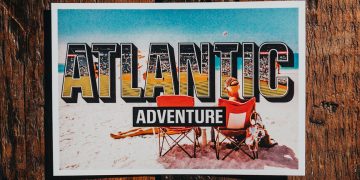
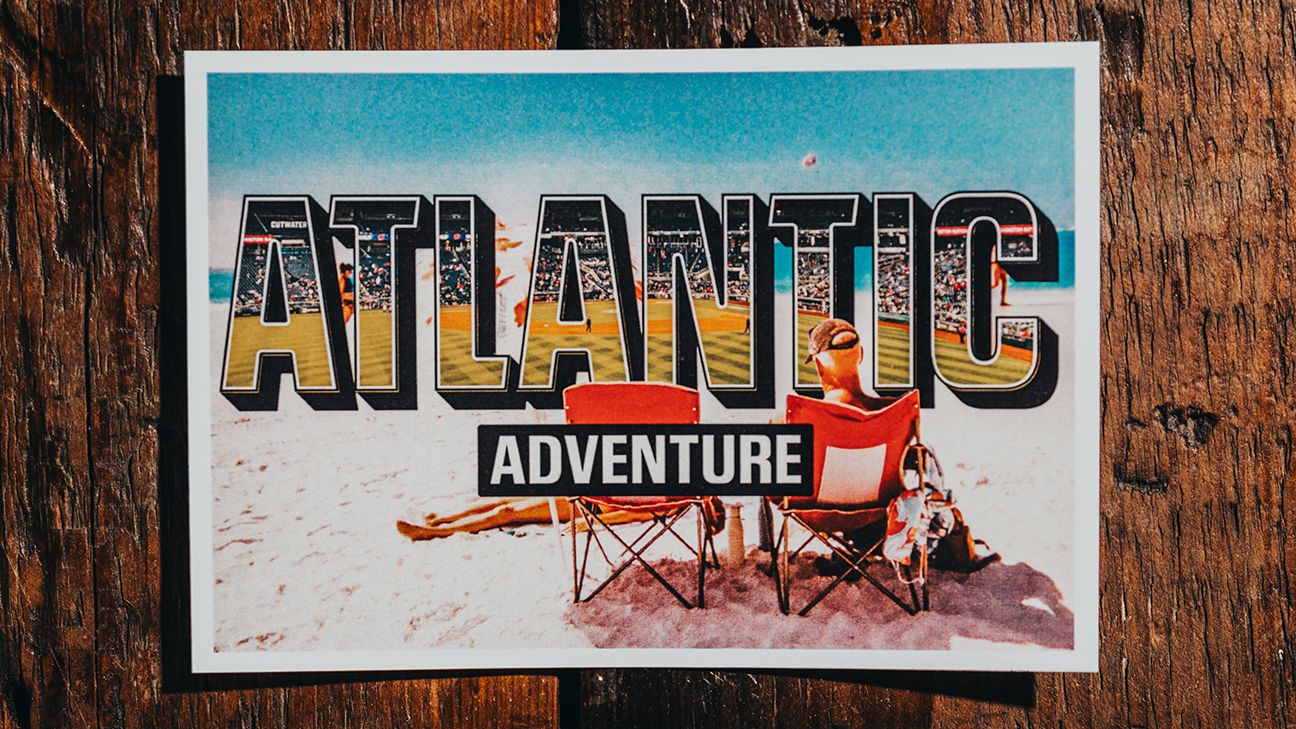
Maps by Christopher Delisle. Postcard design by Don Jolovich. Photo illustrations and editing by Robert Booth, Jason Potterton and Tony Spinelli. Copy edited by Kate Howley. Research by Dana Lee, Gueorgui Milkov and Alonzo Olmedo. Social media execution by Bryan Antos and Christian Gardner. Edited by Susie Arth and Scott Burton.

Understanding Political Strategies: An Insightful Exploration Introduction Politics is the art of governing, making decisions that apply to group members....

Exploring Futuristic Tech Breakthroughs: A Deep Dive Introduction The modern era has been significantly influenced by technology. Society strongly relies...
10 Essential Tips for Creating Your Own Fashion Style The Intricacies of Fashion Fashion is a vast and dynamic industry...
Unleashing Freedom: 7 Tips for Unfettered Travel Introduction Travel is the movement of people away from their regular domicile, for...

Discover Global News Panorama at news.mapworldnow.com — your universal gateway to comprehensive, international journalism. From politics and technology to culture and sports, we cover all news niches and all news categories from every corner of the world, all in one place.