- Latest
- Trending

LONDON — Top-end luxury customers can have it all — but now they want more.
According to new research by Team One, there has been a fundamental shift in how “affluents” define a life well-lived. They’re prioritizing friendships over status, and seeking genuine connections. The shift is forcing some brands to re-think their marketing approach.
Team One said the findings in its 2026 Global Affluent Collective report, “The Belonging Correction,” reveal “a widening disconnect between opportunities for connection and true feelings of belonging.” The report draws on 16 years of proprietary research and a study of 4,334 respondents across 18 countries.
According to the report, some 51 percent of global affluents now “prioritize friendship over status, favor smaller, more intentional friendship circles, and put a growing premium on genuine connection.”
“Affluents overvalued being seen. They’ve corrected toward being understood,” said Mark Miller, chief strategy officer at Team One, a media and communications agency belonging to Publicis Groupe.
Miller added that many luxury brands have not kept up, “and are still speaking to a version of success their audience has already outgrown. What [customers] need isn’t another new room to enter. It’s support. It’s tools that help them build trust, deepen relationships, and show up in the moments that actually matter. The brief isn’t about access alone anymore. It’s about affinity.”
According to the research, 81 percent of those interviewed said social success means being accepted for who they are, not how they’re seen. Some 92 percent said they seek validation from the “right” people, not the “most” people. Eighty percent said they build belonging through shared time and interests, rather than exclusive access.
Tahni Candelaria, director of cultural anthropology at Team One, said in an interview: “We are living through a very particular time in which people are experiencing what we would call ‘connection inflation.’ This describes the phenomenon in which technology has made connection abundant and frictionless — so there are more rooms to enter, more touch points, more circles to be part of, more ‘ways in’ than ever before.”

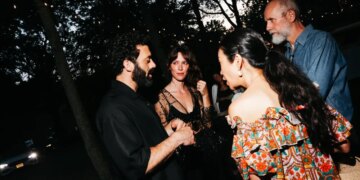
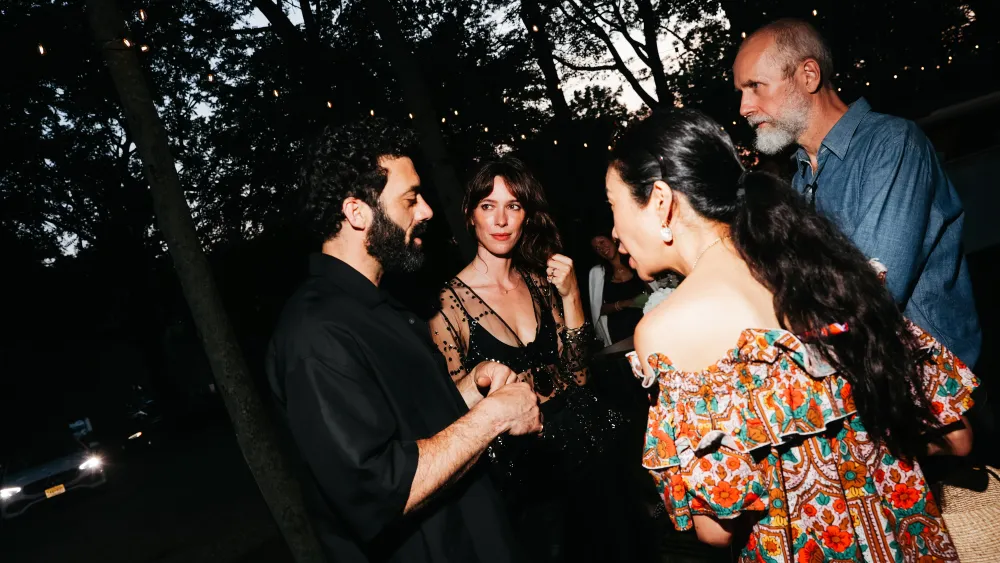
Rachel Chandler and Paloma Elsesser at the Chanel Tribeca Artists Dinner earlier this month.
Lexie Moreland/WWD
She added that abundance doesn’t automatically translate into belonging. “In fact, it often creates social disorientation, especially for affluent audiences, because by virtue of their resources, they have unprecedented access to places and spaces of connection or belonging.”
The question luxury customers are asking has changed from “Can I get in here?” to “Which room is actually mine?” and “Which circles do I actually want to belong to?” according to Candelaria.
She said today’s affluent customers are defining belonging “by resonance and depth, and being understood by the people whose opinion actually carries weight in your life. The definition of belonging itself has shifted: from being seen widely to being known precisely.”
The new report, she added, “isn’t asking brands to be louder, it is asking them to be useful and to build relationships that feel real. In a category long built on ‘more access,’ growth will come from enabling deeper, more meaningful forms of connection rooted in real belonging.”
In an interview, Miller said that brands should work to understand customers’ more nuanced needs.

People at the 2025 Coachella Valley Music and Arts Festival in Indio, Calif.
Getty Images for Coachella
He pointed to last year’s launch of Dior’s Diorexquis high jewelry collection at Château de La Colle Noire, the restored home of designer Christian Dior. “The event felt much more like a small, intimate gathering of friends away from the usual spotlight. It was an event where people felt more like close connections (family) than props,” he said.
He also said Miu Miu’s choice to put Dr. Qin Huilan, a retired surgeon and brand fan, on the Paris runway in 2024 was another example of treating customers like friends. “The key wasn’t just giving her VIP access to the event, but shining a light on her and her story. It proves that being an insider means you do not just belong to the brand; the brand also belongs to you,” he said.
Candelaria pointed to a few examples of brands “hosting” people, and offering personalized moments.
She said that one of the panelists interviewed for the report recounted a night hosted by Amex for Platinum members at a restaurant in San Francisco. The person was able to bring seven of her friends along to the dinner. “It landed as genuine, which is why it built affinity: the brand was letting the relationship be the point” of the evening, said Candelaria.
She said that another panelist recalled a night hosted by Grey Goose, where bartenders improvised drinks around her preferences and sent her home with martini accessories. “It built affinity because she didn’t feel sold to, she felt hosted,” said Candelaria.

Descrease article font size Increase article font size The following article contains spoilers about Bridgerton Season 2. Read at your...

With #Poetry amassing more than 93m Instagram posts alone, is the spoken word resonating more than ever? Source link
Prince Harry and Meghan Markle have received glowing praise from celebrity chef José Andrés for their dedication to humanitarian and...
New publisher Trailmark Games and The Karate Kid: Street Rumble developer Odaclick Game Studio have announced The Walking Dead: Streets...
Discover Global News Panorama at news.mapworldnow.com — your universal gateway to comprehensive, international journalism. From politics and technology to culture and sports, we cover all news niches and all news categories from every corner of the world, all in one place.