- Latest
- Trending

Politics encompasses the activities, actions, and policies that are used to gain and hold power in a government or to govern a state. It involves the process of making decisions for groups, whether these groups are small, like a corporation, or large, like the population of a nation. Politics is inherently tied to the institution of government and the state.
The word politics comes from the Greek word ‘polis’, meaning city or community. The Greeks used the word to denote the totality of human relations and activities designed to establish peace, prosperity, and defense among people. Politics in ancient Greece included the study of philosophy, history, rhetoric, law, property, war, freedom, and morality.

Politics can revolve around a variety of core concepts, including power, authority, conflict, cooperation, and consensus. In the political context, power refers to the ability of one political actor to get another actor to do what it wants, often through coercion.
Authority, on the other hand, is the perceived legitimacy or right to exercise power. It is commonly vested in elected officials, monarchs, or other leaders who receive it from their followers.
Conflict and cooperation are inherent aspects of politics. Politics can often be a struggle for power, involving conflicts of interest and competition for resources. At the same time, politics also includes efforts towards cooperation, compromise, and consensus-building to achieve mutually beneficial outcomes.
There are various levels and types of politics, including local, regional, national, and international politics.
Local politics deals with issues concerning a local community, such as a city or town. This can involve matters like local ordinances, zoning regulations, and allocation of local resources.
Regional politics commonly refers to the issues and policy decisions that affect a larger geographical area or political unit within a country. This might encompass several cities, a province, or a state.
National politics pertains to the governance of a nation as a whole. This typically involves the creation and implementation of broad, nationwide policies, laws, and regulations.
International politics involves interactions among countries, including matters of war and peace, economic agreements, international regulations, and diplomatic relations.
Democracy is a form of government in which power is vested in the people, who rule either directly or through freely elected representatives. It is characterized by free and fair elections, protection of human rights, and equality of all citizens before the law.
In a democratic system, power is transferred peacefully through a process known as elections. Elected officials are chosen by the citizens to represent them and make decisions on their behalf.
Political ideology is a set of ethical principles, beliefs, ideas, or doctrines that shape the thinking of a particular culture or social group. It includes concepts like liberalism, conservatism, socialism, and communism.
Politics and economics are deeply intertwined. Political decisions can affect economic policies, tax rates, public spending, and regulations, which in turn can affect economic growth, unemployment, inflation, and the overall wealth and standard of living in a society.
Public opinion plays a critical role in a democratic system. It can influence the development of policies, the behavior of elected officials, and the outcome of elections. Politicians often use public opinion polls to guide their actions or understand the needs and desires of their constituents.
Political parties are organized groups of people who share similar political philosophies and aim to influence public policy by getting their candidates elected to office.
Politics, in essence, plays a crucial role in coordination, decision-making, conflict resolution and policy implementation in a society. It shapes the way societies function and develop by influencing laws, policies, and public projects. It also provides a platform for public participation, dialogue, negotiation, and compromise. As a field of study, politics assists individuals in comprehending the underlying dynamics of power and governance, and guides societies in making collective decisions that align with their ethics and values. Understanding politics therefore enriches our sense of citizenship and civic responsibility.

An Australian man has been charged with homicide in Thailand, after a Thai teenager’s body was found stuffed in a...

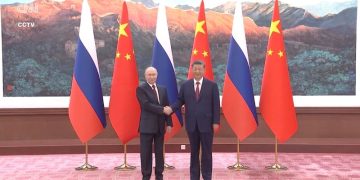
Russian President Vladimir Putin meets Chinese leader Xi Jinping at the Great Hall of the People on Wednesday, days after...
Thursday 02 July 2026 09:33 - 09:37 ECON ENVI LIBE Please try out: nodemaven Pay as our go PROXY with...
New Delhi: The Congress has announced its core team for Punjab ahead of next year's Assembly election. While the party...

Discover Global News Panorama at news.mapworldnow.com — your universal gateway to comprehensive, international journalism. From politics and technology to culture and sports, we cover all news niches and all news categories from every corner of the world, all in one place.