- Latest
- Trending

More like this:
• I created a Christmas jumper I can wear every season
• How climate change has altered Christmas
• How Dickens made Christmas white
Of course, Christmas trees are still typically treated with plenty of pesticides and especially fertilisers to keep them aesthetically pleasing, says Caplat, which has its own impact on the environment. A 2021 study led by landscape ecologist Merle Streitberger from Osnabrück University in Germany found that organic Christmas tree plantations had better habitat structure and plant species diversity than conventional ones, and recommended a reduction in herbicide use in particular.
Importantly, however, some sites used to grow Christmas trees could be used for far worse things environmentally. Areas close to cities, for example, could find alternative uses as parking lots, says Caplat. Kosiba similarly notes that in the rural areas of the north-eastern US, where forests are often being lost to sprawling development, Christmas tree farms can give landowners an important diversified income. “It allows people to live in these places, manage and work in their land,” she says.
In short, says Finton, if a landowner has an economically viable Christmas tree farm, they’re incentivised to keep the land in “that natural, open state…and not to, for instance, sell land to a situation that might end up in a strip mall or a subdivision or housing development”.
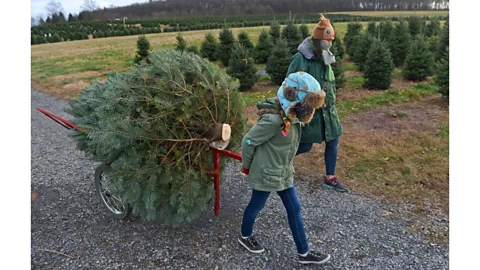 Ben Hasty/Getty Images
Lindsay GAAP EPS of $1.53 beats by $0.32, revenue of $160.8M beats by $3M Source link

Analysis-Britain’s Paramount-Warner review may be aimed at commitments, not a veto Source link
Pretty much everyone agrees that artificial intelligence has the potential to reshape the economy in the coming decades. But no...
Fairfield | 56 Prospect Street, Greenwich, Conn.Condo in an 1876 House$1.275 millionThis three-bedroom, two-and-a-half-bath, 2,128-square-foot renovated home is part of...

Discover Global News Panorama at news.mapworldnow.com — your universal gateway to comprehensive, international journalism. From politics and technology to culture and sports, we cover all news niches and all news categories from every corner of the world, all in one place.