- Latest
- Trending

This article is part of Food Tank’s primer series, “Food Tank Explains.” Each installment unpacks the ideas, innovations, and challenges shaping today’s food and agriculture systems, offering clear insights into complex topics. To explore more articles in the series, click here.
Agroforestry is a land management system that integrates trees with crops or livestock, delivering benefits for food security, environmental outcomes, and farm incomes.
Unlike monocultures, where a single crop is grown over large areas, agroforestry allows different biological systems to interact and strengthen one another, mimicking natural ecosystems. Tree roots release carbon into the soil, improving soil health, and reduce erosion by helping to support soil structures. The trees provide fodder for livestock and corridors for wildlife, while the animals enrich the soil and help with seed dispersal.
Canadian forester John Bene coined the term “agroforestry” in 1973, calling for global recognition of the key role trees play on farms. But, according to World Agroforestry (ICRAF), the practice has ancient origins steeped in local wisdom and traditional knowledge from around the world.
East Amazon communities adopted agroforestry 4,500 years ago, according to research published in Nature Plants, cultivating multiple crops alongside edible forest species. Farmers in West Africa have practiced the parkland system, one of the oldest agroforestry techniques, for over 1,000 years, growing crops like millet and sorghum beneath scattered baobabs and shea trees.
Modern agroforestry systems vary widely across regions and communities, reflecting differences in environmental conditions, cultural traditions, available resources, and local needs.
Agroforestry systems can strengthen food security by increasing and diversifying yield and by improving the availability of micronutrient-rich fruits, seeds, and nuts during lean growing periods, Todd Rosenstock, Director of CGIAR Climate Action, tells Food Tank. They can also serve as an important source of income diversification, and help generate sales that enable the purchase of further food products.
A women’s cooperative, founded by a Lenca community in Honduras, grows fair trade organic coffee under fruit-bearing trees like mango, plantain, and jackfruit. This increases crop diversity and yield, providing the cooperative with fruits that they can barter or sell at the market.
Multi-species, multi-storied, and multi-purpose gardens located close to home are common to many parts of Indonesia. Referred to as “home gardens,” these plots were historically producing foods for home consumption. Now, home gardens play a fundamental role in providing income. They are also considered to have the highest biodiversity of any human-created ecosystem.
In South and Southeast Asia, rotational farming is deeply rooted in traditional knowledge, philosophy, and spirituality, and provides a crucial source of livelihood and food security for millions of people. Prasert Tralkansuphakon, Chair of Pgakenyaw Association for Sustainable Development and Inter Mountain People Education and Culture Association in Thailand, describes agroforestry as a means of producing both food and income “in a traditional and innovative way, managed both by humans and nature, or [just] by humans, but in a natural way.”
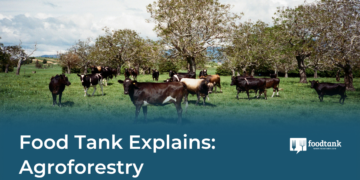
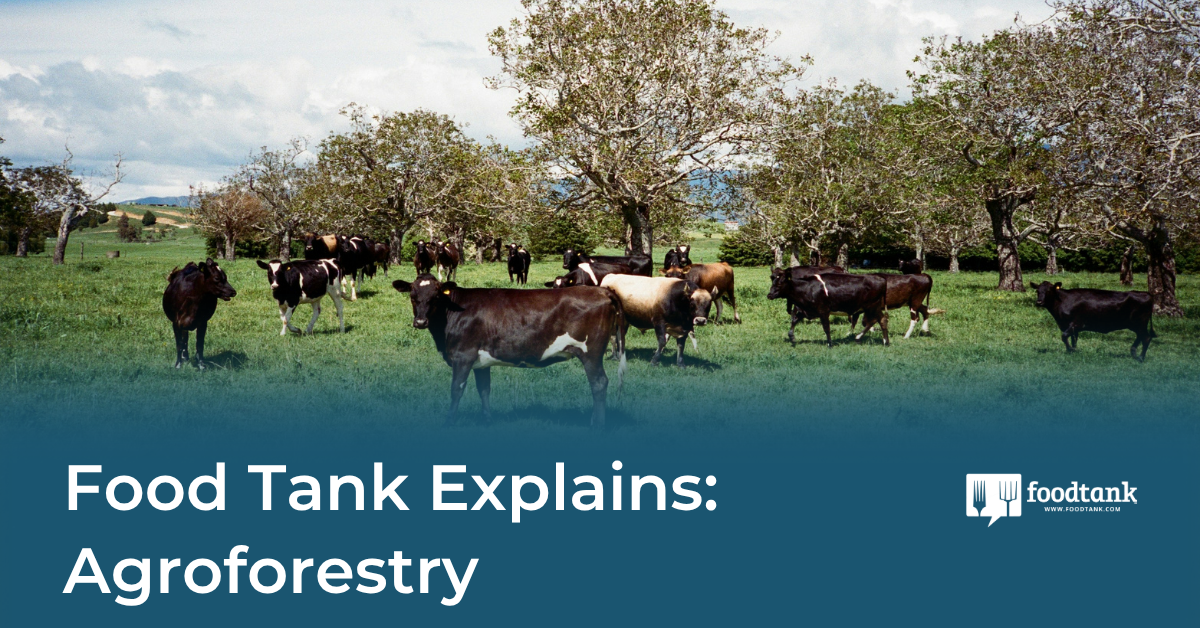
As farmers face more frequent extreme weather events, some agroforestry systems seek to offer protection while others help improve resiliency. Windbreaks include linear tree plantings that shelter crops and soil from wind, snow, and dust. In silvopasture systems, which integrate trees and livestock, trees provide animals essential shade and shelter from extreme heat.
Karina Gonçalves David, Co-founder of ProNobis Agroflorestal, tells Food Tank that the agroforestry system on her family’s farm helps their crops withstand extreme weather. By forming a protective microclimate, the system shields crops from winter freezes, limits soil erosion, and increases the soil’s water-holding capacity.
And ICRAF research suggests that agroforestry is linked with benefits for planetary health including prevention of both air pollution and heat exposure for farmworkers, and regulation of solar radiation and wind.
To expand agroforestry more widely, researchers suggest pairing locally adapted practices with stronger support systems. CIFOR-ICRAF calls for investments in extension services, market development, and institutional capacity, while Cornell University researchers suggest that integrated landscape management can help align efforts among farmers, researchers, policymakers, and the private sector to address persistent barriers.
Articles like the one you just read are made possible through the generosity of Food Tank members. Can we please count on you to be part of our growing movement? Become a member today by clicking here.
Photo courtesy of Christopher Stites

Hiiii! Happy Friday! What do you have going on this weekend? We’re back from an INCREDIBLE trip to Korea and...

I don’t know if I’m the only one who feels this way, but flagship smartphones just don’t excite me anymore....
Discover what’s possible with Gemini 3.5. We launched our latest family of models combining frontier intelligence with action. With powerful...
Earlier this year, the leaders of the world’s largest stock indexes found themselves in a pickle.SpaceX, Elon Musk’s rocket maker,...
Discover Global News Panorama at news.mapworldnow.com — your universal gateway to comprehensive, international journalism. From politics and technology to culture and sports, we cover all news niches and all news categories from every corner of the world, all in one place.