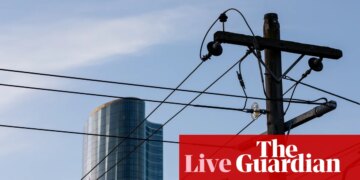
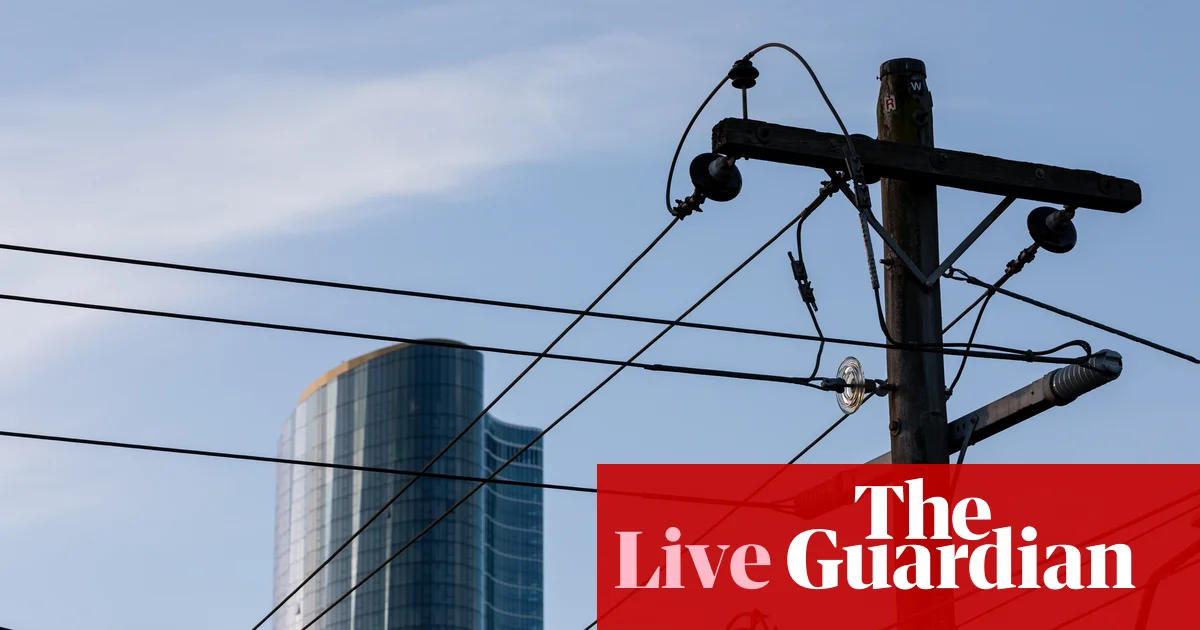
Bowen asks regulator to investigate big jump in power companies’ supply fees
Chris Bowen has asked energy retailers to explain why some of their prices are going up from 1 July when they’re supposed to go the other way, under the latest default market offer.
But long story short, households in most parts of the country are supposed to see prices fall up to 10%, according to the Australian Energy Regulator’s final offer for 2026-27.
The energy minister says that not all companies have to apply the default market offer to their prices, but he’s referred retailers to the Australian competition and consumer commission (ACCC) to look for any misconduct where those prices should be coming down.
Companies have to comply with the default market offer for their relevant default offers, but they don’t have to apply it to all their market offers. We’ve seen some companies, not all, far from it, choose to increase their fixed supply costs while reducing their per-kilowatt hour costs.
What I’ve asked the regulators to do is look at that and ensure it complies, particularly with the prohibited misconduct provisions in energy market laws, which require companies to pass on sustained reductions in energy costs through their bills.
I understand these fixed-cost increases have caused a lot of concern. People have raised them with me, quite rightly, and I’ve raised them with energy companies.
Energy minister Chris Bowen. Photograph: Mick Tsikas/AAP
Key events
‘What a ridiculous argument’ Hume says Australia is a multicultural society
Shortly before her appearance on Sky News, Jane Hume stood up in front of journalists at Parliament to talk about workplace laws.
Of course the questions quickly turned to Angus Taylor’s fumble on multiculturalism yesterday.
For those who have been following diligently, I won’t go back through the whole saga, but if you need to catch up, have a read here.
Hume says:
This is a ridiculous argument … I reject the politics of identity of the left on multiculturalism, but my goodness, I also reject the policy of cultural sphere from the right. We are a multicultural society. Let’s face it, we already are.
We are a multicultural society. I don’t really care where you came from. I don’t give two hoots what your country of our agendas. What I care about is whether you’re going to contribute to building our nation that’s worth fighting for.
Asked why she could give such a coherent answer when her leader couldn’t, Hume says the pair are “pretty aligned on this” and that Taylor cares about Australian values.
The deputy leader of the opposition, Jane Hume, says the government’s NDIS overhaul could “pass this week” with the cooperation of the opposition, bypassing the extra eight-week inquiry negotiated by the Greens yesterday.
Hume says the inquiry is “performative”, and lashed the Greens for taking the deal to pass the tax reforms.
The government said this morning it would look to vote on the bill in August, once the inquiry report is handed down.
Hume tells Sky News:
That eight-week inquiry into the NDIS, I think, is entirely performative. Let’s face it, those NDIS changes could pass this week, and we’ve said that we’ll work cooperatively with the government to do exactly that.
The Greens have really sold their soul on this one, and what for? A bag of beans. Not only have they said that they will rush these taxation changes through, adding something as minor as changes to the super into self-managed super funds. I mean, that’s just gratuitous and mean-spirited, but more importantly, they’ve also denied scrutiny of another dozen pieces of legislation.
Deputy leader of the opposition Jane Hume. Photograph: Mick Tsikas/AAP
Wilson defends old paid parental leave comments, accuses Plibersek of drumming up debate
Tim Wilson has copped a bit of heat over his comments to ABC Q&A back in 2013, where on paid parental leave he said, “that is not my choice that women have children … it’s genetic”.
Social services minister Tanya Plibersek has spent the morning reminding Wilson of those controversial comments, but the shadow treasurer has pushed back.
Speaking to Sky News, Wilson said he does, in fact, support PPL, he was talking at the time about Tony Abbott’s policy which would have provided six months of paid parental leave at the person’s normal wage.
Wilson said:
I support paid parental leave, I just didn’t support – and this is the oddity, and she knows this – I didn’t support the Abbott government’s proposal on paid parental leave, and that’s what I was talking about at the time. Minister Plibersek has a long history of trying to drum these debates up.
Shadow treasurer Tim Wilson. Photograph: Mick Tsikas/AAP
In pics: Albanese meets baby Zoe as the government spruiks paid parental leave extension
There’s not much politicians love more than a photo opportunity with a baby, especially when it’s tied to an announcement (call me a cynic!).
This morning Anthony Albanese couldn’t resist getting the cameras into his office to photograph him holding a cute baby, while the government spruiks the incoming extension to paid parental leave.
PPL will extend from 1 July to 26 weeks – to be shared by both parents (except in single parent families).
Here’s the very happy looking PM:
Anthony Albanese finds an easier audience with baby Zoe and mum Anne Baker. Photograph: Mick Tsikas/AAPThere’s not much politicians love more than a pic with a baby, and Anthony Albanese is no exception. Photograph: Mick Tsikas/AAP
Labor look to pass NDIS reforms in August
After securing victory yesterday, making a deal with the Greens to pass tax reforms, Labor are yet to cement their pathway to passing the NDIS overhaul.
The Greens have promised to do all they can to kill the NDIS bill entirely, but the Coalition have remained open to the changes – the government just needs to get them over the line.
The finance minister, Katy Gallagher, says the government wants those reforms debated once the longer inquiry into the NDIS bill comes back, which is due on 14 August.
She told a press conference a little earlier:
We intend to deal with that bill in the second week of the August sitting. That is our position. The Greens understand that, we understand their position. And so it really comes down to how do we get the votes through the Senate, and that will rely on the Coalition working with us on delivering the NDIS bill.
We’re not going to convince the Greens, they’ve taken a decision. They don’t want that bill to pass.
Finance minister Katy Gallagher. Photograph: Lukas Coch/AAP
Bowen asks regulator to investigate big jump in power companies’ supply fees
Chris Bowen has asked energy retailers to explain why some of their prices are going up from 1 July when they’re supposed to go the other way, under the latest default market offer.
But long story short, households in most parts of the country are supposed to see prices fall up to 10%, according to the Australian Energy Regulator’s final offer for 2026-27.
The energy minister says that not all companies have to apply the default market offer to their prices, but he’s referred retailers to the Australian competition and consumer commission (ACCC) to look for any misconduct where those prices should be coming down.
Companies have to comply with the default market offer for their relevant default offers, but they don’t have to apply it to all their market offers. We’ve seen some companies, not all, far from it, choose to increase their fixed supply costs while reducing their per-kilowatt hour costs.
What I’ve asked the regulators to do is look at that and ensure it complies, particularly with the prohibited misconduct provisions in energy market laws, which require companies to pass on sustained reductions in energy costs through their bills.
I understand these fixed-cost increases have caused a lot of concern. People have raised them with me, quite rightly, and I’ve raised them with energy companies.
Energy minister Chris Bowen. Photograph: Mick Tsikas/AAP
‘We want more investors’: Bragg says CGT and negative gearing changes will scare off buyers
The shadow housing minister, Andrew Bragg, has cast some doubt over Clare O’Neil’s claims this morning that the housing market is currently experiencing a “correction”, as auction clearance rates drop below 50%.
He tells ABC News Breakfast that despite any cooling in the market, at the bottom end where first home buyers are competing, the prices are still unaffordable for many.
It is a long game, housing, and I am not sure she is a forecaster – but what we are seeing in the entry level housing is still persistently higher prices. The government have pumped prime prices with their collapse of supply and their 5% deposits. Until we see a larger amount of housing supplied I don’t think we will see price stability or affordability.
Bragg says we need more investors in the market not less to build more homes, and that the capital gains tax and negative gearing changes will scare them off.
We want more investors. This is the bizarre thing about Labor’s dodgy deal with the Greens, they want to exempt their mates in the super funds so they can build more houses and they want to kick SMSF (self-managed super fund holders) out of the market. It seems like they want to prioritise institutional interests over people. My view would be we want to have more investment in housing, who cares who the investor is.
Shadow housing minister Andrew Bragg. Photograph: Lukas Coch/AAP
Hanson importing ‘chaos and division’: Labor MP
Everyone’s having a crack at Pauline Hanson this morning – no doubt because they realise the political threat she now raises for both major parties.
Labor assistant minister for multicultural affairs, Julian Hill, says One Nation is promoting “cooker stuff” (i.e extreme and conspiracy-driven political views).
He tells Sky News:
She wants to make it easier to sack people, to cut conditions for working Australians, massive cuts to the health system, and this is cooker stuff, abolish the entire health department. But shockingly, and she’s refusing to back down on this, getting rid of paid parental leave.*
This is about importing an extreme rightwing agenda into Australia that goes against everything which everyday Australians have stood for.
It’s an appalling agenda, you may as well rename it Gina Rinehart [policy].
*Hanson said that government paid parental leave could stay, but that small businesses could fold if they had to pay PPL.
One Nation leader Pauline Hanson. Photograph: Lukas Coch/AAP
Patrick Commins
Monthly inflation data out this morning
Consumer price data out at 11.30am this morning is expected to show inflation accelerated further in the year to May, despite another month of retreating fuel prices.
Headline inflation was 4.2% in the year to April, and Westpac and NAB economists predict it lifted to 4.4% in May.
That is well above the 2-3% range targeted by the Reserve Bank of Australia.
Economists and the RBA are alive to the risk that the spike in petrol and fertiliser prices is pushing up the prices of a broader set of goods and services, especially for staples such as milk, fruit and vegetables.
The central bank’s preferred measure of underlying inflation – which removes more volatile prices – is also expected to head in the wrong direction.
CBA analysts expect the “trimmed mean” rate of inflation will climb to 3.6% in the year to May, from 3.4% in April.
The RBA held its cash rate last week after three straight increases, but has warned it is prepared to hike again if inflation proves stickier than hoped.
Financial markets before the release of this morning’s data were pricing in an almost 30% chance of a hike at the end of the RBA’s next meeting on 11 August, and a nearly 70% chance of an increase by the following meeting in November.
Motorist fills up at a fuel station in Melbourne. Photograph: Joel Carrett/AAP
Housing market experiencing a ‘correction’, O’Neil says
Jumping back to Clare O’Neil’s appearance on RN Breakfast, the housing minister said the market is currently experiencing a “correction” as auction clearance rates drop and prices in some cities fall.
O’Neil said the market is cyclical, and that the current trends are just part of that – brought on by not just the tax changes but also the outbreak of war in the Middle East, and rising interest rates in the wake of that.
She adds that there was extremely high house price growth from before the Covid pandemic until now, and the market is seeing a correction from that.
O’Neil says:
I think the housing market’s cyclical in Australia. A very uncontroversial comment. We see periods of very significant house price growth and then we see the market make a correction and that’s what we’re seeing at the moment.
She says it’s the first time in a long time that she’s picked up the Sunday paper and seen “article after article talking about first home buyers winning at auctions.”
Apartments in Sydney. Photograph: Steven Markham/AAP
Cait Kelly
Children and Young People with Disability Australia calls on government to scrutinise NDIS bill
Children and Young People with Disability Australia (CYDA) welcomed yesterday’s extension to the NDIS bill inquiry while calling on the government to genuinely scrutinise its impacts on disabled children and young people.
The CYDA CEO, Skye Kakoschke-Moore, said the delay was a testament to the power of disabled people, families and advocates who refused to let unprecedented changes be rushed through parliament:
Above all else, what this development shows is that our collective advocacy cannot be ignored.
The government must now take the time to properly scrutinise how this law will impact the nearly half a million people with disability under 25 who rely on the NDIS every day.
CYDA’s submission highlighted four key areas of concern in the Bill, including:
The requirement for a person to undertake “all appropriate treatment” without consideration of their location or financial means
The reliance on parental responsibility and already stretched informal supports as alternatives to properly funded supports
The reduction in funding for social and community participation
The centralisation of power with the disability minister of the day
The Children and Young People with Disability Australia CEO, Skye Kakoschke-Moore. Photograph: Joel Carrett/AAP