- Latest
- Trending

Business and economy are intricate realms, densely interwoven with one another. Essentially, the state of business significantly contributes to defining the economy of a nation, region, or even the world. In this context, a comprehensive understanding of these concepts is crucial for anyone involved in business or economic activities.
Business, by definition, involves activities or functions with the fundamental aim of earning profits. These activities or functions may involve trading goods or services against money. On the other hand, economy signifies a structured system where activities pertaining to production, dispersion, and consumption function in harmony, balancing supply and demand.
Undeniably, businesses are key building blocks of an economy, shaping it through their actions and activities. They provide goods and services, while also creating job opportunities that contribute to an individual’s income, impacting expenditure and savings at the macro level. Thus, the performance of businesses directly affects the economy in terms of inflation, unemployment, and GDP.
Therefore, understanding the state of the economy will provide businesses with the necessary insights needed to make strategic decisions. Should they invest more, or retain their current portfolio? Even entrepreneurs who are planning to establish themselves should have a reasonable understanding

Business cycles are the fluctuations in economic activity that an economy experiences over a period of time. These cycles are mainly made up of four stages, namely: the expansion phase, the peak phase, the contraction phase, and the trough phase.
During the expansion phase, businesses thrive. The aggregate demand increases, resulting in higher production, increased employment, and elevated profits. However, once the economy reaches its peak, various factors, like an increase in inflation, cause aggregate demand to drop. Subsequently, leading the economy into the contraction phase, where demand, production, and employment decrease, signifying businesses experiencing reduced profits.
The cycle reaches a trough once the economy cannot contract further. Then, the expansion phase follows again, and the cycle continues. Understanding this cycle can guide businesses in anticipating market conditions and aligning their strategies accordingly.
The business cycle has real-world implications on everyday life. During expansion, more jobs are available and wages may increase, improving the standard of living. During contraction, job loss and decreasing franchises might occur, affecting the livelihoods of individuals.
While a contracting economy can challenge businesses, it’s not necessarily doom and gloom. Businesses can leverage this phase to reinvent their product offerings, enhance efficiency, and target new markets to remain competitive.
Inflation affects businesses by increasing the cost of inputs, consequently eating into profits. When prices increase, businesses might have to increase their prices too, which can lead to decreased demand for their products or services.
The government plays a central role in businesses and the economy by formulating policies that affect business operations. It’s the government’s task to strike a balance between businesses’ needs and overall economic stability, considering aspects like employment, inflation, and sustainable growth.
Understanding the economy assists an entrepreneur in forecasting market trends, customer behavior, and concomitant risks. It also helps in strategic planning, resource allocation and making informed decisions to ensure the venture’s success.
To summarize, business and economy are not two isolated aspects but symbiotic entities defining each other in numerous ways. The sound understanding of how businesses influence the economy, and how the economy, in turn, impacts businesses, is vital. This knowledge is crucial to steer through the cyclical and volatile nature of economies, effectively managing businesses, and making the most of economic opportunities. Whether you’re an established business person, a budding entrepreneur, or simply interested in the business world, keeping an eye on the interplay of business and the economy will always be beneficial in the ever-evolving world of commerce.
The influence of various elements, like government policies or inflation on business activities, further advocates the necessity of understanding the economic landscape. Only by thoroughly comprehending the intricate web that links business and the economy can we expect to make sound decisions and pave the way for sustainable growth and development. Hence, anyone involved in business or economic activities should strive to broaden and deepen their understanding of business and economy.

Today, companies like Meta, owner of Facebook and Instagram, Google, owner of Youtube, and Snapchat, along with relatively newer platforms...

Check out whats clicking on FoxBusiness.com. The General Services Administration (GSA) on Wednesday announced the sale of the Old Post...
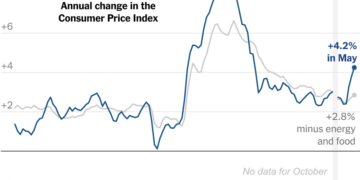
Inflation accelerated for a third straight month in May amid a stalemate in negotiations to end a war with Iran...

Discover Global News Panorama at news.mapworldnow.com — your universal gateway to comprehensive, international journalism. From politics and technology to culture and sports, we cover all news niches and all news categories from every corner of the world, all in one place.